
A Practical Guide to Molly Bolt vs Toggle Bolt Comparisons
Molly Bolt vs Toggle Bolt: Core Mechanical Differences
In a molly bolt vs toggle bolt comparison, molly bolts use a collapsing metal sleeve that allows screw removal and requires smaller drill holes for light-to-medium loads, whereas toggle bolts use spring-loaded wings to distribute heavier loads across a wider clamping surface at the expense of larger drill holes and non-reusable wings. While both create a mechanical stop inside the wall cavity for blind fastening, their internal physics and contact mechanics operate in entirely different ways.
Molly Bolt Mechanics and Sleeve Expansion
A molly bolt (often cataloged as a hollow-wall drive anchor) consists of three parts: a machine screw, a threaded interior cone, and a slotted metal outer sleeve with a collared head.

- You insert the entire unexpanded assembly through a tight-fitting pilot hole until the front collar rests against the drywall face.
- As you turn the machine screw, the internal threads pull the far cone backward toward the wall.
- This axial tension compresses the slotted sleeve, forcing its legs outward and splaying them into a four-legged metal spider against the rear face of the gypsum board.
Once fully compressed, the deformed metal sleeve remains permanently locked into the drywall. You can back the machine screw completely out to position a bracket or replace a fixture, and the threaded sleeve stays firmly anchored in the wall. You can read more about these structural dynamics in this technical reference on hollow-wall molly anchors.
Toggle Bolt Mechanics and Spring-Wing Clamping
A traditional toggle bolt consists of a fully threaded machine bolt paired with a spring-loaded, two-piece folding metal wing nut.
- You must feed the bolt through the item or bracket first before screwing on the wings.
- You squeeze the spring-loaded wings flat against the bolt shaft and push them through a large clearance hole in the wall.
- Once the wings clear the inner wallboard surface and enter the open stud cavity, the internal spring forces the wings to snap wide open.
- Tightening the bolt pulls the flat metal wings flush against the rear face of the drywall, creating a wide clamping surface that bridges the hole.
Because the clamping force is spread across the broad metal wings, toggle bolts distribute loads across a larger surface area of drywall than standard sleeves. However, this mechanism requires significant cavity depth (typically at least 1-7/8 inches) to allow the spring wings to pivot and open fully.
Performance and Usability Comparison
Molly Bolt vs Toggle Bolt Weight Capacity and Load Limits
In hollow-wall installations, hardware failure rarely involves snapping the steel bolt itself. Instead, the failure mode is almost always drywall blowout, where the gypsum core crushes, crumbles, or shears under load.
Anchor weight ratings represent static shear strength (downward force parallel to the wall face) in sound drywall. When a load extends outward from the wall—such as a deep floating shelf or an articulated mount—it introduces a cantilevered rotational moment. This converts downward shear into outward tensile (pull-out) force at the top of the mounting bracket, which substantially reduces the effective holding capacity of the drywall.
When calculating loads, engineers and contractors apply a 4:1 safety factor. If an anchor is rated for 100 pounds static shear, design the permanent working load not to exceed 25 pounds.
| Fastener Type & Diameter | Typical Drill Hole Size | Static Shear Capacity (1/2″ Drywall) | Recommended Max Safe Working Load (4:1) | Reusable Screw? |
|---|---|---|---|---|
| Light Molly Bolt (1/8″) | 1/4″ | 30 lbs | 7.5 lbs | Yes |
| Standard Molly Bolt (3/16″) | 3/8″ | 50 lbs | 12.5 lbs | Yes |
| Heavy Molly Bolt (1/4″) | 1/2″ | 100 lbs | 25 lbs | Yes |
| Small Wing Toggle (1/8″) | 3/8″ | 30–50 lbs | 7.5–12.5 lbs | No |
| Standard Wing Toggle (1/4″) | 5/8″ to 3/4″ | 80–100 lbs | 20–25 lbs | No |
| Heavy Wing Toggle (3/8″) | 7/8″ to 1″ | 135–150 lbs | 33–37.5 lbs | No |
| Heavy Wing Toggle (1/2″) | 1-1/4″ | Up to 225 lbs | ~56 lbs | No |
Molly Bolt vs Toggle Bolt Installation and Removal
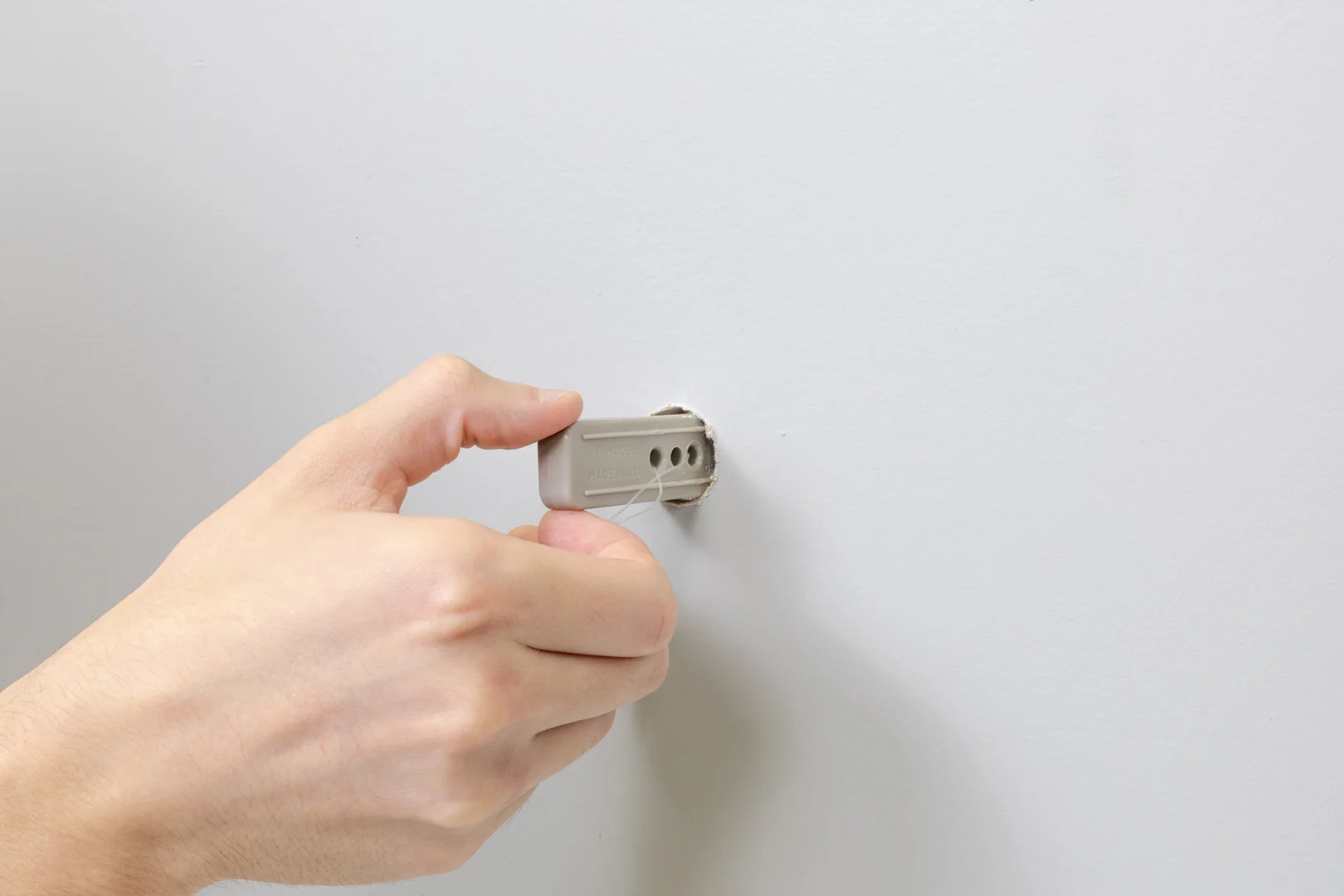
Installation and post-use repair highlight practical differences between the two fasteners:
Installation Usability
- Molly Bolts: Simpler for solo installation. You drill a hole matching the sleeve outer diameter, push the anchor flush, and tighten the screw to collapse the legs. Once set, the screw can be removed, passed through the mounting bracket, and tightened down without wrestling the wallboard.
- Toggle Bolts: Require continuous backward tension during installation. If you stop pulling backward while turning the screw, the wing nut simply spins freely inside the hollow cavity without drawing tight. Furthermore, the fixture must be threaded onto the bolt before inserting the wings into the wall.
Removal and Wall Repair
- Molly Bolts: The expanded sleeve is permanent. To remove it cleanly, drill out the front collar with a metal-cutting bit or tap the collar with a nail set until it sinks slightly below the drywall surface, allowing you to spackle over the sunken anchor.
- Toggle Bolts: Backing out the machine bolt causes the loose spring wings to fall into the wall cavity forever. While the anchor mechanism is destroyed, you are left with an open hole that can be patched with spackle and a mesh patch.
Choosing the Right Fastener by Substrate and Application
The ideal hollow-wall fastener depends on substrate integrity, wall cavity clearance, fixture dimensions, and load direction. Review our selection guide for hollow wall fasteners for a broader look at traditional hardware options.
When to Choose a Molly Bolt
Molly bolts excel in light-to-medium installations requiring precise hardware alignment and fixture removability:
- Keyhole Slots and D-Rings: Fixtures like decorative mirrors or clocks with rear-mounted keyholes require the screw head to protrude slightly. A molly allows you to set the anchor, back the screw out to the exact needed depth, and hang the item directly.
- Small-Footprint Brackets: Curtain rod brackets, towel rings, and narrow coat hooks often have slim mounting bases. The smaller hole required by a molly bolt ensures the bracket fully conceals the entry hole.
- Hollow-Core Doors: Standard interior doors have thin veneer faces (often 1/8 inch thick) where toggle wings cannot clamp cleanly. Short-grip-range molly bolts collapse snugly against the thin inner door face without requiring wide clearance.
When to Choose a Toggle Bolt
Toggle bolts are the better option when maximum surface distribution is needed on sound drywall:
- Heavy Static Hanging: Large picture frames, bulletin boards, and wide wall fixtures where wall studs cannot be reached.
- Ceiling Applications: Light fixtures or suspended planter hooks in drywall ceilings benefit from the wide clamping wings (though heavy loads should always be fastened directly into ceiling joists).
- Loose or Damaged Pilot Holes: If an older plastic anchor pulled out and wallboard around the hole is intact, a toggle bolt wing can pass through the enlarged hole and bridge the damaged area from behind.
Advanced Heavy-Duty Drywall Fastening Alternatives
While molly bolts and toggle bolts handle basic light-to-medium wall hanging, heavier loads require greater load distribution across the drywall face.
For substantial residential and commercial mounting where structural wood studs are unavailable, explore our patented Ghostud Drywall Anchors Category. Manufactured in the USA from 100% recycled plastic, our load-distributing anchors provide stable fastening points across standard wallboard:
- GS1 Drywall Anchor: Installs with a 1-inch hole saw and provides rated holding capacity up to 250 lb in 1/2-inch or 5/8-inch drywall.
- GS2 Drywall Anchor: Installs with a 2-inch hole saw and delivers rated holding capacity up to 1,000 lb shear in 1/2-inch or 5/8-inch drywall.

When GHOSTUD Is the Wrong Choice
GHOSTUD anchors are engineered strictly for 1/2-inch and 5/8-inch drywall assemblies. They are not suitable for plaster, lath, brick, masonry, concrete, stucco, tile backer boards, or metal studs.
Furthermore, never use hollow-wall anchors—including molly bolts, toggle bolts, or GHOSTUD—for safety grab bars, handrails, ADA fall-prevention fixtures, or furniture anti-tip straps. Any assembly meant to support human body weight or dynamic impact requires structural mounting directly into solid wood framing studs with heavy lag screws.
If you locate a convenient wood stud behind your drywall layout, stop drilling for anchors and drive appropriate wood screws directly into the center of the structural framing instead.
Frequently Asked Questions About Hollow Wall Anchors
Can you reuse a toggle bolt or a molly bolt after removal?
A standard spring-wing toggle bolt cannot be reused because its spring wings drop behind the wall cavity when the bolt is removed. A molly bolt permanently locks its metal sleeve into the wallboard, allowing you to remove and reinstall the machine screw as often as needed.
Why do toggle bolts require significantly larger drill holes?
A toggle bolt requires a hole large enough to pass the spring-loaded wings through in their folded position. A 1/4-inch machine bolt uses wings that measure roughly 5/8 inch to 3/4 inch across when folded flat, requiring a clearance hole 2 to 3 times the diameter of the bolt itself.
Can molly bolts or toggle bolts be installed in plaster walls?
Toggle bolts work in lath and plaster walls because their wings clamp behind the wooden lath strips. However, molly bolts often fail in plaster because the brittle material crumbles when the sleeve collapses, and the thickness of plaster-and-lath varies widely, preventing the fixed-grip sleeve from seating securely. When working with plaster, always pre-drill without hammer action to avoid vibrating and cracking the underlying plaster keys.
Conclusion
Both molly bolts and toggle bolts remain standard solutions for hollow-wall fastening. Use molly bolts when you need a smaller hole and the ability to remove and reinstall the mounting screw. Choose toggle bolts when you need broader rear-wall clamping for heavier static items and your bracket covers the larger drill hole.
For high-demand drywall installations where studs are out of reach, evaluating the total weight, pull-out geometry, and substrate thickness will help you select the right fastener for a clean, secure mount.