
How to Secure a Heavy Shelf Without Pull-Out Failure
The Physics of Heavy Shelves: Shear vs. Cantilever Pull-Out Force
The best wall anchor for heavy shelf mounting without wood studs is a heavy-duty steel strap toggle or a wide load-distributing backing plate anchor. Standard plastic expansion plugs and self-drilling anchors hold shear weight but quickly pull out under the rotational leverage generated by deep shelving. High-capacity toggle systems and broad rear-clamping plates safely bridge the hollow wall cavity by distributing tensile pull-out forces across the backside of the drywall.
When you mount a flat picture frame against a wall, the weight pulls almost entirely downward along the surface. This downward force is called shear load. Drywall anchors resist shear well because the force runs parallel to the wall face.
A shelf behaves differently. Because the shelf projects outward into the room, any weight placed on it acts as a cantilever lever arm. This creates rotational torque, turning downward gravity into horizontal tensile pull-out load at the top mounting screws while driving the bottom of the bracket into the drywall core.

The ratio between the bracket’s vertical leg height and the shelf’s horizontal depth dictates the mechanical advantage working against your fasteners:
- Short vertical bracket, deep shelf: If an 8-inch deep shelf uses a bracket with only a 2-inch vertical mounting leg, the leverage multiplies the pull-out force at the upper fastener by roughly 4 to 1. A 30-pound load exerts roughly 120 pounds of direct tension trying to yank the top anchor straight out of the wall.
- Tall vertical bracket, shallow shelf: If the vertical leg is 8 inches long on an 8-inch deep shelf, the ratio is 1 to 1. The pull-out force at the top anchor roughly matches the weight placed on the shelf.
Drywall consists of a compressed gypsum core sandwiched between two paper facings. When subjected to continuous tensile pull, the gypsum matrix crushes and crumbles around narrow fasteners. To prevent structural failure, apply an industry-standard 4:1 safety factor. If a hollow wall anchor has an ultimate failure rating of 200 pounds in laboratory shear testing, do not exceed a 50-pound safe working load under static conditions, and reduce that limit further when accounting for cantilevered torque and dynamic loads like setting down stacks of heavy books.
Choosing the Best Wall Anchor for Heavy Shelf Installations
Base material and thickness dictate how much weight a hollow wall can support. Standard residential interior walls use 1/2-inch drywall, while commercial partitions and fire-rated walls typically use 5/8-inch panels. Drywall that is 5/8-inch thick offers higher shear resistance and greater resistance to gypsum breakout than 1/2-inch sheetrock, but both require anchors that distribute stress across the rear paper surface.
| Anchor Type | Shear Working Capacity (1/2″ Drywall) | Cantilever Pull-Out Resistance | Required Hole Size | Best Application |
|---|---|---|---|---|
| Plastic Expansion Plug | 5 to 15 lbs | Extremely Low | 3/16″ to 5/16″ | Small picture frames, smoke detectors |
| Self-Drilling Zinc Anchor | 25 to 50 lbs | Low | None (self-tapping) | Lightweight spice racks, narrow ledges |
| Traditional Spring Toggle | 40 to 60 lbs | Moderate | 3/8″ to 3/4″ | Medium-weight boxed shelving |
| Steel Strap Toggle | 60 to 90 lbs | High | 1/2″ | Heavy decorative shelves |
| Load-Distributing Plate (GHOSTUD) | Up to 1,000 lbs shear | High | 1″ or 2″ | Heavy hardwood shelves, dense storage |
Explore our complete lineup of GhostUD Drywall Anchors to match your project’s specific load requirements.
Limitations of Standard Self-Drilling and Expansion Anchors
Plastic expansion plugs and ribbed sleeves are built for pure shear loads on flush-mounted items. When you drive a screw into an expansion plug, the plastic splits and presses outward against the edges of the drilled hole. Because drywall is soft gypsum, this radial friction provides very little tensile resistance. Under cantilevered shelf loads, the anchor easily slips forward out of the hole.
Self-drilling zinc or nylon anchors cut their own threads directly into the sheetrock. While easier to install than plugs, their holding power relies entirely on the shallow gypsum ridges engaged by the threads. When rotational torque pulls outward on the top screw, the gypsum threads shear off internally, causing the anchor to pull free without warning. Keep self-drilling anchors limited to shallow display ledges holding lightweight items under 15 to 20 pounds.
Traditional Toggle Fasteners and Hollow Cavity Constraints
Traditional spring-wing toggle bolts use a metal machine screw threaded into two spring-loaded wings. You drill a hole, compress the wings, push the assembly completely through the wallboard, and let the wings pop open inside the wall cavity.
While spring toggles resist pull-out better than expansion plugs by bearing against the backside of the drywall, they present distinct mechanical challenges:
- They require large clearance holes (often 1/2-inch or larger for a 1/4-inch bolt).
- The narrow steel wings concentrate the entire clamping load onto two small contact points on the rear drywall paper.
- If you back out the machine screw to adjust or reposition the shelf bracket, the spring wings drop into the wall cavity, requiring a brand new anchor.
High-Capacity Load-Spreading Systems: The Best Wall Anchor for Heavy Shelf Demands Without Studs
To safely support heavy hardwood shelving or dense loads without access to a wall stud, choose a system that prevents gypsum crush by spreading forces over a wide surface area.
Our patented load-distribution anchors use radial backing plates made from 100% recycled plastic in the USA. Instead of pinching a tiny fraction of an inch of sheetrock, these anchors clamp a broad structural plate flat against the rear drywall face. The GS1 provides up to 250 lb of support in 1/2 in or 5/8 in drywall using a 1-inch hole saw cut, making it ideal for standard utility and display shelves. For extreme residential or commercial shelving, the GS2 delivers up to 1,000 lb shear in 1/2 in or 5/8 in drywall via a 2-inch hole saw cut.
Remember: GHOSTUD is engineered strictly for drywall installations. If your shelf lines up over a solid wood stud, do not use a hollow wall anchor—drive a structural wood screw directly into the center of the wooden stud. Similarly, if your wall is plaster, lath, brick, masonry, or tile over cement backer board, standard drywall load-distributing anchors are the wrong choice. In those environments, switch directly to masonry sleeve anchors or masonry screws rated for your specific substrate.
How to Properly Space and Install Heavy Shelf Anchors
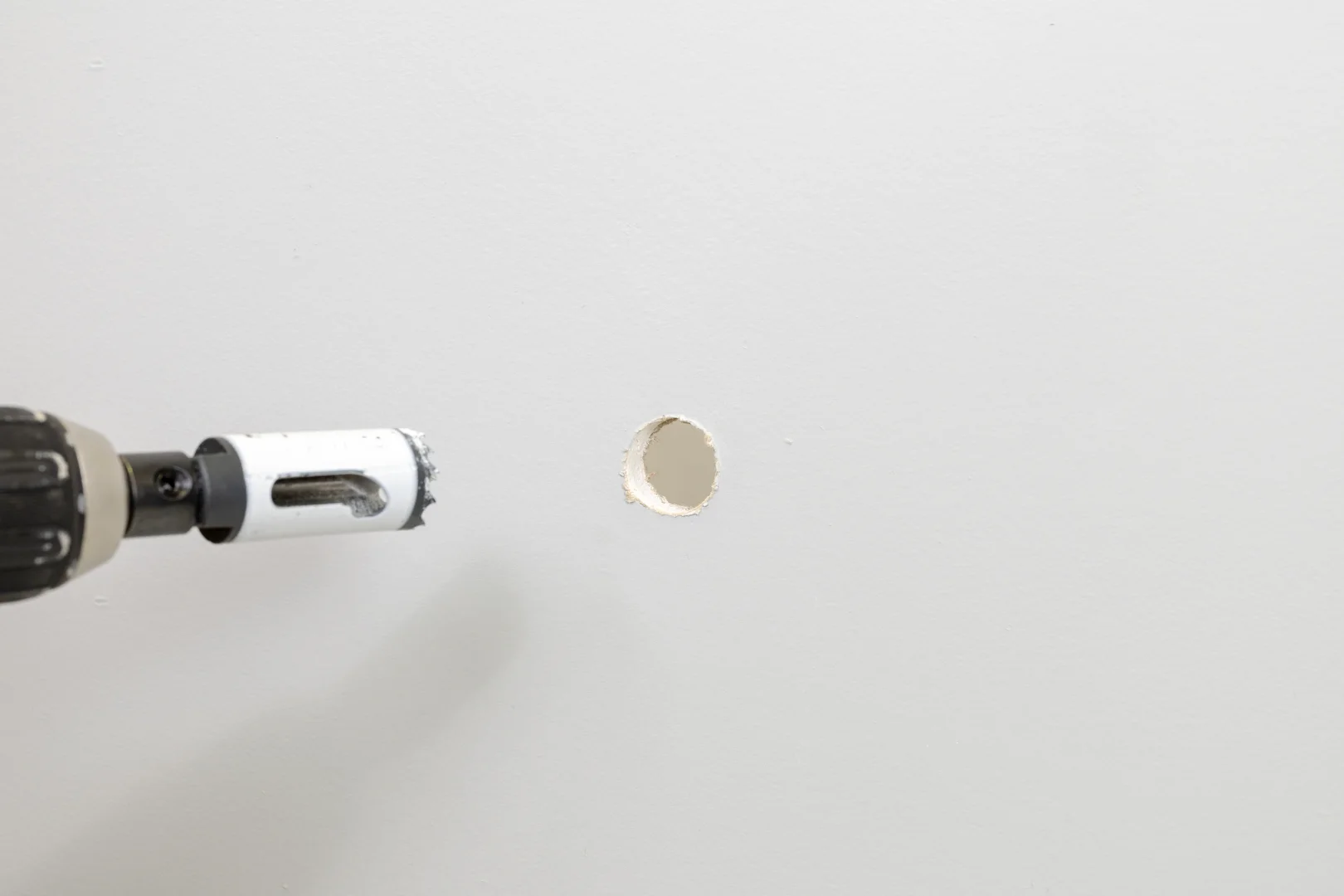
- Map the Wall Framing: Scan the wall using an electronic stud finder. Standard residential wall studs are spaced 16 inches or 24 inches on center. If your shelf brackets line up with studs, drive structural screws into the wood. If your shelf layout lands over hollow wall cavities, mark your anchor locations.
- Level and Mark Bracket Centers: Hold your shelving bracket against the wall. Place a torpedo level on the bracket arm to confirm vertical and horizontal alignment. Mark the exact centers of the mounting holes using a pencil.
- Verify Anchor Spacing: Maintain a minimum distance of at least 4 inches between adjacent hollow wall anchors. Placing high-capacity anchors too close together overlaps their stress cones in the gypsum core, weakening the drywall between the holes.
- Cut Clean Pilot Openings: For standard toggles, drill the exact diameter specified on the package. For wide-plate load distributors, chuck the specified hole saw (1-inch for GS1, 2-inch for GS2) into your drill. Cut through the drywall smoothly at moderate drill speed without pushing so hard that you blow out the paper on the back of the panel.
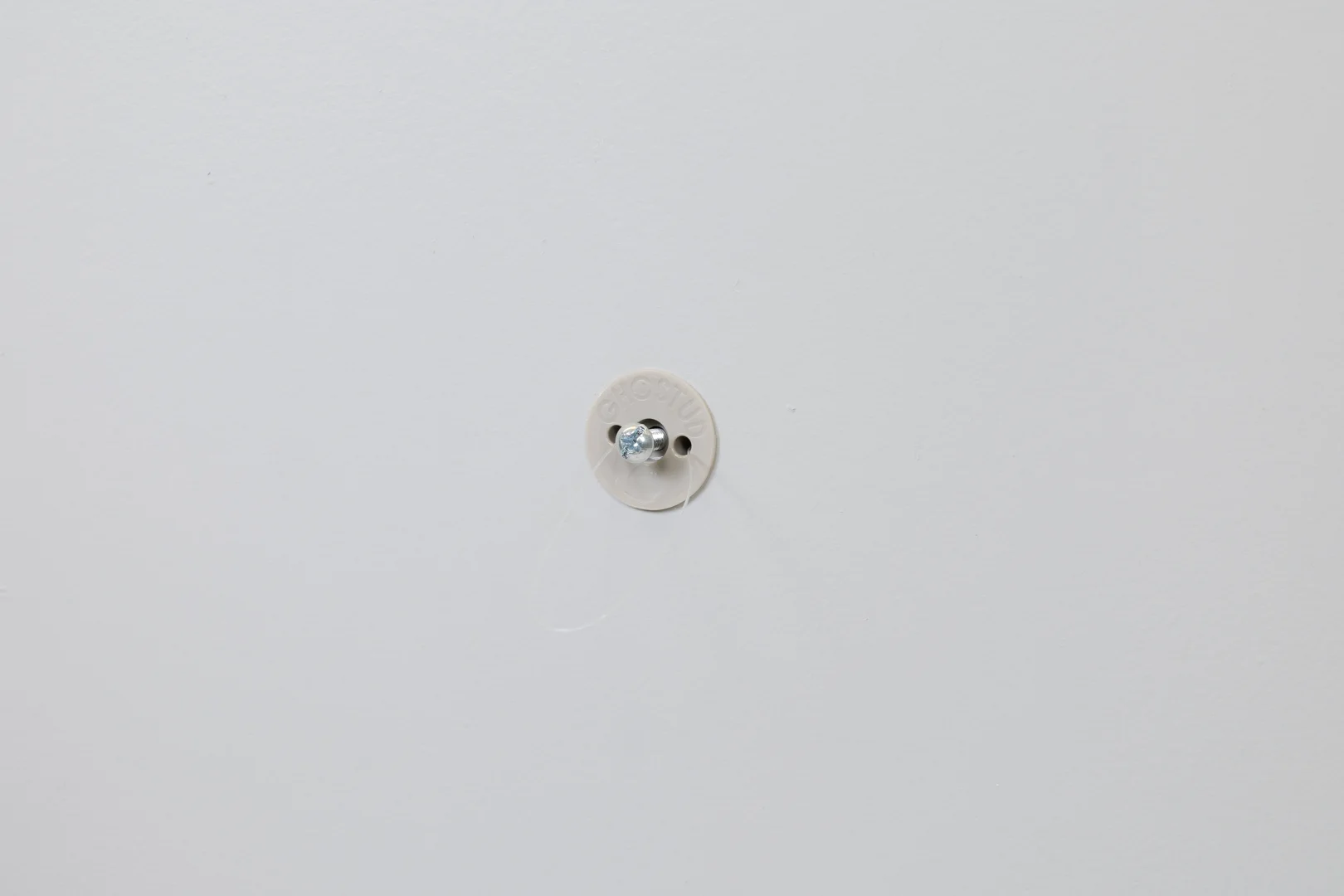
- Insert and Secure the Anchor: Insert the anchor body through the hole according to the product guidelines. Ensure the internal backing plate sits flat against the rear drywall surface.
- Fasten the Bracket: Align the shelf bracket over the anchor face. Drive the mounting bolt until the bracket sits completely flush and firm against the wall. Tighten with a hand screwdriver to avoid stripping the threads or compressing the face paper of the sheetrock.
Common Installation Mistakes That Cause Wall Failure
- Overtightening Fasteners: Driving screws with a high-torque impact driver often strips the fastener or crushes the inner gypsum core. Once the gypsum pulverizes into loose dust inside the wall, the anchor loses its structural backing.
- Using Drill Bits That Are Too Large: Drilling an oversized pilot hole allows the collar of expansion plugs or self-drilling anchors to shift and wobble under load, accelerating tensile pull-out.
- Ignoring the Cantilever Multiplier: Sizing anchors based solely on the total weight of the shelf without calculating shelf depth. An anchor rated for 50 pounds of vertical shear will quickly fail if subjected to an outward 50-pound tensile pull generated by a 12-inch deep shelf.
- Mounting Brackets Out of Plumb: If two wall brackets are not level, one bracket carries the majority of the shelf’s mass. This uneven distribution overloads a single anchor point while the other remains underutilized.
Frequently Asked Questions About Shelving Drywall Anchors
Can drywall anchors alone support a heavy floating shelf?
Drywall anchors can support floating shelves if the anchors provide high pull-out resistance and you distribute the load across multiple points along the wall. Floating shelves place severe outward pull on upper fasteners because they lack diagonal support struts. Use heavy-duty toggle bolts or high-capacity load-distributing anchors, apply a strict 4:1 safety margin, and ensure the shelf bracket provides at least 2 to 3 inches of vertical mounting flange height against the wall.
What size hole saw or drill bit is required for heavy shelf anchors?
Standard metal spring toggles typically require a 3/8-inch to 3/4-inch drill bit depending on bolt diameter. For heavy-duty load-spreading anchors, use a 1-inch hole saw for anchors in the GS1 class (up to 250 lb in 1/2 in or 5/8 in drywall) or a 2-inch hole saw for anchors in the GS2 class (up to 1,000 lb shear in 1/2 in or 5/8 in drywall). Always use a sharp, dedicated hole saw to cut crisp drywall circles without tearing the exterior paper facing.
Can heavy shelf wall anchors be removed and reused?
Standard spring-wing toggles cannot be reused because the internal wings drop down into the wall cavity when the screw is removed. High-capacity radial plate systems remain fixed in place within the wall cavity, allowing you to remove the mounting bolt, adjust or replace your shelf bracket, and re-thread the bolt without losing anchor positioning. Because these high-capacity systems require 1-inch or 2-inch holes, they are permanent fixtures rather than temporary or renter-friendly hardware; removing them entirely requires patching the hole with a drywall repair clip, joint compound, and paint.
Conclusion
Securing a heavy shelf to drywall requires planning for both downward shear and horizontal pull-out torque. For the safest installation, always secure brackets into solid wall studs whenever framing lines up with your design. When mounting into hollow drywall cavities, avoid basic plastic expansion plugs and match your hardware to the depth and intended load of your shelf. Using heavy-duty toggle hardware or patented, load-distributing anchors made from 100% recycled plastic allows you to spread forces across a broad area of the drywall, ensuring your shelves stay secure under heavy daily use.