
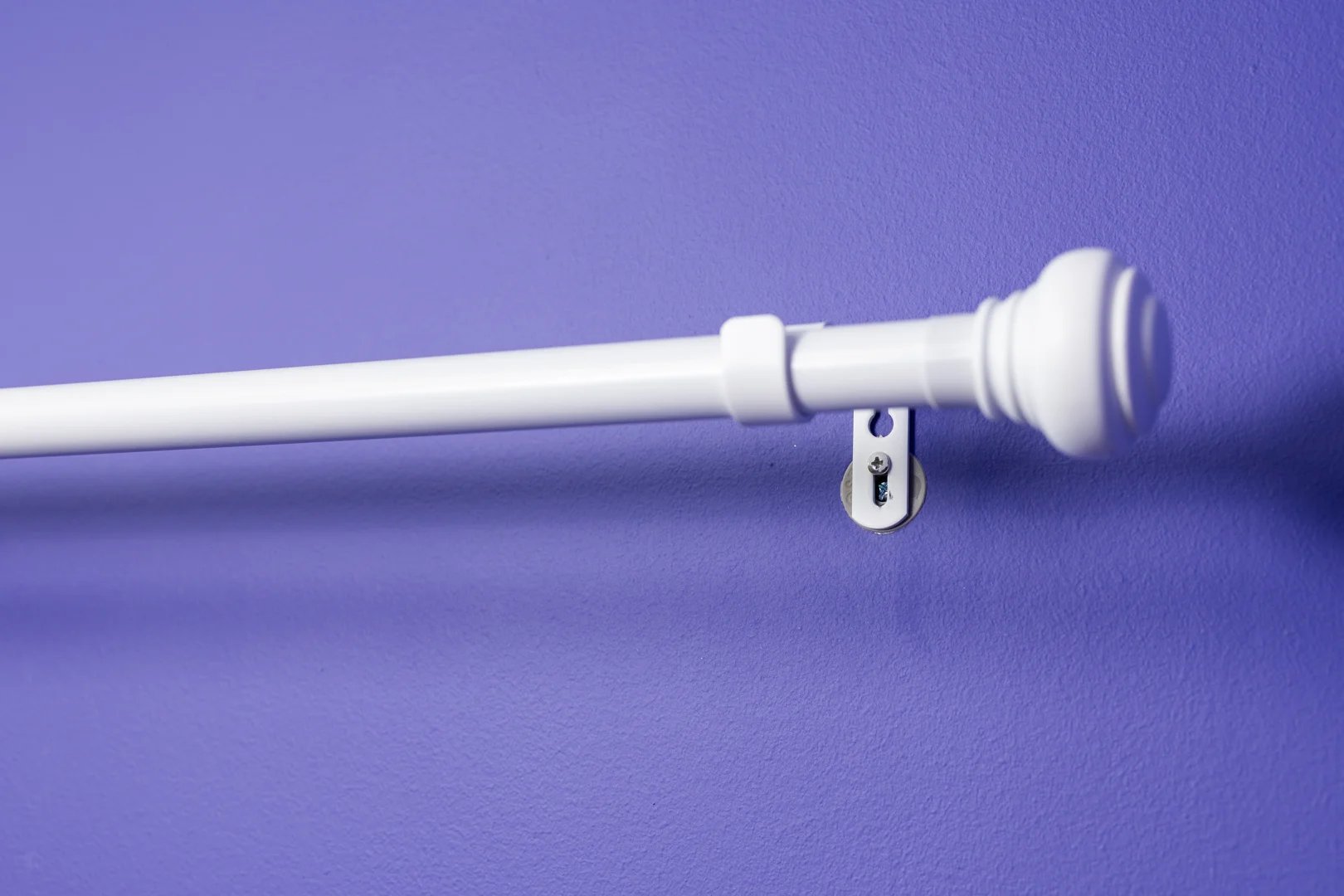
Beginner’s Guide to Best Drywall Anchors for Curtain Rods
Why Standard Drywall Anchors Fail on Curtain Rods
The best drywall anchors for curtain rods depend on total drapery weight: self-drilling threaded anchors suit lightweight curtains under 15 pounds, while steel toggle bolts or strap toggles are necessary for medium to heavy blackout drapes between 15 and 50 pounds. Selecting the correct anchor mechanics prevents wall blowouts caused by bracket leverage.
Drywall is composed of a gypsum plaster core pressed between paper facings. A direct screw driven into 1/2-inch gypsum provides roughly 5 pounds of holding power before the gypsum threads strip out. Curtain installations fail because of how bracket geometry interacts with this brittle core.
A curtain rod bracket projects 2 to 4 inches away from the wall surface. This projection acts as a lever arm. When you hang drapery, the downward weight transfers through the bracket and creates a fulcrum against the bottom edge of the mounting plate. This mechanic creates two simultaneous forces:
- Vertical Shear Force: The downward gravitational pull of the fabric, finials, and rod.
- Outward Pull-Out Tension: The top mounting screw experiences horizontal tension pulling directly away from the wall cavity.
Standard plastic expansion plugs (such as the smooth or ribbed conical sleeves included in retail curtain rod kits) rely purely on friction against the gypsum hole. They are designed primarily for flush, static shear loads like small picture frames.
When you pull or draw curtains closed, you introduce dynamic shock loads. Dynamic cycling pulls the top screw outward, crushing the chalky gypsum core inside the hole. Once the drywall core fractures, the friction fit collapses, causing the anchor to back out and leave a blowout crater in the wall.
Best Drywall Anchors for Curtain Rods: Top Hardware Options
Selecting the right hardware requires matching the anchor mechanics to the dynamic load and drywall thickness (standard interior residential walls use 1/2-inch drywall, while fire-rated walls and sound-insulated assemblies often use 5/8-inch board).
| Drywall Anchor Type | Typical Mechanism | Holding Capacity (1/2″ or 5/8″ Drywall)* | Recommended Curtain Weight & Application |
|---|---|---|---|
| Plastic Expansion Sleeves | Friction grip inside drilled hole | 5–15 lb (Static shear only) | Ultra-light sheer fabrics, small café rods (< 5 lb total) |
| Self-Drilling / Threaded (Nylon or Zinc) | Wide external threads bite into drywall core | 50–75 lb (Static shear) | Lightweight linens, single-rod sheer or cotton panels (< 15 lb total) |
| Molly Bolts (Sleeve Anchors) | Metal legs expand against back of drywall | 25–50 lb (Shear / moderate tension) | Medium-weight drapery, standard double rods (15–25 lb total) |
| Steel Toggle / Strap Bolts | Metal channel / spring wings spread load over rear wall surface | 45–65+ lb (High shear & pull-out resistance) | Heavy blackout curtains, velvet drapes, wide spans (25–50+ lb total) |
| High-Capacity Plate Anchors | Wide backplate mechanical clamping | Up to 250 lb – 1,000 lb shear | Commercial-grade velvet, multi-layer drapes, ultra-wide heavy assemblies |
*Note: Published ratings denote vertical shear capacity under static laboratory testing. Cantilevered bracket projection and dynamic pulling reduce working load safety margins. Always apply a 2x safety factor.
Light to Medium Drapery: Self-Drilling and Expansion Anchors
For lightweight drapery installations (under 10 to 15 pounds total), self-drilling anchors—constructed from glass-filled nylon or cast zinc—offer a fast, reliable installation.
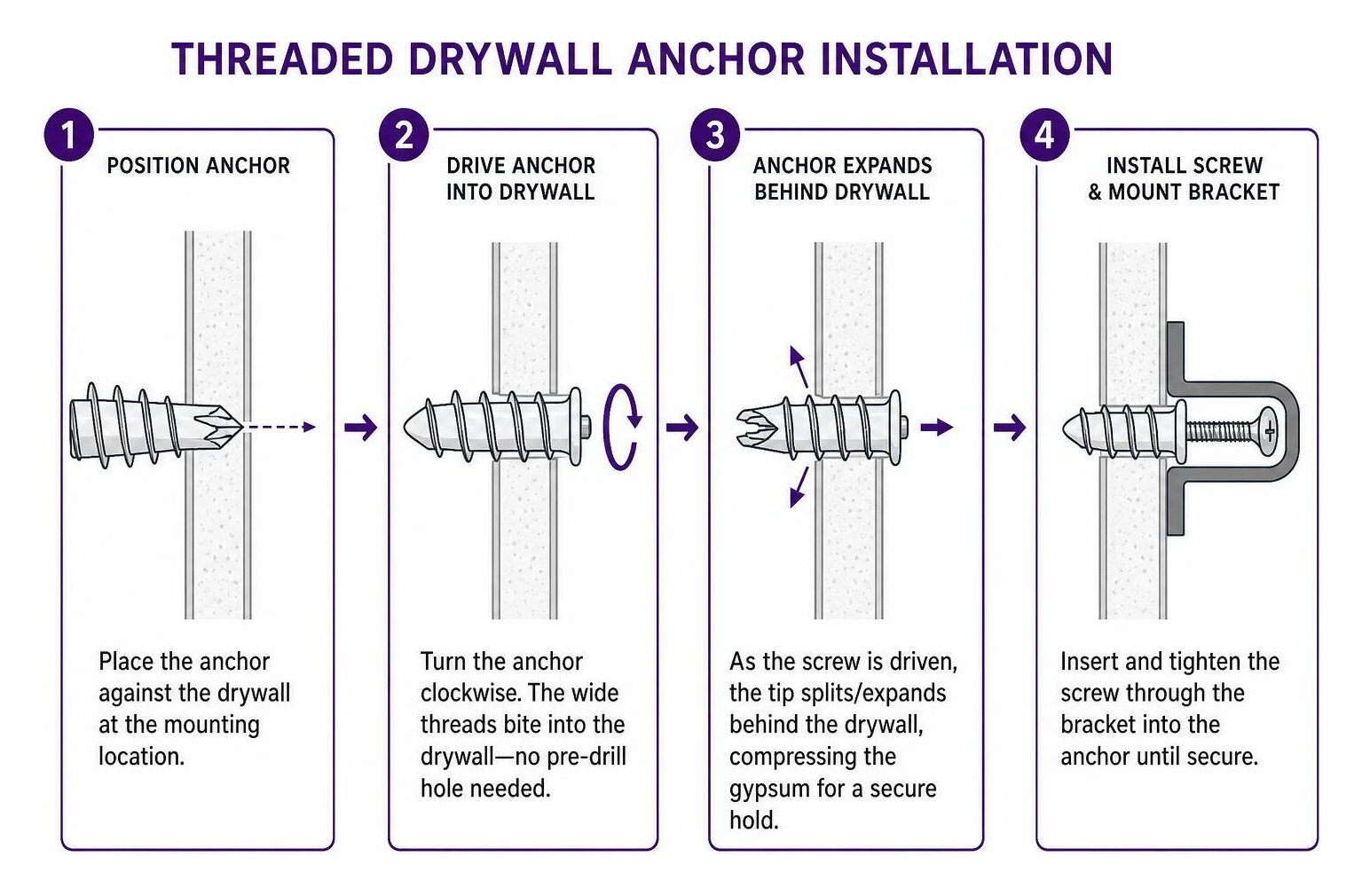
These fasteners utilize coarse exterior threads that tap directly into the gypsum board without requiring a pre-drilled pilot hole. As the included mounting screw is driven into the anchor body, the inner mechanism forces the anchor tip to split or expand slightly behind the board, placing the gypsum in compression.
Use these for:
- Sheer linen curtains
- Single curtain rods under 60 inches wide
- Low-traffic guest rooms or decorative side panels
Limitation: Avoid using threaded self-drilling anchors for heavy blackout fabrics, long extended spans, or households with small children or pets where dynamic tugging can strip the gypsum threads.
Heavy Blackout Drapes: Steel Toggle Bolts and Molly Fasteners
When hanging lined blackout curtains, thermal velvet panels, or heavy grommet drapes, the fastener must bear outward pull-out tension behind the wall board.
- Spring-Wing Toggle Bolts: A machine screw passes through the curtain bracket and threads into a spring-loaded metal wing. When pushed through a drilled clearance hole (typically 3/8-inch to 1/2-inch), the wings spring open inside the hollow wall cavity. Tightening the screw clamps the wings flat against the hidden back face of the drywall, spreading the pull-out force over several square inches.
- Solid Channel Strap Toggles: Similar to spring toggles, but use a solid steel channel positioned via plastic straps. This allows you to remove the bracket screw without losing the toggle channel inside the wall cavity.
- Molly Bolts (Hollow Wall Drive Anchors): These feature a slotted metal sleeve. As the screw is tightened, the metal sleeve collapses outward into four structural legs that seat firmly against the back of the drywall.
These fasteners provide structural clamping force, resisting both vertical shear and outward pull-out tension created by bracket leverage.
Ultra Heavy Assemblies: High-Capacity Load-Distributing Anchors
When supporting multi-layered custom drapery, motorized track assemblies, ceiling-mounted tracks, or wide double-bracket installations that exceed standard household weights, high-capacity load-distributing anchors provide maximum performance in hollow walls.
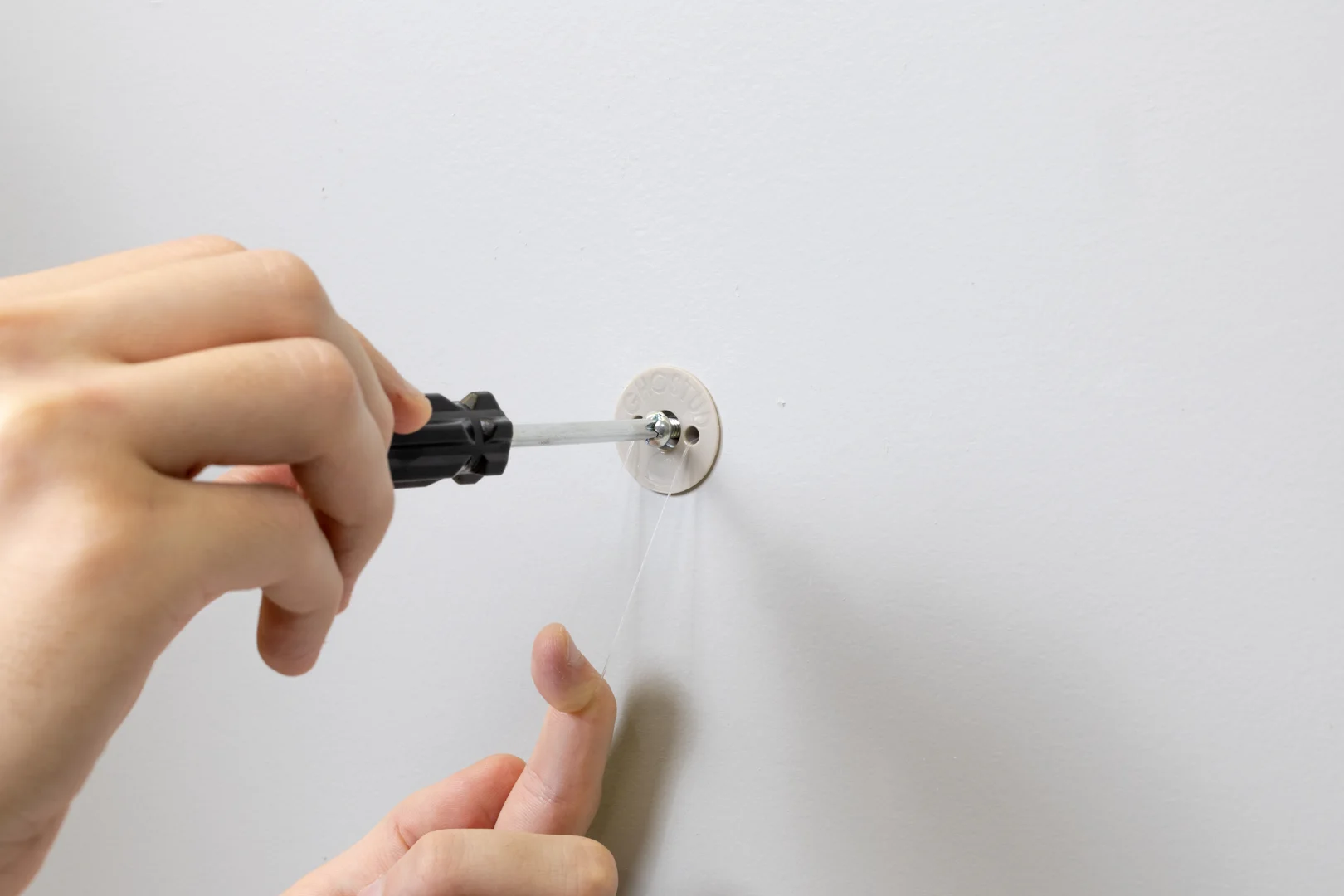
For installations on standard 1/2-inch or 5/8-inch drywall where solid wall studs are unavailable, our GS1 GhostUD Drywall Anchor provides up to 250 lb shear capacity using a 1-inch hole saw installation. For structural installations requiring extreme load handling, the GS2 anchor handles up to 1,000 lb shear in 1/2-inch or 5/8-inch drywall with a 2-inch hole saw profile.
Both systems are manufactured in the USA from 100% recycled structural plastic and utilize wide, load-distributing backplates that clamp drywall in multi-point compression.
When NOT to use high-capacity plate anchors: If a structural stud, window header, or top plate is located directly behind your bracket mark, do not cut large holes for drywall anchors. Drive a standard 2.5-inch construction screw directly into the wood framing. Additionally, high-capacity drywall anchors must never be used in plaster, lath, brick, masonry, or tile substrates.
How to Select Hardware for Your Window Treatments
Selecting the best drywall anchors for curtain rods requires calculating the total dead weight of the hardware and drapery, factoring in leverage, and inspecting the framing around the window opening.
Choosing the Best Drywall Anchors for Curtain Rods by Fabric Weight
Calculate your total installation load using these baselines:
- Curtain Rod & Hardware: Standard steel rods with decorative finials weigh between 3 and 8 pounds. Double-rod systems weigh up to 10–12 pounds.
- Fabric Panels:
- Lightweight sheers: 1 to 3 pounds per panel.
- Standard cotton/linen curtains: 3 to 7 pounds per panel.
- Lined blackout or heavy velvet drapes: 10 to 20+ pounds per panel.
- The 2x Safety Factor: Multiply your combined weight (rod + brackets + fabric) by two. If a double-rod setup with blackout curtains weighs 25 pounds, choose a mounting setup rated for at least 50 pounds total capacity to account for dynamic operation, wind resistance from open windows, and downward pulls.
Evaluating Stud Locations, Top Plates, and Bracket Spacing
Before drilling into hollow drywall, map out the underlying wall framing using a stud finder:
- King and Jack Studs: Windows are framed by vertical 2×4 studs on both sides of the rough opening. If you mount brackets 2 to 4 inches outside the window casing, check if shifting the bracket slightly allows you to hit the solid jack or king stud.
- Window Headers: Solid structural lumber (often doubled 2×6, 2×8, or 2×10 headers) spans directly above the window opening. Brackets mounted within 2 to 6 inches above the trim can often be fastened directly into solid wood with 2.5-inch wood screws, bypassing the need for hollow anchors.
- Top Plate Framing: In rooms where curtain rods are mounted high near the ceiling to create height, standard residential framing features a horizontal top plate consisting of approximately 2.5 to 3 inches of solid 2×4 framing. Driving a 2.5-inch screw upward at a slight angle through the top bracket hole catches solid framing.
- Bracket Spacing Rules: Always install a center support bracket if your curtain rod spans over 60 inches (5 feet) or for every 25 to 35 inches of heavy drapery span. A center support divides the total vertical shear load and prevents the middle of the rod from bowing.
Step-by-Step Installation Guide for Hollow Drywall
Follow this contractor-grade procedure to install heavy-duty hollow-wall anchors for curtain rod brackets.
Tools Required
- Measuring tape and spirit level (or 4-foot laser level)
- Pencil
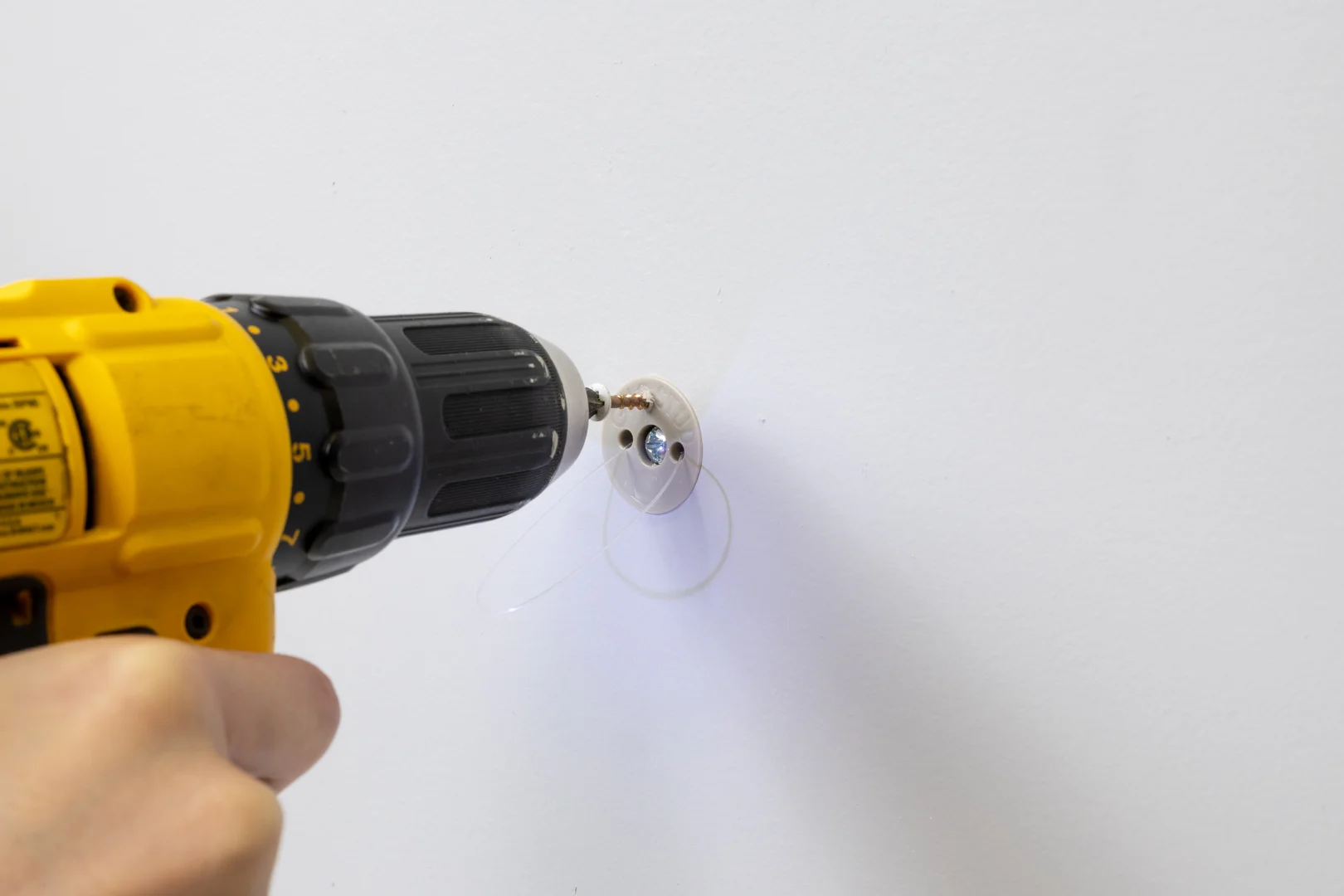
- Cordless drill with correct drill bit size (or hole saw per anchor instructions)
- Painter’s tape or dust collection envelope
- Screwdriver (Phillips or flathead, matching hardware)
- Selected drywall anchors and machine/wood screws
How to Install the Best Drywall Anchors for Curtain Rods Step-by-Step
- Measure and Mark Placement: Measure 4 to 8 inches above the window frame and 3 to 6 inches outward from each side of the casing. Hold the mounting bracket against the wall and use a spirit level to ensure the brackets are level across the span. Mark every bracket hole with a pencil.
- Check for Studs: Run a stud finder over the pencil marks. If solid wood framing is detected, pre-drill a 1/8-inch pilot hole and use 2.5-inch wood screws. If the wall is hollow, proceed with drywall anchor installation.
- Capture Dust: Place a folded strip of painter’s tape or an envelope directly below the drill mark to catch falling gypsum dust.
- Drill the Pilot Hole: Select the drill bit size specified on the anchor packaging (e.g., 5/16-inch for plastic toggles, 1/2-inch for steel strap toggles). Drill straight and perpendicular through the drywall. Do not wobble the drill bit, as an oversized hole weakens anchor retention.
- Set the Anchor:
- For Self-Drilling Anchors: Drive the anchor clockwise into the drywall with a hand screwdriver until the flange sits perfectly flush with the drywall face paper.
- For Toggle Bolts: Thread the machine screw through the curtain bracket mounting hole first, thread the spring toggle onto the screw end, compress the wings, and push the assembly completely through the drilled hole until the wings snap open in the wall cavity.
- For Solid Channel Toggles: Slide the metal channel through the hole, cinch the plastic faceplate tight against the front wall, snap off the excess straps, and position the bracket.
- Fasten the Bracket: Drive the screws into the installed anchors. Do not over-torque. Finish the last few turns using a manual hand screwdriver. Over-tightening with an impact driver or high-torque drill can crush the interior gypsum core or strip the fastener.
- Mount the Rod and Drapery: Place the curtain panels on the rod, set the rod into the mounted brackets, and tighten the bracket set screws securely to prevent the rod from sliding during daily operation.
Frequently Asked Questions About Curtain Rod Anchors
Can heavy curtain rods be mounted securely on drywall without hitting a stud?
Yes. Heavy curtain rods can be mounted in hollow drywall using heavy-duty mechanical anchors such as steel strap toggles, spring-wing toggle bolts, or load-distributing backplate anchors. These fasteners clamp behind the rear face of the drywall board, distributing vertical shear and outward pull-out tension across a broad surface area rather than relying on brittle core friction.
Why do screws pull out of drywall above windows?
Standard wood or drywall screws driven directly into hollow gypsum board hold only about 5 pounds of force. Curtain brackets project several inches away from the wall, turning the downward weight of the drapes into outward leverage. Daily drawing of the curtains crushes the soft gypsum core, stripping the screw threads and pulling the fastener out.
What is the difference between shear capacity and dynamic curtain pull force?
Shear capacity measures the vertical, downward weight an anchor can support when the load sits flush against the wall board. Dynamic curtain pull force includes outward leverage (tensile load) and sudden physical tugs when opening, closing, or pulling on fabric panels. Because dynamic outward forces compromise drywall faster than static downward weight, curtain hardware should always have a rated static capacity at least double the measured curtain weight.
Conclusion
Hanging curtain rods securely requires matching your mounting hardware to the real-world leverage forces exerted by window treatments. Whenever framing allows, drive screws directly into wall studs, headers, or the ceiling top plate. When mounting directly into hollow 1/2-inch or 5/8-inch drywall, avoid basic friction plugs in favor of mechanical clamping systems—such as toggle bolts, strap toggles, or patented load-distributed plate anchors—to prevent sagging rods and damaged walls.