
Choosing the Best Drywall Anchors for Floating Shelves
Use a stud when one is accessible and properly located. When evaluating the best drywall anchors for floating shelves on hollow drywall, choose screw-in anchors for a shallow decorative ledge, toggle bolts for a shelf with a moderate load, or a load-distributing anchor for heavier shelving. Check the shelf depth, the weight of the shelf and its contents, and the bracket’s fastener holes before you buy.
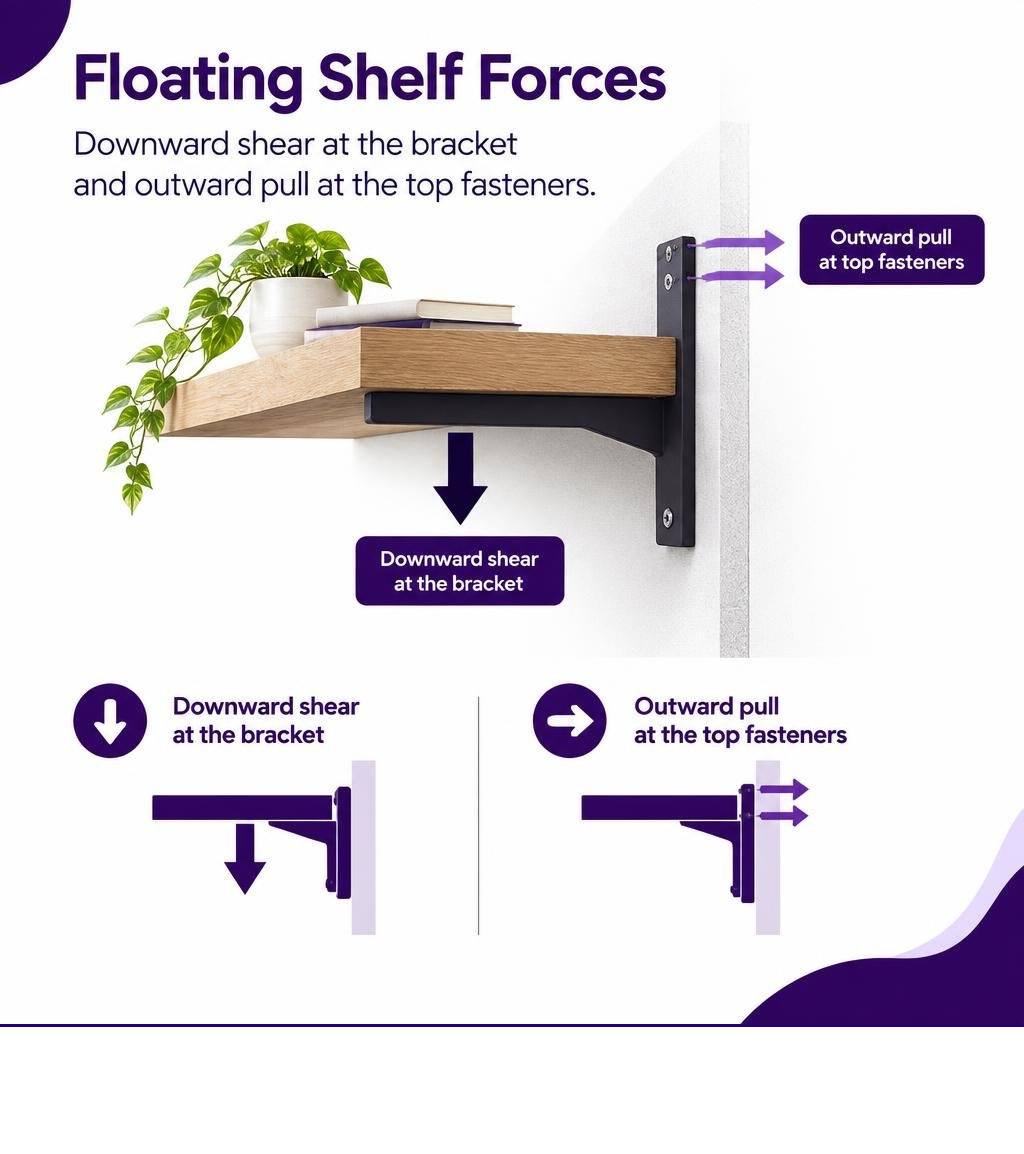
A floating shelf acts like a lever. Weight pushes down on the bracket and can pull its top fasteners outward, so a shear rating alone does not tell you how the mount will handle that force.
Load-distributing anchors are for 1/2-inch or 5/8-inch drywall only. For plaster, lath, concrete, masonry, brick, stucco, tile over backer board, or metal studs, choose a mounting solution made for that surface.
Understanding Floating Shelf Physics: Cantilever Torque and Gypsum Limits
A floating shelf does not behave like a flat picture frame. A picture frame hangs flush against the wall, applying almost pure downward shear force to a fastener. A floating shelf projects outward into the room, creating a cantilever arm that converts downward weight into rotational torque.
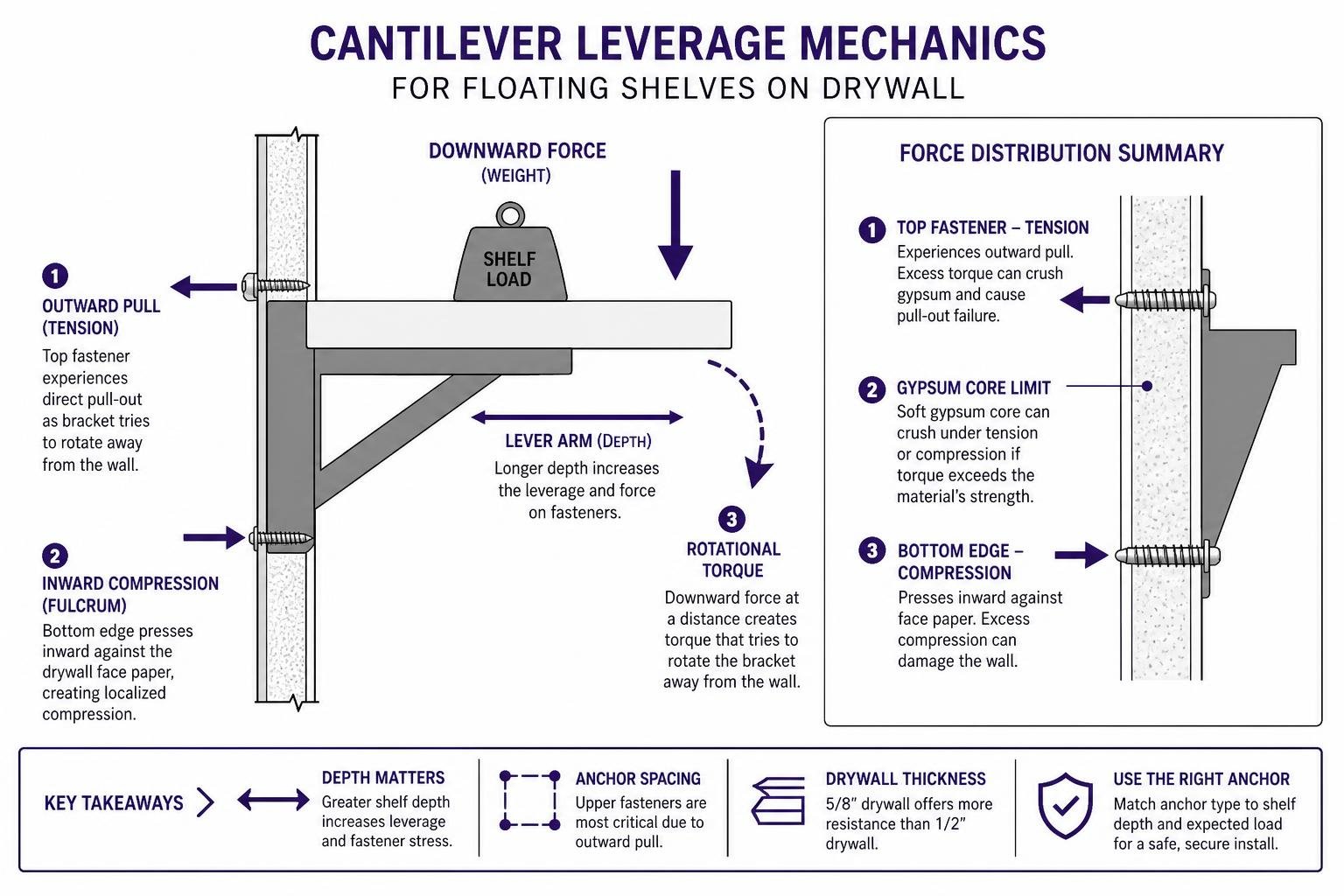
When you place items on a floating shelf, the shelf bracket acts as a class-one lever:
- The Top Fastener Acts in Tension: The top anchor experiences direct outward pull-out tension as the bracket tries to rotate away from the wall.
- The Bottom Edge Acts as a Fulcrum: The bottom edge of the bracket presses directly inward against the drywall face paper, creating localized compression.
- The Gypsum Core Limits the Load: Standard residential drywall consists of a soft gypsum core sandwiched between two paper facings. When rotational torque exceeds the paper’s tensile strength, the top anchor crushes the internal gypsum matrix. This causes catastrophic pull-out failure, leaving a crumbling crater in your wall.
Drywall thickness plays a direct role in structural capacity. Standard 1/2-inch drywall provides a baseline holding surface, whereas 5/8-inch drywall offers higher density and greater resistance to gypsum core crushing under inward compression. As shelf depth increases from 6 inches to 10 or 12 inches, the mechanical advantage of the lever doubles. This multiplies the tension on your upper fasteners even if the item weight stays constant. For detailed steps on preventing structural failure, see our guide on how to secure a heavy shelf without pull out failure.
How to Install Floating Shelf Wall Anchors in Drywall
Follow these step-by-step instructions to ensure a rigid, level installation on hollow drywall.
Tools and Materials Required
- Electronic stud finder
- 24-inch or 48-inch bubble level
- Cordless drill/driver
- Correctly sized drill bit or hole saw (e.g., 1-inch or 2-inch hole saw for GHOSTUD anchors)
- Hand screwdriver (for final fastener seating)
- Floating shelf bracket and shelf body
- Selected hollow-wall drywall anchors
Step-by-Step Installation Process
- Scan the Wall for Framing: Run your electronic stud finder along the planned mounting line. Mark any framing locations. Standard wood studs spaced at 16 inches on center provide 500 to 700 lb of shear strength per screw. Always secure at least one bracket point into a stud if your shelf alignment allows it.
- Mark the Level Line: Hold the floating shelf bracket against the wall at your desired height. Place a level on top of the bracket spine. Mark each mounting hole with a pencil. Follow proper leveling techniques for floating shelf installations to avoid tilted brackets.
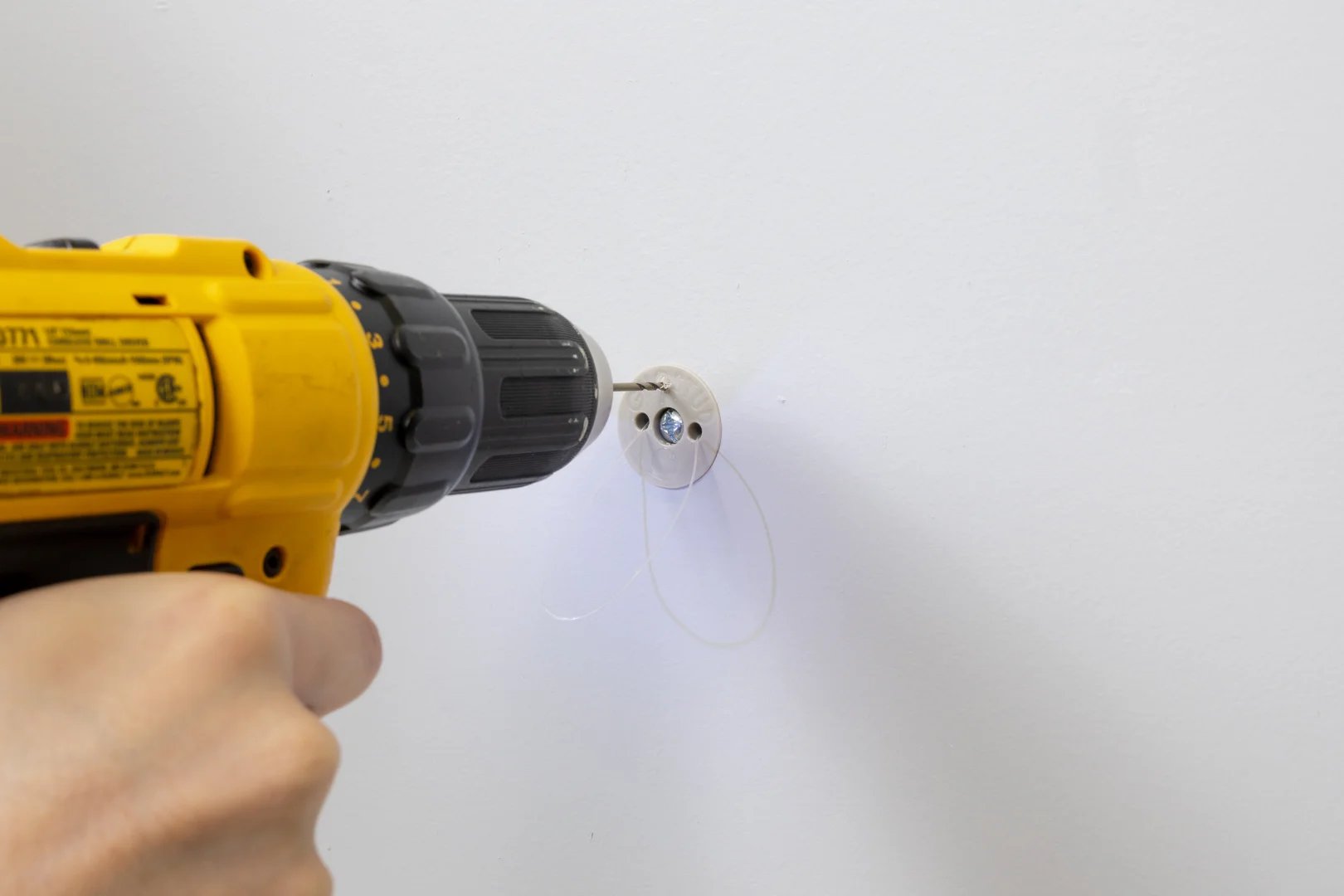
- Drill the Mounting Holes: Set your drill strictly perpendicular (90 degrees) to the drywall face. If using self-drilling anchors or toggle bolts, drill the exact pilot hole diameter specified by the manufacturer. If installing a GHOSTUD GS1, use a 1-inch hole saw; for a GS2, use a 2-inch hole saw. Do not wobble the drill bit, or you will ream an oversized hole and reduce the fastener’s grip.
- Insert the Anchors: Insert your chosen anchors into the drilled openings. Ensure the anchor collar sits completely flush against the drywall paper face.
- Align the Bracket: Position the bracket holes directly over the installed anchors. Thread the machine screws or mounting fasteners through the bracket and into the anchor bodies.
- Tighten Fasteners Carefully: Drive the screws using moderate speed. Finish tightening by hand with a manual screwdriver. Stop turning as soon as the bracket sits tight against the wall. Overtightening with an impact driver will strip the anchor threads or crush the drywall core.
- Slide and Secure the Shelf: Slide the shelf body onto the bracket support rods. Secure the shelf to the bracket using the set screws provided on the underside of the shelf.
The Best Drywall Anchors for Floating Shelves: Ranked by Load Capacity
Selecting the right fastener requires matching the anchor mechanics to your shelf’s depth and intended load. Review our drywall anchor guide to match fastener types with your wall conditions before drilling.
| Anchor Type | Drywall Condition | Shear Rating (Downwards) | Pull-Out Tension Resistance | Hole Size Required | Max Recommended Shelf Depth |
|---|---|---|---|---|---|
| Zinc Self-Drilling Anchor | 1/2 in Drywall | Up to 50–75 lb | Low (10–15 lb) | None (Self-drills) | 4 inches |
| Steel Spring Toggle Bolt (1/4 in) | 1/2 in Drywall | Up to 90–150 lb | Moderate (30–50 lb) | 5/8 in | 8 inches |
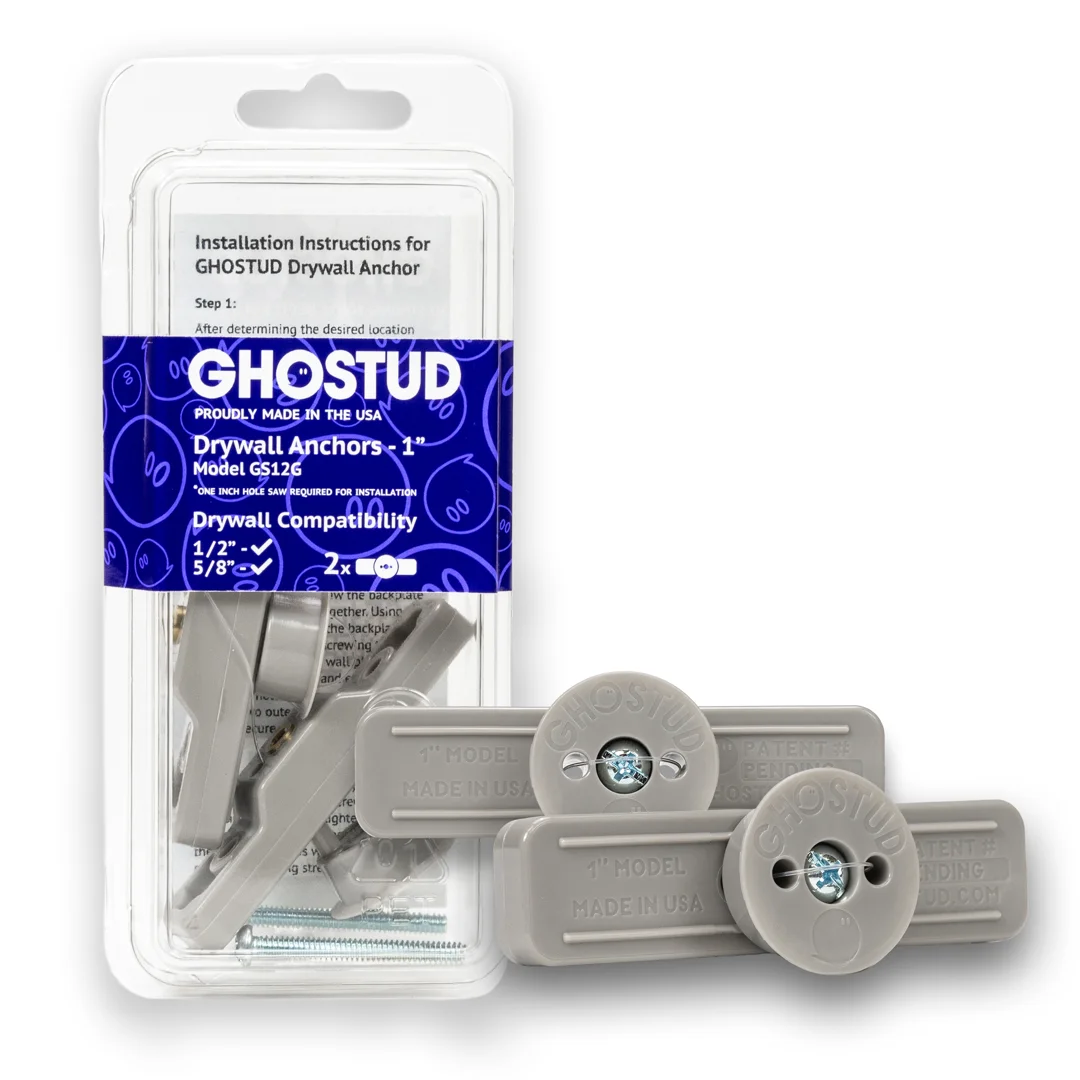
| GHOSTUD GS1 | 1/2 in or 5/8 in Drywall | Up to 250 lb | High | 1 in (Hole saw) | 8 inches |
| GHOSTUD GS2 | 1/2 in or 5/8 in Drywall | Up to 1,000 lb shear | High | 2 in (Hole saw) | 12 inches |
Note: The GHOSTUD GS2 rating of 1,000 lb is a shear rating in 1/2 in or 5/8 in drywall, not a pull-out rating. Pull-out capacity depends on rotational leverage and shelf depth.
Mounting something heavy where there’s no stud? GHOSTUD® spreads the load across the drywall with a wide backplate instead of relying on the gypsum core. GS1 holds up to 250 lb shear, GS2 up to 1,000 lb. Made in the USA from recycled structural plastic. Shop GHOSTUD® from $16.99 →
Light-Duty Screw-In Anchors for Shallow Ledges
Zinc self-drilling anchors cut their own threads directly into the drywall gypsum core.
These anchors install fast using a standard Phillips screwdriver. However, their coarse external threads rely solely on the brittle gypsum matrix for retention. They work well for shallow picture ledges (under 4 inches deep) holding lightweight frames under 10 lb total. Do not use them on deep shelves or for storing heavy objects, as cantilever torque will pull the entire zinc body straight out of the wall.
Steel Toggle Bolts: Best Drywall Anchors for Floating Shelves with Moderate Weight
Traditional spring-wing toggle bolts clamp a broad metal wing against the rear paper face of the drywall. When tightened, the wing spreads the clamping force across a larger surface area than screw-in plugs. Learn more about how to anchor a shelf without studs.
Toggle bolts support moderate static loads on floating shelves up to 8 inches deep. Their primary limitation involves installation logistics and hole clearance:
- They require drilling a wide 1/2-inch to 5/8-inch hole to feed the folded wings through the wall.
- You must assemble the bolt through the bracket before inserting the wings into the wall.
- If you remove the bolt, the spring wing drops permanently inside the wall cavity.
- Cyclic loading or shelf vibration can cause the thin metal wings to wear into the back paper face over time.
High-Capacity Structural Anchors: Best Drywall Anchors for Floating Shelves Holding Heavy Loads
When you need to hang floating shelves holding books, dinnerware, or heavy decor without hitting studs, load-distributing structural anchors provide the highest holding power.
GHOSTUD manufactures patented, load-distributed drywall anchors engineered to transfer weight away from the weak hole edge:
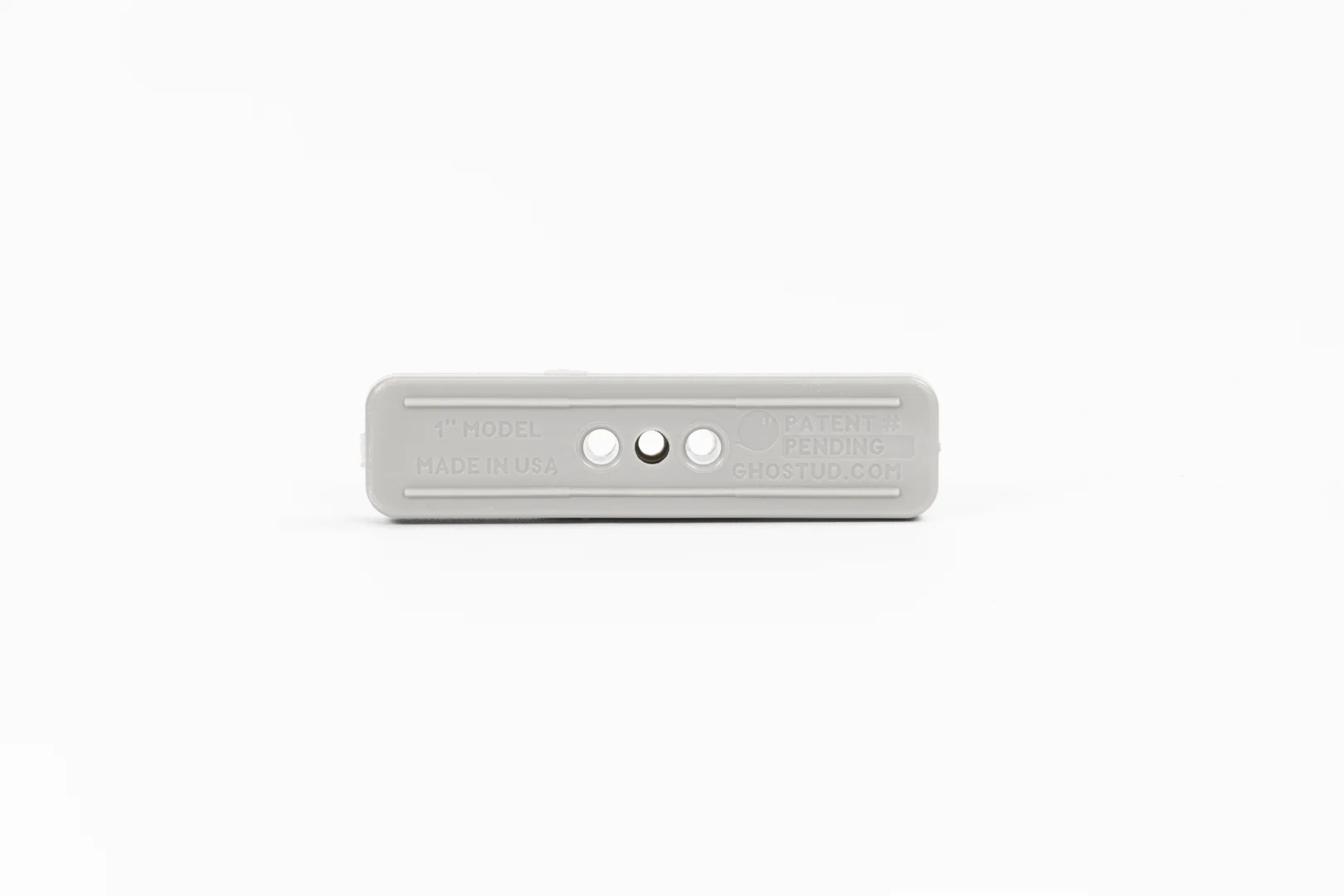
- GHOSTUD GS1: Installs using a 1-inch hole saw. Rated up to 250 lb in 1/2-inch or 5/8-inch drywall. Designed for towel bars, curtain rods, toilet paper holders, picture frames, and light shelving.
- GHOSTUD GS2: Installs using a 2-inch hole saw. Rated up to 1,000 lb shear in 1/2-inch or 5/8-inch drywall. Engineered for TVs, cabinets, mirrors, and heavy shelving.
Both GS1 and GS2 anchors are manufactured in the USA from 100% recycled material and sold in 2-packs and 20-packs. Unlike point-contact anchors that crush drywall under cantilever leverage, our system uses an internal support structure that sandwiches the gypsum core between solid front and rear plates.
Engineering Clarity on Ratings: Please note that the 1,000 lb rating on the GS2 is strictly a downward shear rating under static loading in 1/2 in or 5/8 in drywall. Cantilever pull-out force is distributed across the broad backing plate to resist rotational torque. Read our guide where drywall anchor shear ratings are explained for full structural details.
GHOSTUD Trade-offs: Our anchors require cutting a 1-inch or 2-inch hole with a hole saw, carry a higher cost per unit than commodity fasteners, and create an intentional, permanent structural mount. For more on selecting the right anchor for your wall, see our guides.
Wall Types, Edge Cases, and When to Avoid Drywall Anchors
Drywall anchors are built for specific scenarios, but they are not universal fasteners. Recognize the limits of your wall before mounting.
Explicit Cases Where GHOSTUD is the Wrong Choice
- A Wood Stud is Accessible: If an accessible wood stud sits directly behind your shelf bracket mounting hole, drive a 2.5-inch or 3-inch structural wood screw straight into the framing. Never use a hollow-wall anchor in place of a solid stud.
- Loads Under 5 Pounds: For very light picture frames or 2-inch shallow ledges holding small plastic items, standard lightweight plastic anchors or small nails are sufficient.
Incompatible Wall Surfaces: GHOSTUD anchors are designed exclusively for 1/2-inch or 5/8-inch drywall. Do not use GHOSTUD on:
- Plaster and lath
- Solid concrete, poured masonry, or brick
- Stucco
- Tile installed over cement backer board
- Hollow metal commercial studs
If you have plaster, masonry, or tile walls, use specialized masonry sleeve anchors, tapcons, or plaster-rated toggle assemblies instead.
Prohibited Safety Applications
Do not use drywall anchors—including GHOSTUD products—for grab bars, handrails, safety rails, ADA applications, aging-in-place modifications, fall prevention, or any application where human body weight will rest on or be caught by the fixture. Do not use drywall anchors for anti-tip furniture safety straps. Safety hardware must anchor directly into solid structural wood framing.
Frequently Asked Questions About Floating Shelf Anchors
Can you safely hang floating shelves on drywall without studs?
Yes, provided you account for the shelf depth and use appropriate hollow-wall fasteners. For deep shelves (8 to 12 inches) or loads exceeding 20 lb, use heavy-duty toggle bolts or GHOSTUD load-distributing anchors. For shelves holding lightweight items under 10 lb on shallow ledges, zinc self-drilling anchors are sufficient. Always secure into a stud when one is accessible and properly located.
Why do standard plastic expansion plugs fail on floating shelves?
Standard plastic expansion plugs are designed primarily for solid masonry or concrete, where the plug expands outward against solid material. In hollow drywall, there is no solid backing. The rotational torque of a floating shelf bracket pulls the smooth plastic sleeve straight out of the soft gypsum core, stripping the hole.
How many anchors are needed to secure a floating shelf bracket?
Use at least two anchors for floating shelves up to 24 inches long. For brackets spanning 36 to 48 inches, install at least three to four anchors spaced evenly across the mounting plate. Placing an anchor near the top-center of the bracket prevents the bracket spine from flexing outward under load.
Conclusion
Mounting floating shelves securely depends on matching your hardware to shelf depth, total weight, and wall material. Check your wall thickness, locate any available framing with a stud finder, and calculate the total load including your shelf contents.
Ready to plan your wall layout? Take your stud finder to the wall, mark your stud centers, and choose the right structural fastener for your hollow spans. For a comprehensive walkthrough on mounting without framing, read our complete guide on floating shelves without studs.
Mount it once, mount it right. Compare GS1 and GS2 →