
Choose the Right Drywall Screw for the Job
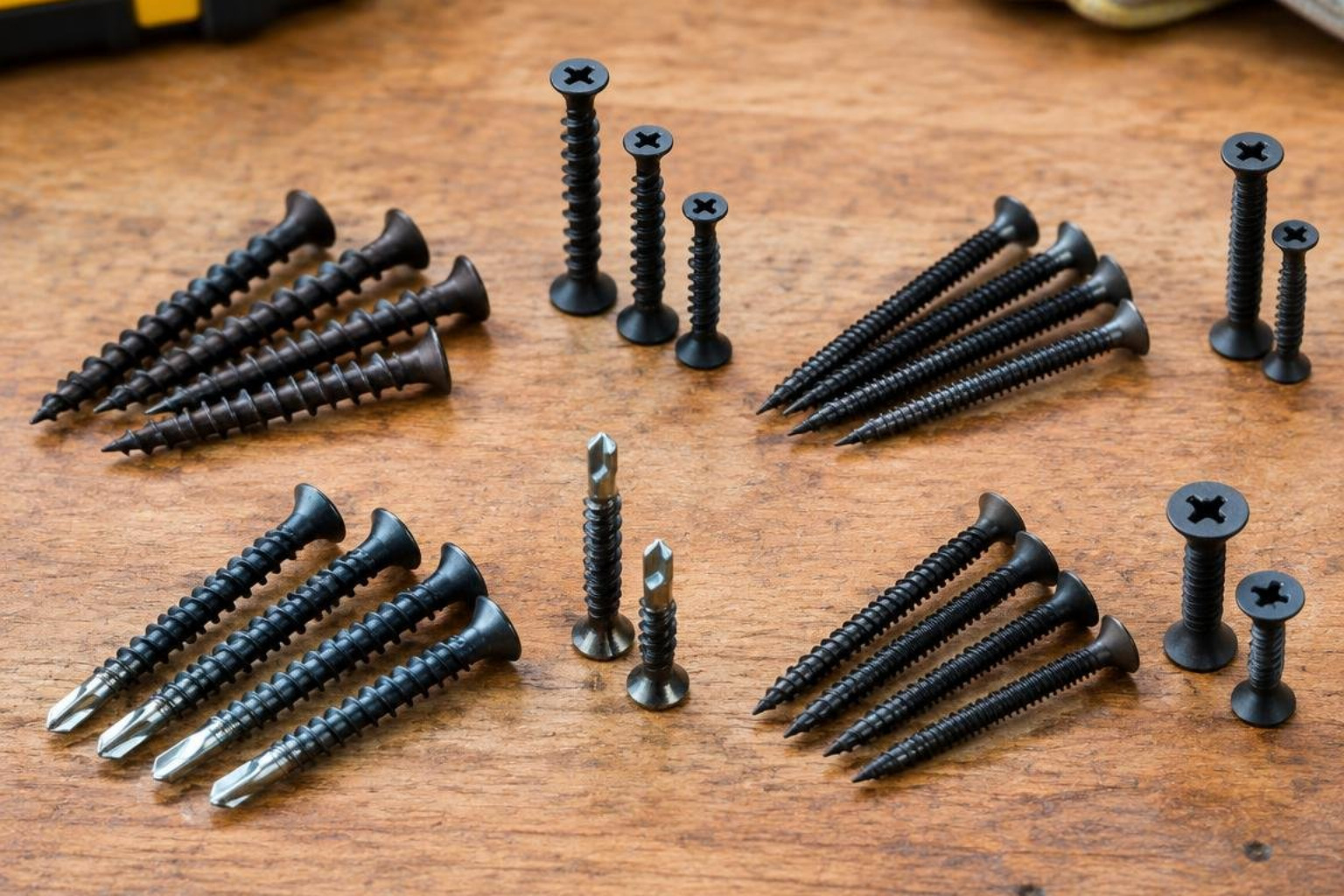
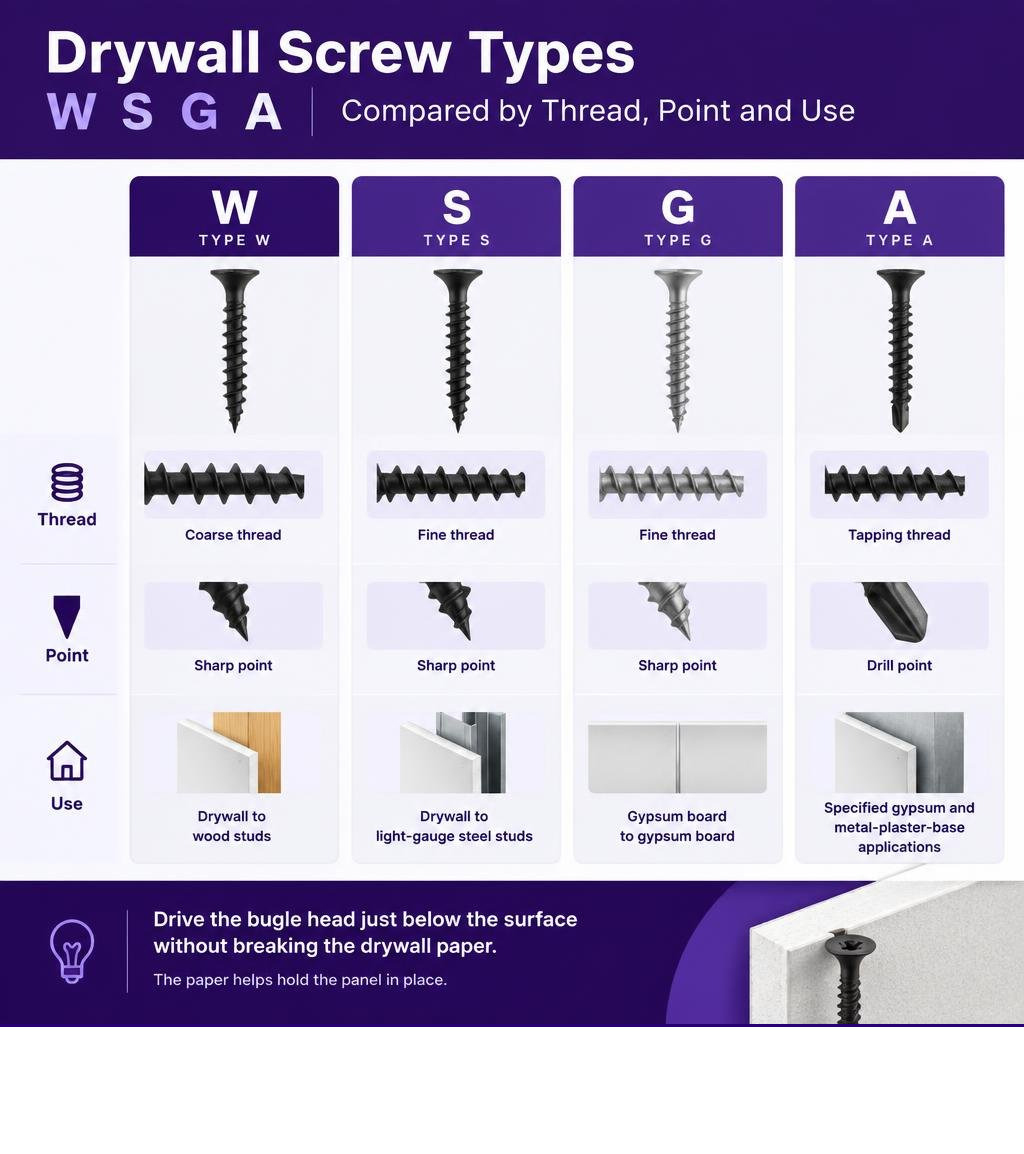
Match the screw to what you are fastening. Use coarse-thread Type W screws for drywall on wood studs and fine-thread Type S screws for drywall on light-gauge steel studs. Type G screws join gypsum board to gypsum board. Type A is a tapping-thread screw for specified gypsum and metal-plaster-base applications, not the usual choice for hanging drywall.
Check the point, too. A sharp point pierces thin steel; a drill point is made for thicker steel. Whichever screw you choose, drive its bugle head just below the surface without breaking the drywall paper. That paper helps hold the panel in place.
Improper fastener selection causes real headaches. A standard drywall screw provides 310 to 380 lb of withdrawal resistance in framing members, which is roughly 30% more holding power than traditional ring-shank nails. Knowing how different types of drywall screws interact with wood and steel framing ensures dependable holding power right from the start.
Breaking Down the Different Types of Drywall Screws by Thread and Design
A drywall screw is purpose-built to hang gypsum panels without crushing the gypsum core or slicing through the structural face paper. Unlike standard wood or construction screws, drywall screws feature a distinct bugle head with a concave, curved transition from the shaft to the top edge. This shape distributes seating pressure outward, depressing the paper smoothly into a dimple rather than cutting it like a flat countersunk head would.
Manufacturers produce these fasteners from high-carbon steel (such as C1022 case-hardened steel). Instead of cutting threads into the shank, machines roll the steel cold. Cold-rolling preserves grain continuity, giving the threads higher tensile strength and dependable advancement through framing substrates.
Main ASTM Standards and Different Types of Drywall Screws (Type W, S, G, and A)
Fasteners intended for gypsum board are categorized under industry standards like ASTM C1002. Understanding these designations ensures you pick the right screw for your specific framing material. Reviewing verified ASTM C1002 drywall screw specifications helps align your work with residential and commercial building codes.
| ASTM Type | Primary Substrate | Thread Pitch | Point Style | Common Applications |
|---|---|---|---|---|
| Type W | Wood studs & joists | Coarse (wide pitch) | Sharp piercing point | Residential walls, ceiling drywall, framing lumber |
| Type S | Light metal studs (25–22 ga) | Fine (tight pitch) | Sharp piercing point | Commercial interior partitions, metal-framed chases |
| Type G | Gypsum to gypsum | Deep, high thread | Sharp piercing point | Multi-layer soundproofing, laminating double drywall |
| Type A | Metal plaster bases | Sheet-metal tapping | Gimlet / Tapping | Specialized plaster bases, architectural trims |
Mounting something heavy where there’s no stud? GHOSTUD® spreads the load across the drywall with a wide backplate instead of relying on the gypsum core. GS1 holds up to 250 lb shear, GS2 up to 1,000 lb. Made in the USA from recycled structural plastic. Shop GHOSTUD® from $16.99 →
- Type W (Wood): Built with coarse, widely spaced threads that dig deep into softwood fibers. The deep valleys between threads give wood fibers room to expand and lock the shank in place.
- Type S (Steel): Designed with fine threads spaced close together. This tight thread pitch prevents stripped steel framing when securing panels to thin metal keels.
- Type G (Gypsum-to-Gypsum): Features high, deeply cut threads specifically configured to grip the powdery gypsum core when laminating two drywall layers together without entering framing behind them.
- Type A (Tapping): A specialized tapping-thread screw engineered for specific gypsum assemblies and metal-plaster base systems.
Thread Pitch and Point Styles: Sharp-Point vs. Self-Drilling
Thread geometry determines advancement speed and how firmly the screw bites into the framing. Fine-thread drywall screws feature 30% to 50% more threads per inch than coarse-thread variants. This higher thread density distributes mechanical load across multiple points on thin steel flanges without stripping out the pilot hole.
For specialized tasks, Hi-Low double-pitch thread screws combine alternating high and low thread crests. This dual-pitch profile reduces driving friction, speeding up installation by roughly 20% while providing balanced grip in mixed-density materials.
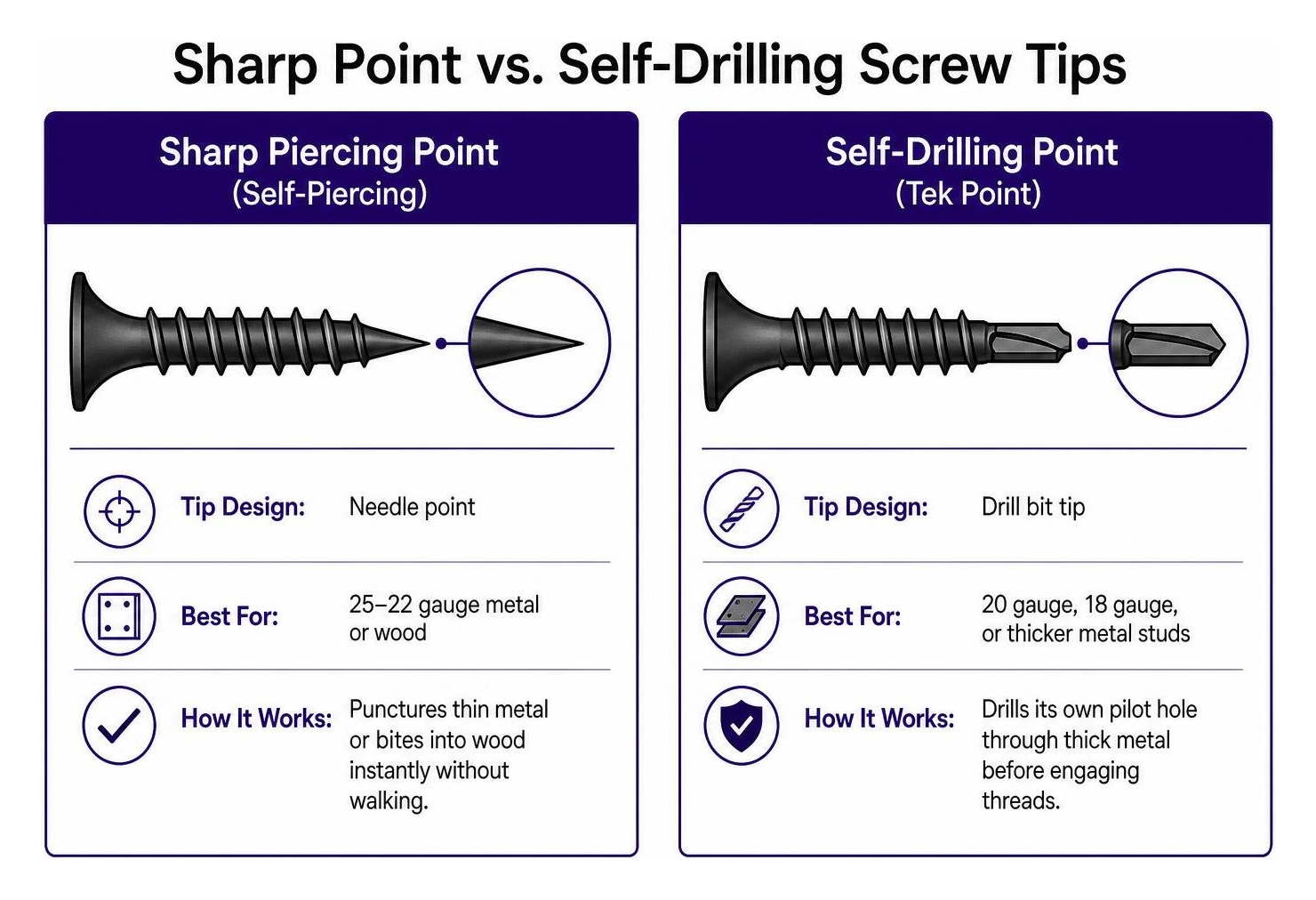
Tip selection directly affects performance:
- Sharp Piercing Point (Self-Piercing): Standard on most Type W and Type S fasteners. The needle tip punctures 25-gauge to 22-gauge sheet metal or bites into wood instantly without walking.
- Self-Drilling Point (Tek Point): Features a miniature drill bit tip. Standard sharp points will skate and overheat on structural metal studs that are 20-gauge, 18-gauge, or thicker. A self-drilling tip cuts its own pilot hole through heavy steel before engaging the threads, increasing installation speed by 30% to 50% over pre-drilling methods.
Drywall Screw Sizing, Length, and Framing Compatibility
Drywall screws are measured by length and gauge diameter. The most common size across residential construction is the #6 gauge screw (approximately 0.138-inch major diameter). For heavier assemblies, commercial double-layer walls, or high-wind zones, #8 gauge screws (0.164-inch major diameter) deliver higher pull-through resistance and increased shear capacity.
Choosing Between Different Types of Drywall Screws for Wood vs. Metal Framing
Using the wrong fastener for the framing type causes immediate installation failure. Driving a coarse-thread Type W screw into a light-gauge metal stud will ream out the metal hole, leaving the screw spinning freely with zero holding power. Conversely, driving a fine-thread Type S screw into softwood framing results in a weak mechanical bite that can work loose over time as framing lumber shrinks and expands with seasonal humidity shifts.
When attaching boards to metal, review specialized metal stud fastener standards to match fastener gauge, drive type, and thread pitch to the metal thickness.
Sizing for Drywall Thickness: 1/2-Inch vs. 5/8-Inch Panels
To meet code and prevent fastener pop-outs, calculate your fastener length based on panel thickness plus framing penetration rules:
- Wood Framing: Minimum 5/8-inch embedment into solid lumber.
- Steel Framing: Minimum 3/8-inch penetration past the interior metal stud face.
| Drywall Setup | Framing Material | Recommended Screw Length | Screw Gauge & Type | Min. Penetration |
|---|---|---|---|---|
| 1/2-inch Single Layer | Wood Studs | 1-1/4 inch | #6 Type W (Coarse) | 5/8 inch |
| 1/2-inch Single Layer | 25–22 ga Steel | 1-1/4 inch | #6 Type S (Fine) | 3/8 inch |
| 5/8-inch Single Layer | Wood Studs | 1-5/8 inch | #6 Type W (Coarse) | 5/8 inch |
| 5/8-inch Single Layer | 20–16 ga Steel | 1-5/8 inch | #6 Self-Drilling (Fine) | 3/8 inch |
| Double Layer (1/2″ + 1/2″) | Wood Studs | 2-1/4 inch to 2-1/2 inch | #8 Type W (Coarse) | 5/8 inch |
| Double Layer (5/8″ + 5/8″) | Steel Studs | 2-1/2 inch to 3 inch | #8 Type S or Self-Drilling | 3/8 inch |
For detailed breakdowns of commercial layering schedules, check standard drywall screw sizing recommendations to match your framing package.
Screw Materials, Protective Coatings, and Load Limitations
Standard drywall screws are manufactured with case-hardened steel. This heat treatment produces a hard outer shell that keeps the drive head from stripping under high-speed driver rotation. However, that high surface hardness makes the core brittle. Drywall screws are engineered specifically to resist perpendicular tension (withdrawal), not heavy lateral shear loads.
Phosphate, Zinc, and Corrosion Protection
Drywall screws come in several common protective finishes:
- Black Phosphate Finish: The industry baseline, accounting for roughly 60% of stock recommendations for suppliers. This chemical conversion coating offers mild corrosion resistance and provides an etched surface that helps joint compound (mud) and primer adhere without peeling. It is intended for dry interior rooms.
- Zinc Plating (Clear or Yellow): Provides a sacrificial barrier against oxidation. Ideal for high-humidity areas such as utility rooms, kitchens, and basements.
- Galvanized / Polymer Coatings: Engineered for exterior gypsum sheathing, high-moisture commercial spaces, or bathroom tile backer applications where continuous moisture would rust ordinary black phosphate screws.
Structural Limitations and When to Switch to Heavy-Duty Anchors
Never use drywall screws for structural carpentry, framing connections, subfloors, deck building, or ledger boards. Under lateral shear force—such as the downward pull of a heavy cabinet or the structural settling of wall framing—the brittle hardened shank can shear off cleanly at the head.
Similarly, hanging wall fixtures between framing studs requires purpose-built hardware. A drywall screw driven directly into hollow 1/2-inch or 5/8-inch drywall has virtually zero holding capacity; the paper core crumbles under minimal load.
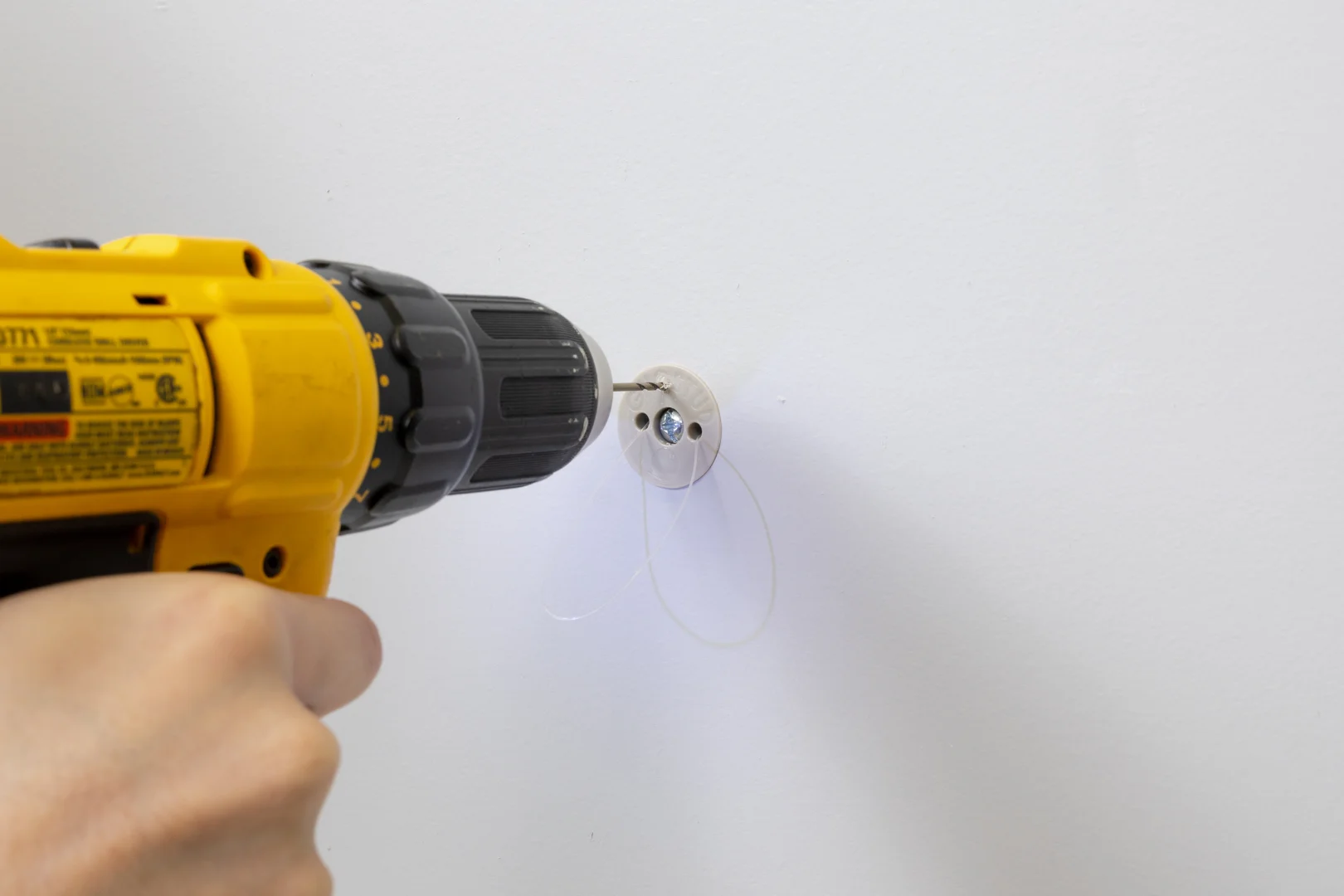
When studs are unavailable, review our step-by-step guide to drywall anchor types to match your mounting strategy to your fixture weight. For heavier hollow-wall loads, see our guide to Ghost Anchor drywall mounting solutions.
GHOSTUD manufactures high-capacity drywall anchors from recycled material in the USA, sold at ghostud.com. The GS1 requires a 1-inch hole saw cut and is rated up to 250 lb in 1/2-inch or 5/8-inch drywall, making it ideal for daily dynamic loads like towel bars, curtain rods, toilet paper holders, and picture frames. The GS2 requires a 2-inch hole saw cut and is rated up to 1,000 lb shear in 1/2-inch or 5/8-inch drywall, designed for heavy static loads like TVs, upper cabinets, heavy mirrors, and large shelving units.
Keep physical limitations in mind: GHOSTUD anchors are designed exclusively for 1/2-inch and 5/8-inch gypsum drywall. They are not suitable for plaster, lath, concrete, masonry, brick, stucco, tile backer board, or metal studs. They are also the wrong choice for loads under 5 lb where basic hanging methods suffice. They require cutting a dedicated hole with a hole saw, representing a permanent installation. If an accessible wood framing stud is located right where you need to mount, always drive directly into that wood stud rather than using hollow-wall anchors. Furthermore, never use hollow-wall anchors for safety rails, grab bars, or fall-prevention applications where body weight support is required.
Proper Installation Techniques, Depth, and Spacing Schedule
Driving a drywall screw correctly requires balanced tool speed and depth control. Use a dedicated drywall screw gun or a cordless drill equipped with a magnetic drywall dimpler bit (screw setter). These tools automatically disengage the drive clutch when the screw collar reaches flush depth, preventing ruined dimples.
Achieving the Perfect Bugle Head Dimple Without Paper Tearing
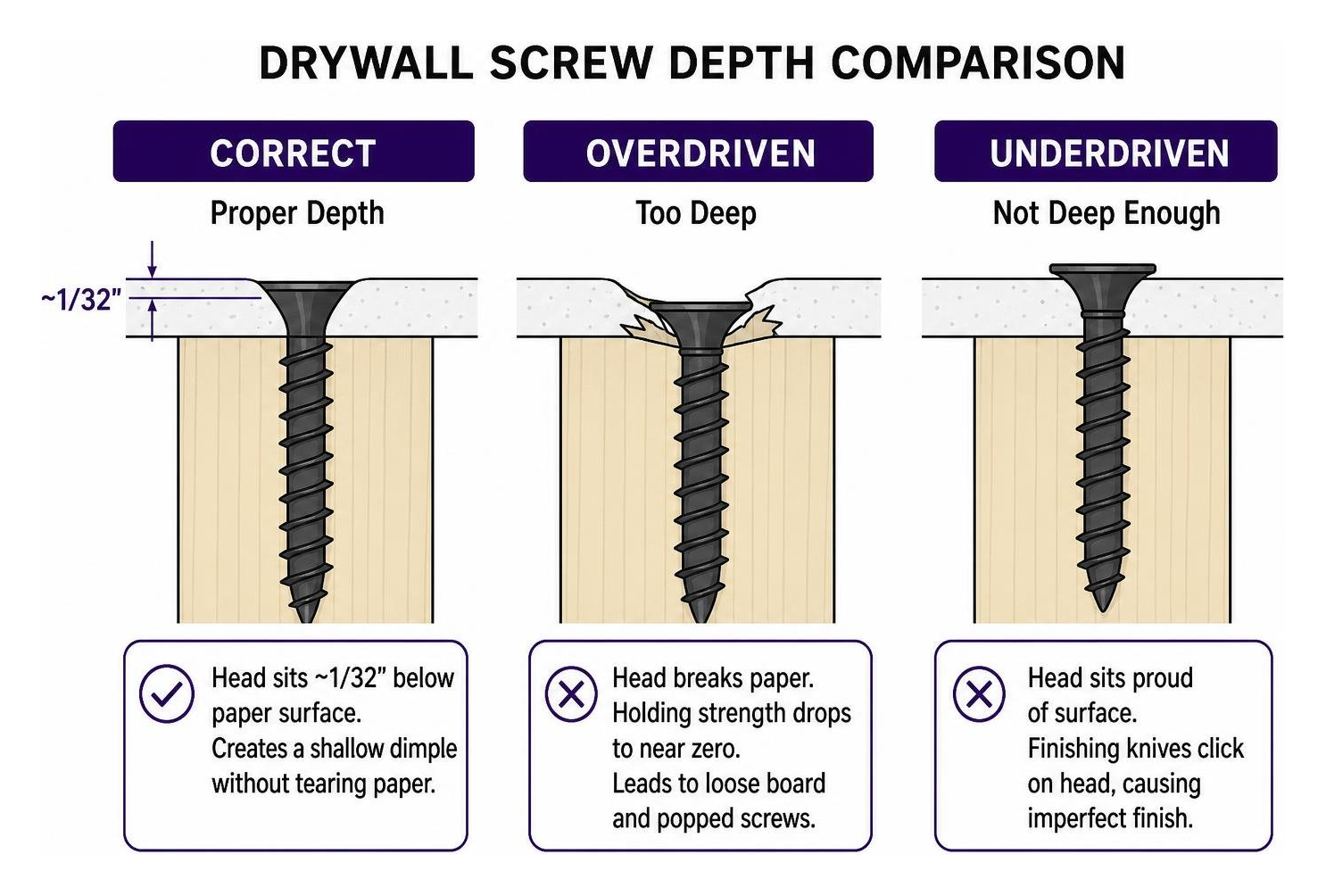
Follow these installation rules:
- Target Depth: Drive the screw so the bugle head sinks roughly 1/32-inch below the drywall paper surface, creating a shallow concave dimple.
- The Paper Integrity Rule: The paper facing provides almost all the panel’s tensile holding strength. If the head over-penetrates and tears the paper ring, holding strength drops to near zero, creating a loose board that will eventually lead to popped screws.
- Underdriving Flaws: If the screw is underdriven and leaves the head proud of the surface, finishing knives will click against the metal, preventing a clean mud finish.
Wall vs. Ceiling Fastener Spacing and Sheet Calculation
Building standards, including GA-216 and IRC R702.3.5, establish strict spacing requirements:
- Walls (16″ On-Center Framing): Space perimeter edge screws 8 inches apart; space field screws (the studs running down the middle of the sheet) 16 inches apart.
- Ceilings (16″ or 24″ On-Center Framing): Maximum spacing is 12 inches on-center along all framing members to prevent panel sag under gravitational pull.
- Fire-Rated Assemblies (Type X Drywall): Often require 6-inch to 8-inch fastener spacing along all ceiling joists and wall studs. Verify the exact architectural schedule.
- Edge Margins: Always set screws at least 3/8-inch inward from cut or tapered board edges to prevent core blowout.
A standard 4×8 sheet of drywall requires between 28 and 32 screws on framing spaced 16 inches on center, and roughly 27 screws on framing spaced 24 inches on center. When estimating project packages, plan on approximately 1,000 Type W screws per 1,000 square feet of drywall on 16-inch framing (plus a 10% waste factor for dropped or stripped fasteners).
Common Drywall Fastening Mistakes to Avoid
- Overdriving the Head: Breaking the front paper face destroys withdrawal resistance. When this happens, drive a new screw 1.5 to 2 inches away from the damaged hole.
- Using Standard Wood Screws: Standard flat-head wood screws lack a bugle curve. Their sharp underside slices through the surface paper instantly.
- Mismatched Thread Selection: Driving coarse screws into metal studs strips out the metal flange; driving fine screws into wood causes weak pull-out retention.
- Placing Screws Too Close to the Edge: Fastening closer than 3/8-inch to the edge crumbles the brittle gypsum core.
- Re-driving into Stripped Holes: If a screw spins freely in a metal keel, remove it and offset your placement by at least 1 inch into fresh metal.
Frequently Asked Questions About Drywall Screws
Can I use coarse-thread drywall screws in metal studs?
No. Coarse threads (Type W) have an aggressive thread pitch that punches a hole through thin 25-gauge or 22-gauge steel studs rather than threading securely into them. The screw will spin, strip the hole, and fail to pull the gypsum panel tight against the framing. Always use fine-thread Type S screws for light metal studs.
How deep should a drywall screw penetrate wood framing?
Per standard residential building codes (such as the IRC), drywall screws must achieve a minimum penetration depth of 5/8-inch (approximately 16 mm) into the solid wood stud or ceiling joist. For standard 1/2-inch drywall, this makes a 1-1/4 inch screw the standard choice (1/2″ panel + 5/8″ penetration = 1-1/8″, rounded up to standard 1-1/4″ fastener stock).
Why shouldn’t drywall screws be used for structural framing?
Drywall screws are case-hardened to resist cam-out during rapid driving, which makes the metal hard but brittle. They handle direct axial tension well but have very low shear strength. When framing lumber shifts, twists, or carries dead weight, drywall screws snap rather than bending. Structural connections require ductile, code-approved framing nails or structural wood screws.
Choosing the Right Fastener for Every Stage of Your Build
Hanging drywall successfully comes down to matching your fastener to the substrate. Use coarse-thread Type W screws for wood framing, fine-thread Type S screws for light steel, and self-drilling Tek screws for heavy 20-gauge metal studs. Verify your board thickness, maintain the 5/8-inch wood or 3/8-inch metal embedment rule, and set your dimpler clutch to protect the paper face on every drive.
When the walls are taped, finished, and ready for hardware, switch tools based on the mounting conditions. If you can locate a solid wood framing stud, drive your mounting fasteners directly into that lumber. When studs aren’t available and you need to mount fixtures to hollow gypsum walls, select a tested anchor matched to your load requirements.
For heavy, high-demand fixtures on hollow drywall, explore patented heavy-duty drywall anchors from GHOSTUD to secure static loads up to 1,000 lb shear in 1/2-inch or 5/8-inch drywall without framing access. To learn more about anchor mechanisms, shear capacities, and project-specific ratings, check our comprehensive mounting guides. Grab your tape measure, mark your stud locations, and set your fasteners to build a solid, reliable wall assembly.
Mount it once, mount it right. Compare GS1 and GS2 →