
Drywall Anchor vs Stud: A Detailed Guide to Choosing the Right Support
Drywall Anchor vs Stud: Fundamental Differences in Structural Support
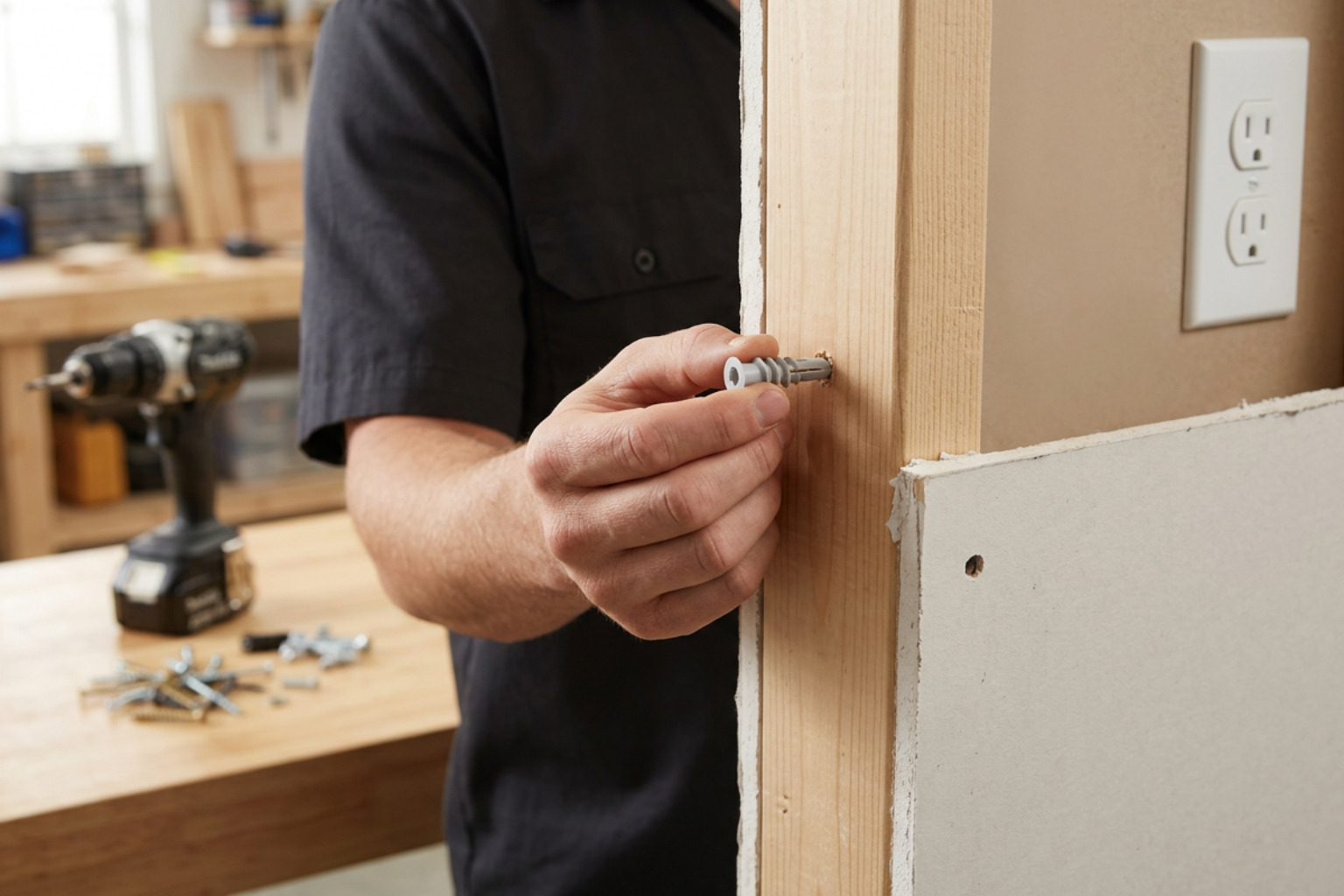
When deciding between a drywall anchor vs stud, fasten directly into a wood stud for heavy items over 15 pounds, cantilevered shelves, or hardware exposed to dynamic movement. Hollow-wall drywall anchors should be reserved for lightweight fixtures or locations where framing alignment is unavailable.
Understanding the fundamental mechanical differences between structural framing and gypsum wallboard prevents most mounting failures. Residential interior walls rely on vertical framing members—typically 2×4 or 2×6 dimensional lumber—spaced either 16 inches or 24 inches on center. These studs form the load-bearing skeleton of the building. They tie directly into the top and bottom wall plates, transferring vertical and lateral loads down to the foundation.
In contrast, drywall is a non-structural building material. It consists of a dense, crystalline gypsum core sandwiched between two sheets of recycled paper facings. While gypsum board provides excellent fire resistance, sound dampening, and a smooth cosmetic finish, it possesses low tensile strength. As highlighted in Popular Mechanics research on fastener performance, driving a bare fastener into gypsum creates an unstable connection. The core easily crumbles under mechanical vibration or shear pressure, leaving no material for screw threads to bite into.

How Wall Studs Bear Structural Load
Fastening directly into vertical lumber transfers force through continuous wood fibers. When you drive a coarse-thread wood screw into a solid stud, the threads wedge between the grain, creating a high-friction mechanical grip along the entire embedded length of the screw shank.
This deep engagement provides direct shear transfer down the wall frame and significant resistance against pull-out force. Because dimensional lumber flexes slightly without fracturing, a connection made in a wood stud tolerates repeated dynamic loads, vibration, and thermal expansion far better than any fastener mounted exclusively in brittle gypsum.
How Drywall Anchors Distribute Force Across Gypsum
When mounting hardware in a hollow wall cavity where no structural lumber is present, a drywall anchor acts as an intermediate mechanical bridge. Because gypsum board cannot hold threads under tension, drywall anchors distribute localized stress across a wider surface area.
Anchors achieve this load distribution through specific mechanical behaviors:
- Radial Expansion: Standard plastic sleeves expand outward against the interior edges of the drilled hole as a screw is driven home.
- Thread Displacement: Large-diameter threaded anchors bite broad, deep grooves into the gypsum to increase total contact surface area.
- Rear Clamping: Heavy-duty toggle fasteners pass entirely through the wall cavity, deploying a metal or composite bar that clamps firmly against the hidden back face of the board.
The limiting factor in any anchor installation is never the metal or plastic of the fastener itself; it is the structural limit of the gypsum core. If localized force exceeds the core’s shear strength, the drywall matrix crushes, leading to sudden fastener blowout.
Weight Capacity and Mechanical Forces: Shear vs Pull-Out
Mounting safety requires evaluating the directional forces acting on the fastener. Fasteners experience two primary mechanical stresses: shear force and pull-out (tension) force.
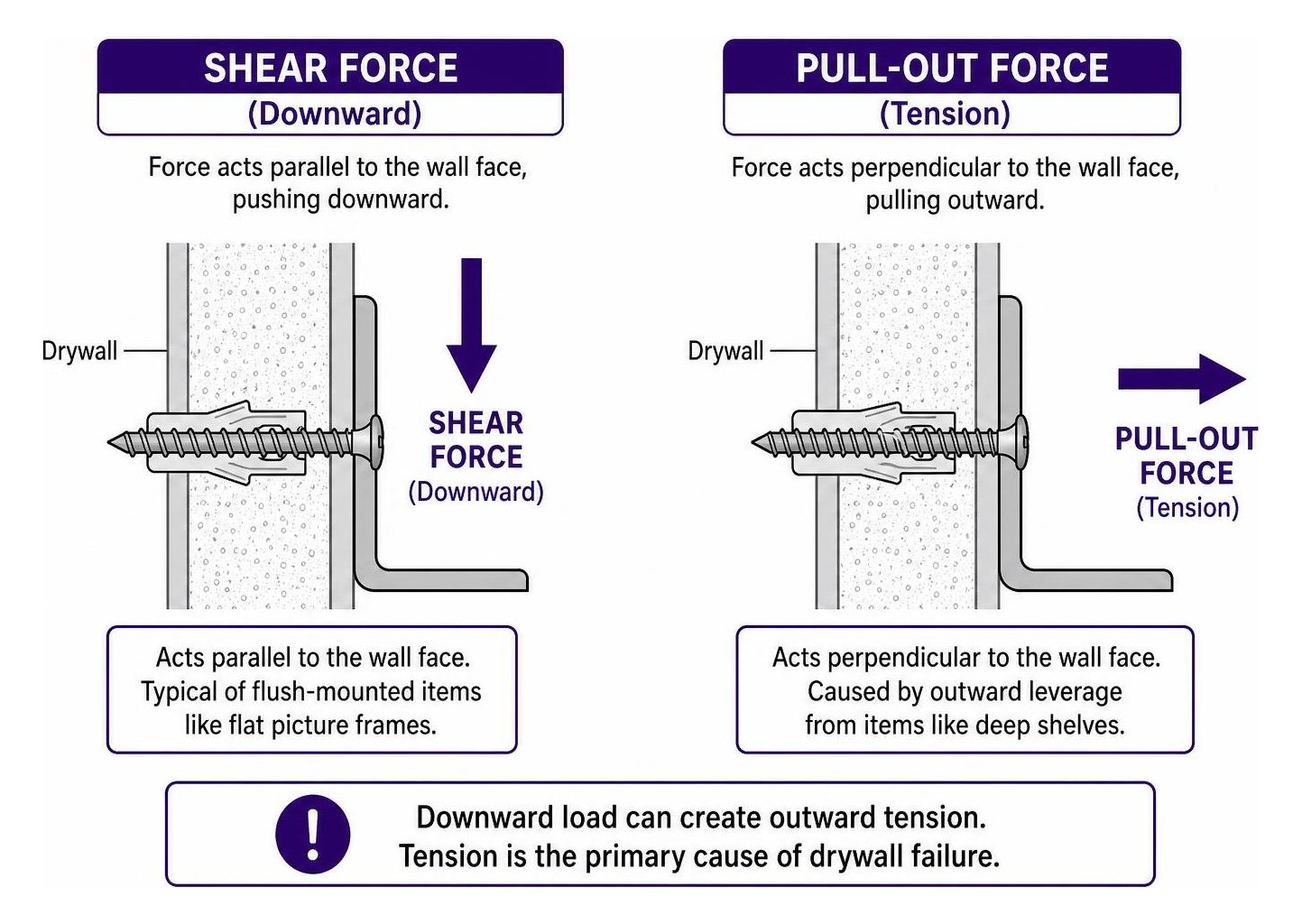
- Shear force acts parallel to the wall face, pushing downward against the shank of the fastener. Flush-mounted objects, like flat picture frames, exert almost pure shear stress.
- Pull-out force (tension) acts perpendicular to the wall face, pulling directly outward.
Published anchor ratings in the hardware industry reflect static shear capacity under ideal laboratory conditions. When an item extends outward from the wall—like a deep floating shelf—it generates rotational torque. This mechanical lever converts downward gravitational load into an aggressive outward tension force at the top mounting point. Under tension, drywall readily delaminates and crumbles, significantly reducing the safe working limit of the installation.
| Fastener Type | Target Material | Rated Shear Capacity (1/2″ Drywall) | Rated Shear Capacity (5/8″ Drywall) | Primary Failure Mode |
|---|---|---|---|---|
| Bare Wood/Drywall Screw | Gypsum Only | 5–10 lb | 10–15 lb | Thread stripping, core crumbling |
| Plastic Expansion Plug | Gypsum Only | 10–25 lb | 15–30 lb | Friction loss, straight pull-out |
| Self-Drilling Threaded Anchor | Gypsum Only | 25–50 lb | 35–65 lb | Core shear, conical hole breakout |
| Metal Toggle Bolt | Gypsum Only | 50–100+ lb | 75–125+ lb | Rear drywall fracture, blowout |
| GS1 GHOSTUD Anchor | Gypsum Only | Up to 250 lb shear | Up to 250 lb shear | Drywall shear perimeter cracking |
| GS2 GHOSTUD Anchor | Gypsum Only | Up to 1,000 lb shear | Up to 1,000 lb shear | Drywall shear perimeter cracking |
| #10 Wood Screw | Solid Wood Stud | 80–100+ lb | 80–100+ lb | Fastener shear (wood remains intact) |
Drywall Anchor vs Stud Load Capacities Compared
Standard hardware selections range from simple expansion sleeves to heavy structural screws. Basic plastic plugs rely strictly on friction and are suitable only for lightweight decor. Self-drilling threaded anchors offer higher shear resistance by cutting wide threads into the gypsum, while toggle bolts provide strong mechanical clamping against the back surface of the wall.
However, published weight capacities represent maximum laboratory break limits. For any critical installation, apply an industry-standard safety factor by derating the published static capacity to one-fourth (25%) of its tested rating. For detailed guidance on calculating these limits, read our guide on how to select the right drywall anchor for your load.
A single #10 wood screw driven at least 1.5 inches into a solid wood stud easily supports 80 to 100+ pounds of working load without stressing the surrounding drywall.
The Impact of Cantilevered Leverage and Dynamic Loads
Cantilevered leverage dramatically alters fastener performance. When a shelf bracket extends 10 inches outward from the wall, placing a 20-pound weight on its outer edge generates significant rotational leverage.
The bracket acts as a mechanical pry bar: the bottom edge pushes inward against the wall surface, while the top mounting screw experiences intense outward pull-out force. Gypsum board offers very poor tension resistance. Under continuous tension, the gypsum core slowly compresses and pulverizes, allowing the anchor to back out.
Dynamic forces further accelerate this degradation. Everyday items like bathroom towel bars, coat hooks, and curtain rods experience constant pulling, tugging, and vibration. This movement widens the hole in the brittle gypsum board over time. To avoid hardware failure on projecting loads, follow our recommendations on how to secure a heavy shelf without pull-out failure.
When to Fasten Directly to a Stud vs When to Use Drywall Anchors
A practical rule of thumb for wall mounting: if an item weighs more than 15 pounds, projects outward from the wall, or experiences regular dynamic movement, fasten it directly into a wood stud.
Use a stud whenever the mounting bracket aligns with existing framing. Structural lumber should always be your first choice for:
- Heavy mirrors and large glass frames
- Deep book shelving and cantilevered floating shelves
- Kitchen cabinetry and wall-mounted storage units
- Large flat-screen television brackets
- Frequently handled hardware like towel rails and wardrobe hooks
Reserve drywall anchors for situations where framing layout constraints make stud mounting impossible, such as centering a lightweight piece of artwork between two 16-inch stud bays.
Making the Drywall Anchor vs Stud Choice for Shelves and TVs
Flat-screen televisions and articulated monitor arms present a unique combination of heavy static weight and extreme rotational leverage. When a television is mounted on an articulating arm and extended 18 inches away from the wall, the tension load on the top wall fasteners multiplies dramatically.
If an articulating TV bracket is mounted strictly to hollow drywall with standard expansion or threaded anchors, the continuous outward pull will quickly fatigue the gypsum core, resulting in catastrophic wall blowout. For flat-profile mounts or fixed hardware where a stud is unavailable, specialized techniques are required. Learn how to install a TV mount without studs safely using high-capacity hollow-wall systems.
High-Capacity Anchor Options When No Stud Is Accessible
When stud placement does not align with your layout and you must support substantial loads on hollow drywall, standard plastic expansion plugs are inadequate. You must step up to specialized hollow-wall hardware.
For moderate to heavy loads, steel toggle bolts or heavy-duty cavity fasteners provide necessary rear-wall clamping. Learn more in our comparison of a practical guide to molly bolt vs toggle bolt comparisons.
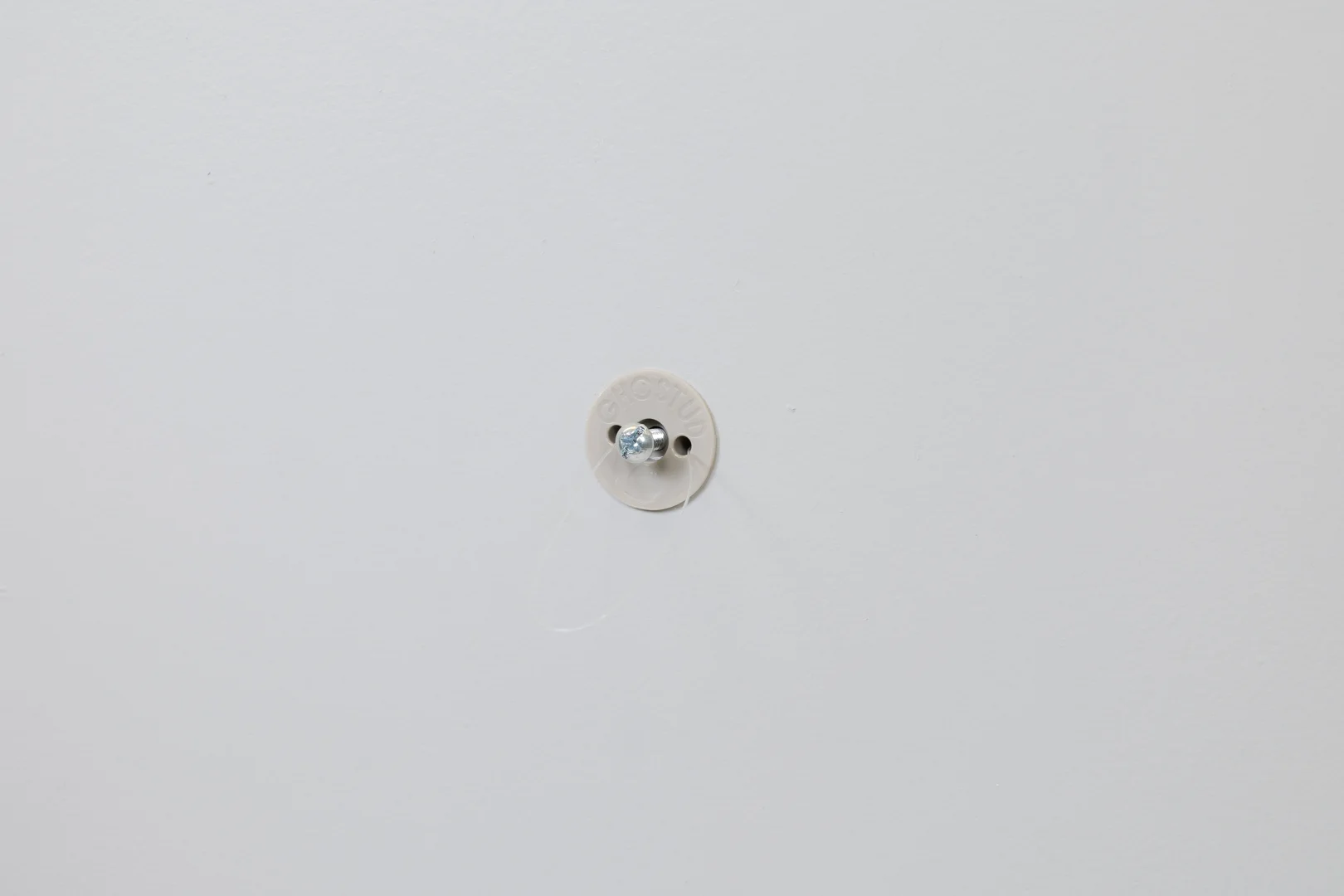
When you need exceptional load-bearing performance without an accessible stud, we manufacture patented, heavy-duty drywall anchors designed to distribute stress across large drywall surfaces:
- The GS1 GHOSTUD Drywall Anchor requires a 1-inch hole saw for installation and supports up to 250 lb shear in 1/2 in or 5/8 in drywall.
- The GS2 Drywall Anchor requires a 2-inch hole saw and provides up to 1,000 lb shear in 1/2 in or 5/8 in drywall.
Both models are manufactured in the USA from 100% recycled plastic, utilize load-distributing internal geometry, and are available in convenient 2-packs and 20-packs.
Important limitation: GHOSTUD anchors are engineered strictly for drywall panels. Never use them in plaster, lath, brick, masonry, concrete, stucco, tile over backer board, or metal framing. If your wall consists of plaster and lath, standard drywall anchors will crack the brittle plaster keys behind the wall. In that situation, stop immediately, use a masonry drill bit to locate solid wood lath, and fasten directly into the structural timber studs using standard wood screws.
Proper Installation Steps and Critical Mistakes to Avoid
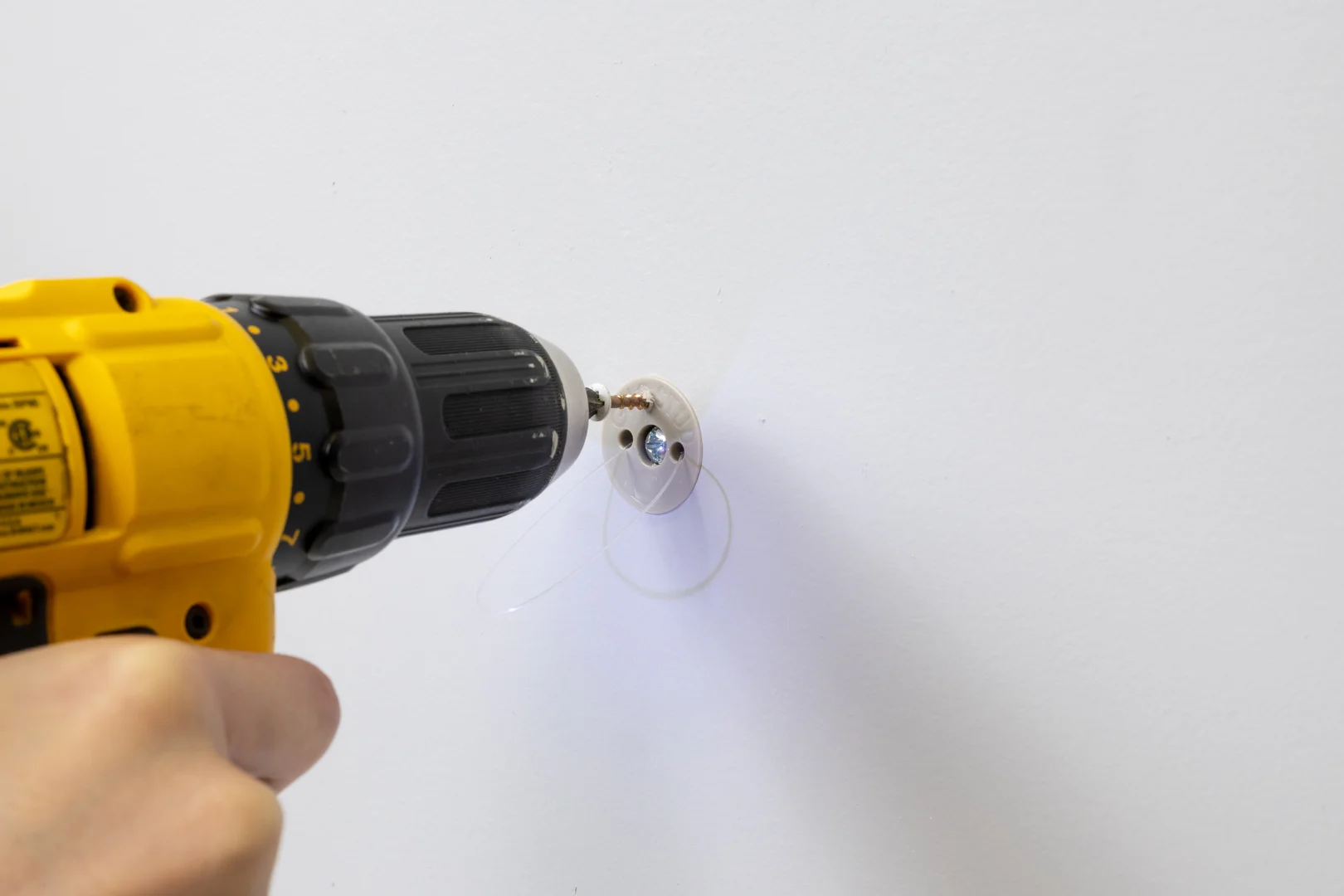
A drywall anchor’s actual holding power depends entirely on correct installation technique. An improperly installed anchor in pristine drywall will fail well below its rated capacity.
Step-by-Step Anchor Installation for Maximum Holding Power
Follow these step-by-step procedures to achieve maximum mechanical performance from your wall anchors. For an in-depth breakdown of individual hardware designs, review our step-by-step guide to drywall anchor types.
- Locate Internal Obstacles: Scan the mounting zone with a reliable stud finder. Verify whether a wood stud is present. Check for hidden electrical wiring and plumbing pipes before drilling.
- Mark Precise Centers: Use a level and a sharp pencil to mark your fastener locations. Lightly center-punch the mark using an awl to prevent the drill bit from wandering across the drywall surface.
- Drill the Correct Pilot Hole: Use a sharp drill bit matched precisely to the manufacturer’s recommended diameter. Hold the drill perfectly perpendicular (90 degrees) to the wall face. Do not wobble the drill bit, as an oblong hole reduces anchor retention.
- Seat the Anchor Flush: Press the anchor into the pilot hole. If using a tap-in plastic sleeve, tap it gently with a hammer until the collar sits completely flush with the paper facing. Do not overdrive the anchor below the drywall surface.
- Drive the Fastener Carefully: Insert the matched screw through your fixture and into the anchor. Drive the screw smoothly until snug. Stop driving the moment the fixture sits firmly against the wall.
Common Mounting Mistakes and Why Anchors Fail
Most drywall anchor failures result from predictable, avoidable installation errors:
- Drilling Oversized Pilot Holes: Using a drill bit that is even 1/16-inch too large destroys the anchor’s friction fit, causing the entire assembly to spin freely when the screw is inserted.
- Over-Torquing the Fastener: Driving screws with a high-speed impact driver often strips the internal threads of the anchor or chews through the surrounding gypsum core, eliminating all mechanical clamping force.
- Reusing Damaged Anchor Holes: If an anchor pulls out, driving a new anchor into the same enlarged, fractured hole will result in immediate failure. Always patch the damaged area and drill a fresh hole at least 2 inches away.
- Using Plastic Plugs for Dynamic Loads: Using light plastic expansion plugs on items that experience continuous movement (like bathroom hand towel rings) leads to hole enlargement and loose hardware within weeks.
Frequently Asked Questions About Wall Fasteners
Can you use a drywall anchor in a wood stud?
No. Drywall anchors are designed strictly to operate in hollow wallboard cavities. If you hit a wood stud while drilling, do not attempt to force a plastic or metal drywall anchor into the framing.
Forcing an anchor into solid wood will snap plastic sleeves, strip self-drilling metal threads, and leave an oversized, damaged hole in your wall. If you encounter solid wood, set the anchor aside and drive a standard #8 or #10 wood screw directly into the pilot hole. Solid wood framing provides a much stronger connection than any hollow-wall fastener.
How much weight can bare drywall hold without an anchor?
Bare drywall with a standard nail or screw holds only about 5 to 10 pounds under static shear load. Gypsum has virtually no internal tensile strength. Without an anchor to distribute the load across the paper facing or rear surface, the shank of a bare screw acts like a knife blade, gradually crushing the soft gypsum core until the fastener falls out under minimal downward pressure.
How do you determine the safe working load for an anchor?
To calculate the safe working load of any wall anchor, take the manufacturer’s published static shear rating and divide it by four (the 4:1 safety factor). For example, if a heavy-duty toggle bolt is rated for 100 pounds of static shear in 1/2-inch drywall, calculate your maximum working load at no more than 25 pounds.
If the mounted object projects outward from the wall (like a deep shelf or hanging plant hook) or will be subjected to dynamic movement, reduce that working load by an additional 50% to account for cantilevered pull-out forces.
Conclusion
Choosing between a drywall anchor and a stud comes down to a simple mechanical trade-off: mount into wood framing whenever maximum structural strength and pull-out resistance are required, and use properly rated hollow-wall anchors when hardware placement requires mounting between stud bays.
Always assess the full dynamics of the load before drilling. Consider not just total static weight, but also cantilevered depth, rotational leverage, and everyday dynamic vibration. By selecting the right hardware, applying a 4:1 safety factor, and following precise installation steps, you can ensure your fixtures remain securely anchored for years to come. For a detailed breakdown of hardware styles and ratings, explore our comprehensive guide to drywall anchor types.