
What Is Ghost Stud Technology and How Does It Support Heavy Shelves?
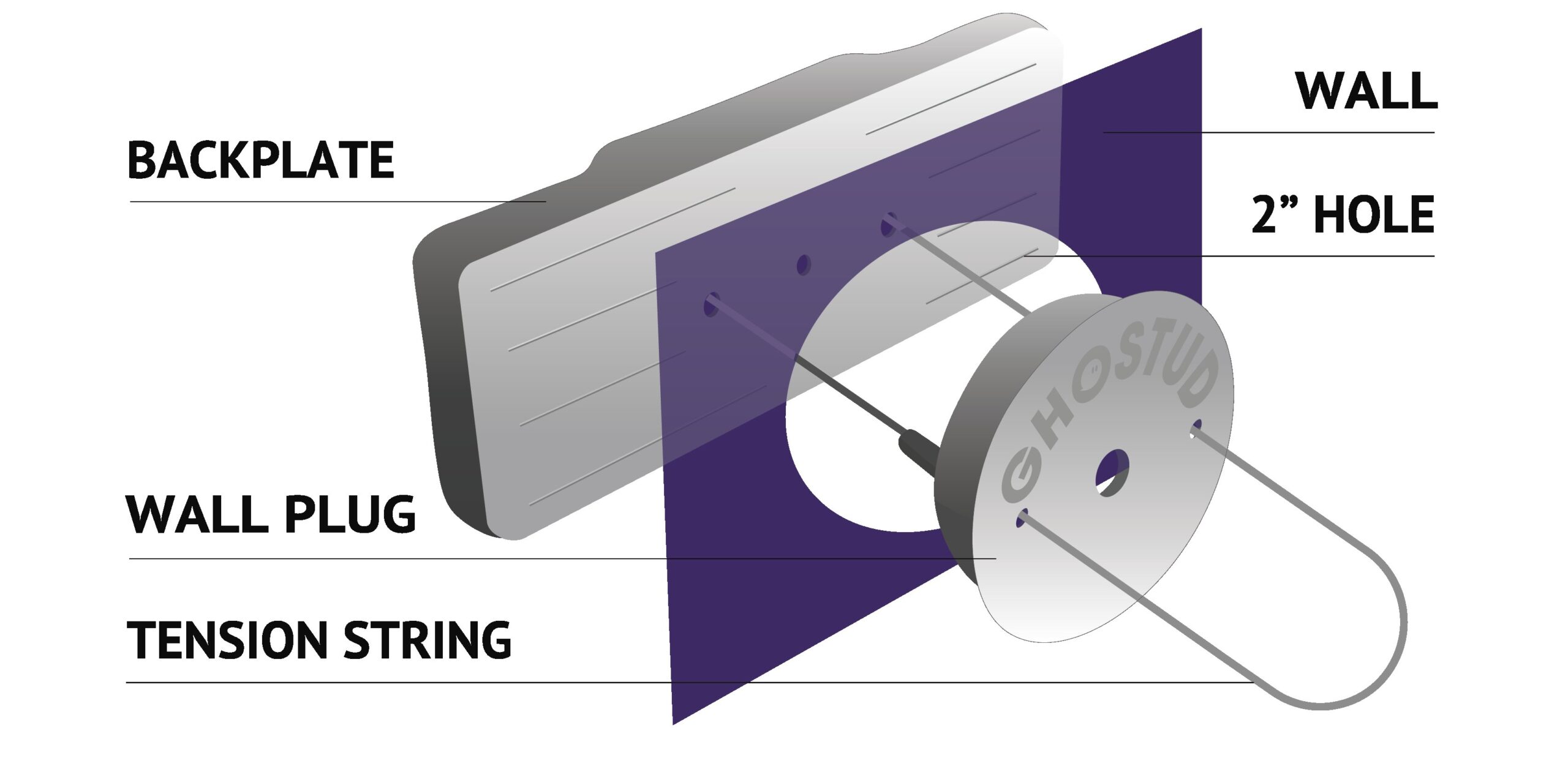
Ghost stud technology refers to specialized retrofit hardware designed to create a broad, rigid backing plate behind hollow drywall partitions where physical timber or metal studs are absent. Standard plastic expansion plugs and self-drilling anchors concentrate entire shelf loads onto a tiny circular footprint of fragile gypsum. In contrast, ghost stud hardware distributes downward and outward stresses across a substantially larger surface area behind the drywall face. This broad engagement transforms a weak hollow wall section into a reinforced mounting zone capable of supporting substantial shelving loads without crushing the wall core.
Standard plastic plugs rely on friction and localized outward expansion inside a small drilled hole. When you load a shelf attached to these plugs, the hardware exerts high point pressure directly against the soft, pulverized gypsum core. Gypsum board, the core material in drywall, possesses low tensile strength; under localized stress, it rapidly crumbles, resulting in hole enlargement, loose screws, and eventual breakout.
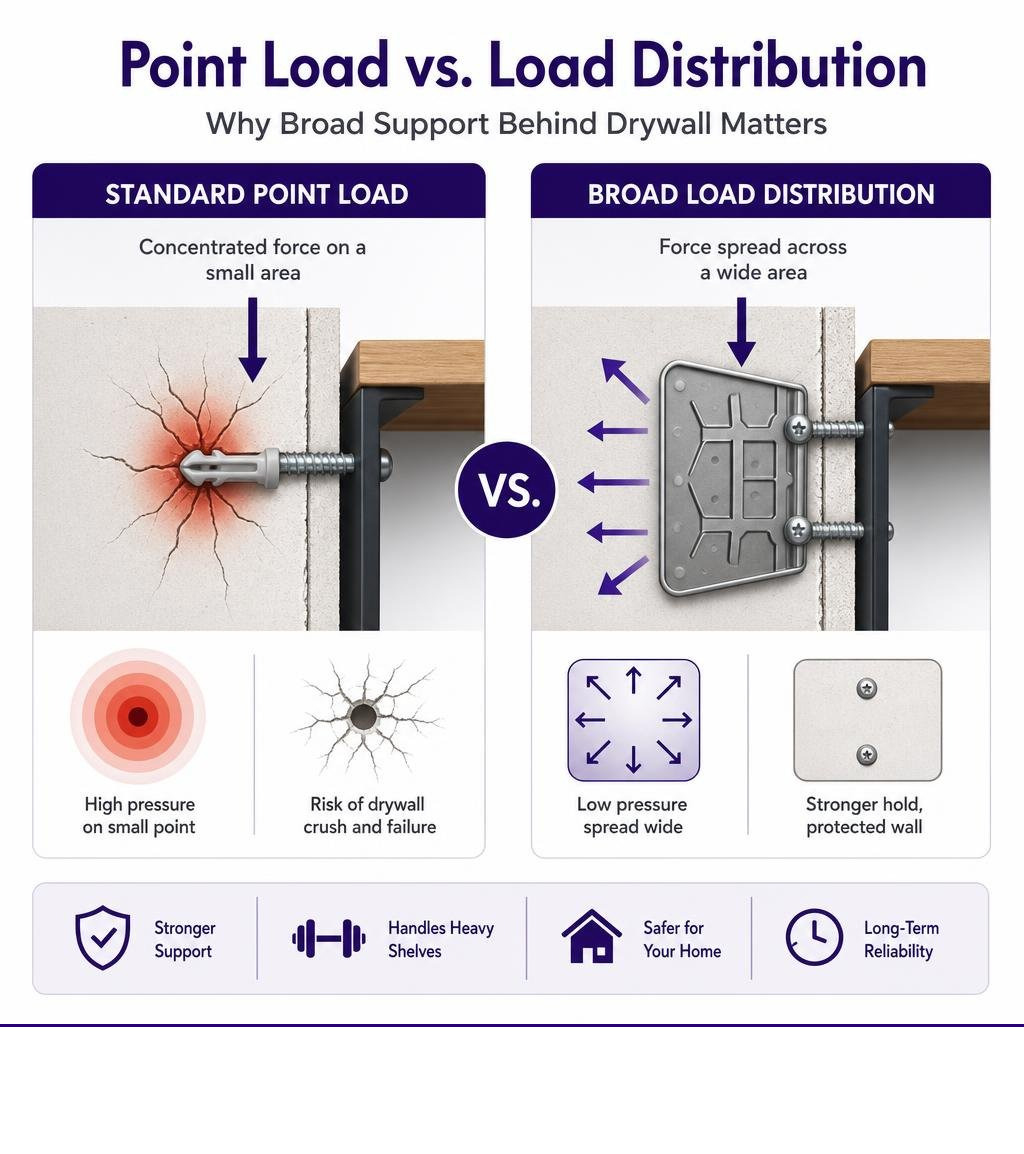
Understanding why shelves fail requires analyzing two distinct mechanical forces: static downward shear and outward cantilever pull-out tension.
- Shear force: The vertical, downward gravity load acting parallel to the wall surface. Drywall resists shear relatively well when the force is distributed across a large, flat surface.
- Tension (Pull-out) force: The horizontal force pulling the fastener straight out of the wall cavity.
- Cantilever leverage: When you place heavy items on a shelf that extends 8 to 12 inches out from the wall, the shelf bracket acts as a class-1 lever. The top fastener absorbs intense rotational pull-out tension, while the bottom of the bracket pivots inward, pushing into the wall face.
Published load ratings for drywall fasteners denote static vertical shear. They do not equal pull-out capacity for deep, cantilevered shelves extending away from the wall. Mitigating rotational leverage requires broad rear surface engagement to prevent the anchor from tilting forward and blowing through the gypsum face.
Which Brands Offer Ghost Stud Technology and Load-Distributed Solutions?
The term “ghost stud” describes patented, wide-plate load-distributed anchors engineered specifically for retrofit mounting onto existing drywall. It is sometimes conflated in builder searches with proprietary metal framing studs, but those are structural steel framing members installed behind open walls during framing, not retrofit fasteners.
For finished walls where you cannot alter the internal wall structure, we manufacture the primary dedicated ghost stud retrofit systems: the GHOSTUD® GS1 and GS2 series.
| Hardware Model | Hole Saw Size Required | Drywall Compatibility | Verified Shear Capacity | Available Packaging | Primary Shelf Use Cases |
|---|---|---|---|---|---|
| GHOSTUD® GS1 | 1-inch | 1/2 in or 5/8 in | Up to 250 lb shear | 2-Packs & 20-Packs | Display ledges, narrow utility shelves, lightweight brackets |
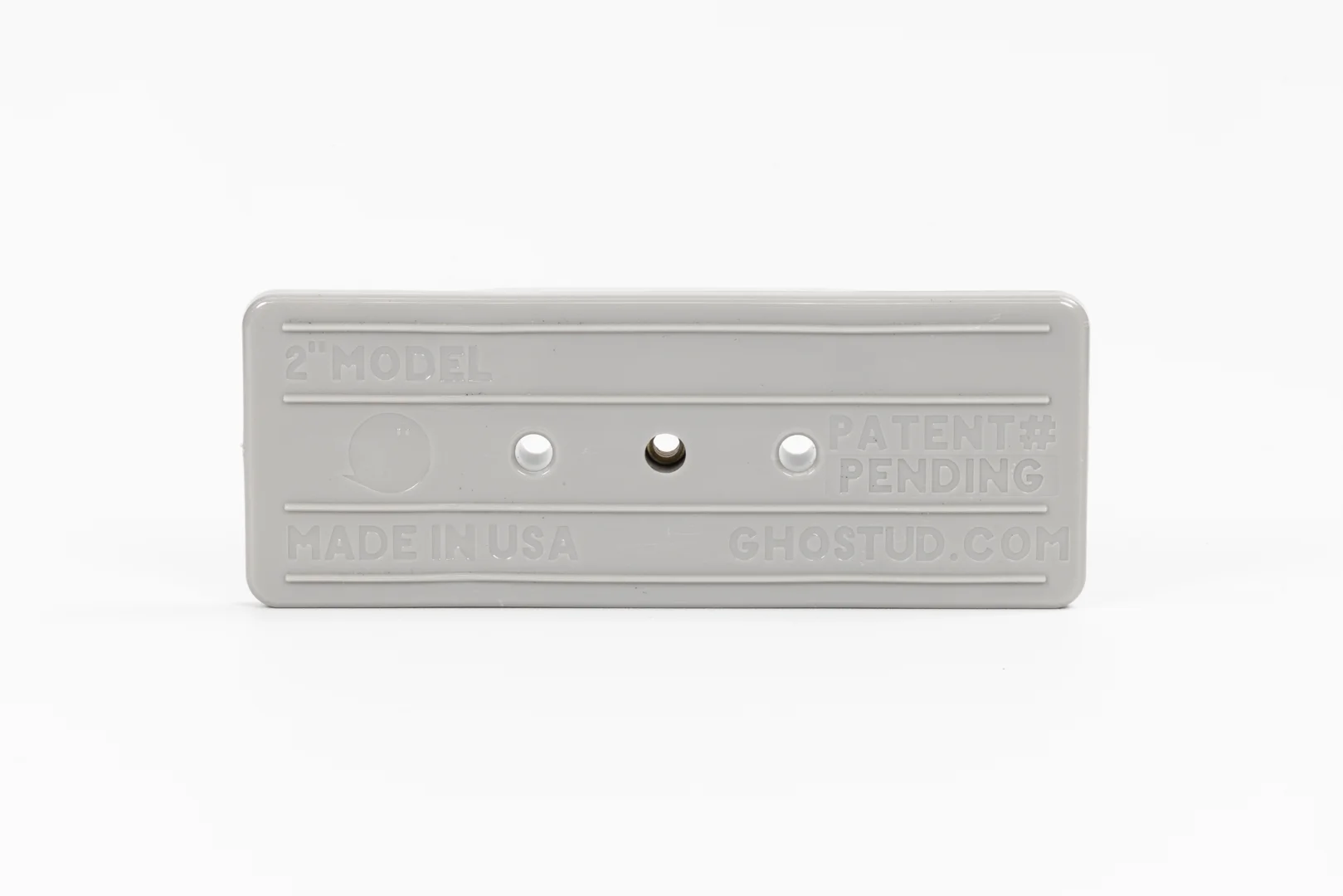
| GHOSTUD® GS2 | 2-inch | 1/2 in or 5/8 in | Up to 1,000 lb shear | 2-Packs & 20-Packs | Deep floating shelves, solid timber shelving, heavy storage racks |
GHOSTUD® GS1 Drywall Anchors (Up to 250 lb Shear)
Our entry-level load-distributing fastener is the GS1 ghost stud drywall anchor. We engineered the GS1 to replace traditional toggle bolts and expansion plugs for medium-duty shelving layouts.
The GS1 requires cutting a 1-inch access hole using a standard hole saw. Once inserted, its internal backing plate bridges across the rear of standard 1/2-inch or 5/8-inch drywall, delivering a verified load rating of up to 250 lb shear. Manufactured in the USA from 100% recycled nylon, the GS1 is sold in 2-packs and 20-packs. It provides solid anchoring for shallow decorative ledges, framed art shelving, and everyday wall fixtures that pull out standard plastic plugs.
GHOSTUD® GS2 Heavy-Duty Drywall Anchors (Up to 1,000 lb Shear)
For demanding shelving applications where standard hardware fails, our heavy-duty solution is the GS2 drywall anchor. Designed with a wide rear structural footprint, the GS2 creates stud-like backing directly behind hollow gypsum panels.
The GS2 requires a 2-inch hole saw for installation. It is rated for up to 1,000 lb shear in standard 1/2-inch or 5/8-inch drywall. Like the GS1, we manufacture the GS2 in the USA using 100% recycled nylon, distributing it in 2-packs and contractor 20-packs.
The GS2 is engineered for wide floating shelves, thick hardwood display surfaces, garage utility shelving, and heavy wall cabinetry mounted where wood framing members are unavailable or misaligned with bracket locations.
Clarifying “Ghost Stud” Terminology: Retrofit Anchoring vs. Physical Wall Framing
It is essential to distinguish between retrofit drywall anchors and cold-formed steel framing systems that share similar terminology:
- Retrofit Ghost Stud Anchors (GHOSTUD®): Blind fasteners installed into finished hollow drywall through a drilled access hole. They create a wide mechanical backing plate inside the stud bay without requiring drywall removal or wall reframing.
- Structural Steel Framing Studs: Physical structural framing members installed during open-wall construction. These cold-formed steel framing studs feature stiffening lips and embossed webs compliant with structural building codes.
If your wall is already sheeted, taped, and painted, physical steel studs cannot help you mount a shelf unless you tear open the wall. For finished drywall partitions, wide-plate retrofit anchors provide the load distribution needed to support weight between existing stud bays.
How Do Load-Distributed Anchors Compare to Traditional Fasteners for Heavy Shelving?
Standard drywall fasteners fail under heavy shelving because they concentrate high mechanical stresses onto very small points of brittle gypsum board.
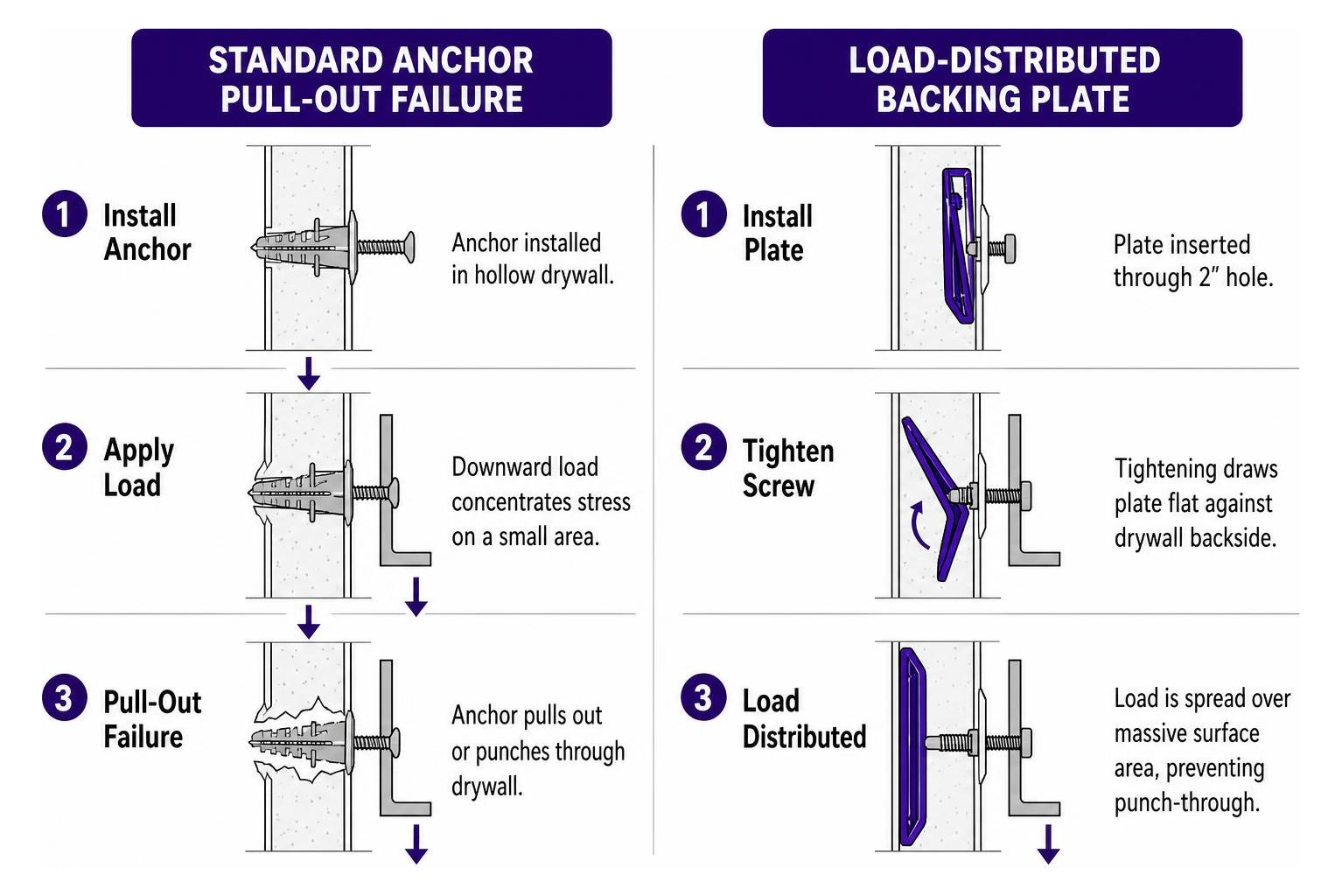
When you mount a heavy shelf using common retail fasteners, specific mechanical failures occur:
- Conical Plastic Anchors: As downward load increases, the plastic smooths and slips against the gypsum core. Rotational cantilever pull-out easily strips the anchor out of the drywall, leaving a ragged hole.
- Self-Drilling Screw Anchors: The broad outer threads cut into the gypsum core, weakening the surrounding plaster. Under medium shear loads, the threads shear the core clean out of the wall like a core drill.
- Standard Toggle Bolts: Metal wings provide better rear resistance than plastic plugs, but their narrow contact strip concentrates tension into two small pressure points behind the drywall paper. If tightened excessively or loaded unevenly, the metal wings crush the drywall backing, causing the toggle to tilt and punch through.
Reviewing a practical guide to molly bolt vs toggle bolt performance highlights how narrow-footprint anchors struggle under dynamic cantilever forces. When a shelf extends 10 inches from the wall, placing books or kitchenware on its front edge multiplies the pull-out leverage at the top anchor bracket. If you need insights on securing a heavy shelf without pull-out failure, the solution lies in spreading those rotational forces over a wide surface area using broad backing hardware rather than narrow metal wings.
For lightweight items like small picture ledges weighing under 5 pounds, basic plastic anchors or self-drilling fasteners are adequate and cost-effective. However, for deep shelving or dense storage, wide-plate load distribution is necessary to prevent wall failure. For a complete breakdown of light versus heavy fasteners, refer to our step-by-step guide to drywall anchor types.
How Do You Install Load-Distributed Ghost Stud Anchors Step-by-Step?
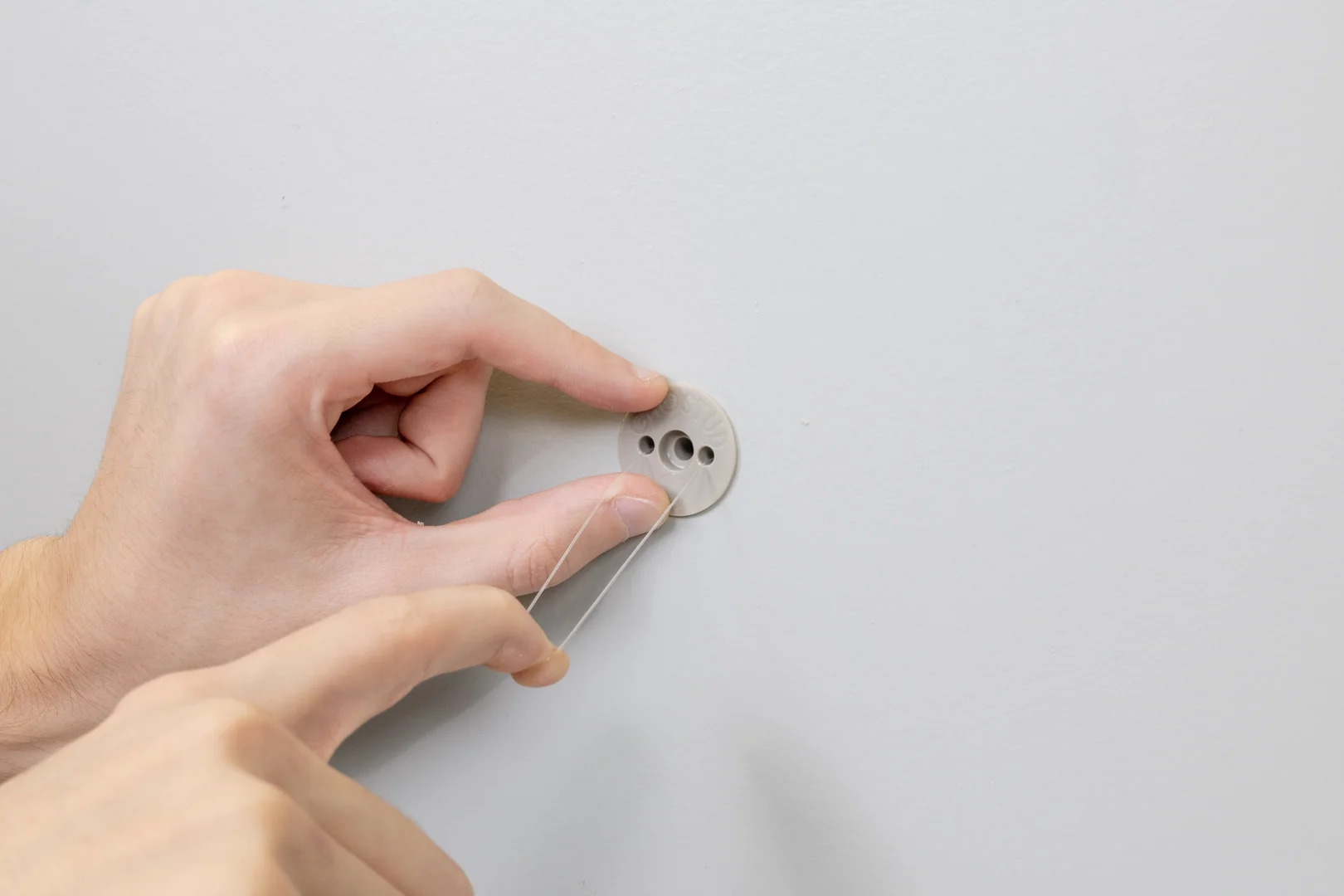
Installing load-distributed ghost stud hardware requires cutting a dedicated access opening to allow the wide backing plate to enter the wall cavity.
Pre-Installation Assessment
- Verify Drywall Thickness: Confirm your wall is standard 1/2-inch or 5/8-inch gypsum drywall.
- Scan the Cavity: Use a stud finder and voltage scanner to ensure no physical timber studs, plumbing lines, or electrical conduits run directly behind the intended hole location. GHOSTUD® anchors require a clear, hollow drywall bay.
Required Tools
- Power drill
- Appropriate hole saw: 1-inch for GS1 or 2-inch for GS2
- Standard drill bits for pilot holes
- Phillips screwdriver or drill driver with a clutch setting
Installation Steps
- Mark Anchor Locations: Hold your shelf brackets against the wall at the desired height. Mark the center of each mounting hole with a pencil.
- Cut the Access Opening: Chuck the specified hole saw (1-inch for GS1, 2-inch for GS2) into your drill. Cut smoothly through the drywall at your pencil mark. Clear any loose drywall dust from the rim of the hole.
- Insert the Backing Plate: Insert the anchor assembly through the circular drywall opening into the hollow wall cavity.
- Seat the Backing Mechanism: Align the broad backing plate against the interior face of the drywall. Draw the anchor body forward until the plate rests completely flush against the back side of the gypsum panel.
- Fasten the Bracket: Place your shelf bracket over the anchor face. Drive the mounting bolt through the bracket hole into the anchor’s central threaded hub. Tighten the fastener securely until the bracket sits flat against the finished wall. Do not over-torque.
For additional diagrams and mounting details, reference our comprehensive install guide.
What Are the Important Limitations and Best Practices for Drywall-Only Mounting?
While load-distributed anchors significantly increase the capacity of hollow walls, working with drywall requires strict adherence to physical limitations and safety boundaries.
1. Always Use Wood Studs When Available
Drywall anchors are designed for locations where physical framing members do not align with your shelving layout. If a wood stud is present behind your desired mounting bracket, always drive structural wood screws directly into the stud. An anchor in hollow drywall is never a replacement for a solid wood framing member when one is available.
2. Substrate Restrictions
GHOSTUD® anchors are engineered exclusively for hollow assemblies framed with standard 1/2-inch or 5/8-inch gypsum drywall.
- Do not use in: Plaster and lath, masonry, brick, poured concrete, stucco, tile over cement backer board, or directly into metal studs.
- If you encounter plaster and lath, standard hole saws can shatter the brittle plaster keys, causing catastrophic surface cracking. In plaster walls, locate the structural framing studs or use masonry fasteners into solid masonry backing.
3. Permanent Installation Realities
Installing ghost stud anchors requires drilling 1-inch or 2-inch holes through your drywall face. This is not a damage-free, temporary, or renter-friendly mounting solution. If you remove the shelves in the future, you must patch the circular openings with drywall mesh and joint compound.
4. Critical Safety Boundaries
- No Human-Weight Applications: Never use drywall anchors for grab bars, safety handrails, ADA compliance fixtures, aging-in-place supports, or any fall-prevention equipment intended to bear human body weight. Such fixtures must be bolted into solid wood blocking or structural framing.
- No Anti-Tip Restraints: Do not use hollow drywall anchors for primary anti-tip furniture restraints. Heavy dressers, tall bookcases, and large storage cabinets must be anchored directly into solid wood wall studs to prevent tipping hazards.
Frequently Asked Questions About Ghost Stud Technology and Heavy Shelf Anchoring
How does ghost stud anchor technology differ from standard toggle bolts?
Standard toggle bolts use narrow metal wings that exert pressure along a thin line behind the wall. Under heavy vertical shear or outward pull, these thin wings can slice into the soft gypsum core. Ghost stud anchors use a broad, rigid backing plate made of durable nylon that covers a wide surface area. This spreads the mechanical load across the drywall face, significantly reducing the risk of core crushing and blowout.
Can GHOSTUD® anchors support heavy shelving on 1/2-inch or 5/8-inch drywall without a wooden stud?
Yes. When installed in hollow 1/2-inch or 5/8-inch drywall, the GS1 supports up to 250 lb of shear force, and the GS2 supports up to 1,000 lb of shear force. However, these ratings reflect static vertical shear. For deep shelves that exert outward cantilever leverage, always keep the load balanced and account for rotational pull-out forces on the top fasteners.
Are ghost stud anchors reusable or damage-free if shelves are relocated?
No. Installing a ghost stud anchor requires cutting a permanent 1-inch (GS1) or 2-inch (GS2) hole in the drywall. If you relocate your shelving, the anchors cannot be cleanly pulled out without leaving the access hole behind. Repairing the wall requires standard drywall patching techniques, including backing support, joint compound, sanding, and repainting.
Conclusion
When mounting heavy shelves on finished walls, choosing the right hardware depends on your wall structure and shelf dimensions. If you are framing an open wall from scratch, structural steel framing members provide lightweight, code-compliant interior framing.
For finished, hollow drywall where wood studs are out of reach, true ghost stud technology bridges the gap. By distributing forces across a wide internal backing plate rather than concentrating stress on a small point, our GHOSTUD® GS1 (up to 250 lb shear in 1/2-in or 5/8-in drywall) and GS2 (up to 1,000 lb shear in 1/2-in or 5/8-in drywall) allow you to mount display and storage shelving securely. Match your shelf depth, total payload, and wall thickness carefully to ensure a durable, safe installation.
For deeper technical comparisons and detailed hardware selection criteria across all wall types, explore our comprehensive drywall anchor types guide.