
How to Select the Right Drywall Anchor for Your Load
What Size Drywall Anchor Do I Need for My Project?
To determine what size drywall anchor you need, match the total weight of your fixture and your drywall thickness to the corresponding screw gauge and anchor style:
- Under 10 to 20 lbs: Use a small plastic expansion sleeve or mini self-drilling anchor paired with a #6 screw in standard 1/2-inch drywall.
- 20 to 50 lbs: Use a medium-duty threaded self-drilling anchor or hollow-wall molly bolt paired with a #8 screw in 1/2-inch or 5/8-inch drywall.
- Over 50 lbs: Use a 3/16-inch to 1/4-inch toggle bolt or heavy-duty hollow-cavity anchor paired with a #10 screw to span the rear drywall face.
Selecting the right fastener requires evaluating how mechanical forces interact with gypsum wallboard. Drywall consists of a compressed gypsum chalk core wrapped in paper facing. Unlike solid lumber, hollow gypsum lacks internal grain structure, meaning standard wood screws will strip the core into powdery dust if driven directly into the wall without a stud.
When sizing an anchor, you must evaluate two distinct mechanical forces:
- Shear Load (Downward Force): The vertical force pulling directly down against the wall surface. Drywall handles shear loads relatively well because the anchor body presses across the face paper.
- Tension Load (Pull-Out Force): The horizontal force pulling straight out from the drywall. Fasteners relying purely on friction or outward expansion have significantly lower tension strength than shear capacity.
Reviewing a proper anchor selection guide will help you determine how your fixture transfers these forces into the wall.
Matching Anchor Dimensions to Screw Gauge and Length
Drywall anchors are engineered around standardized screw gauges. For an expansion sleeve or threaded plug to grip the gypsum correctly, the internal diameter of the sleeve must be slightly narrower than the major diameter of the screw threads.
When you drive a screw into an anchor, the screw threads bite into the internal plastic or metal walls, forcing the anchor body to expand radially outward against the gypsum:
- #6 Screw (0.138-inch diameter): Common for lightweight expansion anchors and mini self-drilling fasteners. Best for loads under 10 to 20 lbs.
- #8 Screw (0.164-inch diameter): The industry standard for medium-duty self-drilling anchors and hollow-wall anchors. Used for loads between 20 and 50 lbs.
- #10 Screw (0.190-inch diameter): Used for heavier-duty expansion plugs, winged toggles, and load-bearing brackets.
If you insert a screw that is too small (e.g., driving a #6 screw into an anchor sized for a #10 screw), the threads will not engage the internal walls, preventing outward expansion and causing the fastener to slip out under load. Conversely, forcing an oversized screw into a small anchor will split the sleeve or shear the anchor head clean off before it seats flush.
Screw length also matters. The screw must be long enough to pass entirely through the thickness of the fixture bracket, penetrate the full length of the anchor sleeve, and extend at least 1/4 inch past the back of the anchor to force the tip or wings to expand behind the board.
Sizing for Drywall Thickness and Wall Material
Residential and commercial buildings constructed after 1960 primarily use standard gypsum drywall. The two most common drywall thicknesses are:
- 1/2-Inch Drywall: The standard thickness for interior residential walls and ceilings.
- 5/8-Inch Drywall: A denser, fire-rated board commonly installed on garage shared walls, commercial partition walls, and sound-dampened ceilings.
To measure your wall thickness without tearing open a wall, turn off the breaker to a nearby electrical outlet, remove the decorative faceplate, and use a caliper or ruler to measure the exposed edge of the drywall sheet along the side of the junction box. Alternatively, probe an existing exploratory hole with a bent wire.
Matching your anchor to wall thickness ensures that toggles, molly sleeves, and self-drilling tips clear the back of the board and deploy correctly within the hollow wall cavity. Installing an anchor designed for 1/2-inch drywall into 5/8-inch drywall can prevent locking wings from snapping open, compromising holding power.
Drywall Anchor Types and Weight Ratings
Different anchor designs utilize different mechanical principles—friction expansion, structural clamping, or wide rear load distribution.
| Anchor Type | Pilot Hole Size | Compatible Drywall Thickness | Safe Working Shear Load (1/2 in Drywall) | Safe Working Shear Load (5/8 in Drywall) |
|---|---|---|---|---|
| Plastic Expansion Plug | 3/16 in to 1/4 in | 3/8 in to 1/2 in | 5 – 15 lbs | 10 – 20 lbs |
| Self-Drilling Threaded (Nylon/Zinc) | None (Self-drills) | 1/2 in to 5/8 in | 25 – 40 lbs | 35 – 50 lbs |
| Winged Plastic Anchor | 5/16 in | 3/8 in to 1/2 in | 20 – 35 lbs | 30 – 45 lbs |
| Molly Bolt (Hollow Wall Anchor) | 5/16 in to 3/8 in | Specific to sleeve length (1/2 in or 5/8 in) | 30 – 50 lbs | 40 – 65 lbs |
| Spring Wing Toggle Bolt | 3/8 in to 5/8 in | Hollow cavity (universal) | 50 – 90 lbs | 70 – 110 lbs |
| Steel Channel Snap Toggle | 1/2 in | 3/8 in to 2-1/2 in | 80 – 150 lbs | 100 – 175 lbs |
| GS1 GHOSTUD Drywall Anchor | 1 in Hole Saw | 1/2 in or 5/8 in | Up to 250 lbs shear | Up to 250 lbs shear |
| GS2 GHOSTUD Drywall Anchor | 2 in Hole Saw | 1/2 in or 5/8 in | Up to 1,000 lbs shear | Up to 1,000 lbs shear |
Note: The ratings above represent safe working shear loads. Published ultimate failure capacities are higher, but manufacturers recommend applying a safe working load limit (typically 25% of ultimate rating) to account for dynamic vibrations and variations in gypsum density.
Light to Medium-Duty Fasteners for Everyday Decor
For small decorative fixtures, standard friction and self-tapping fasteners offer quick installation without extensive wall cutting:
- Plastic Expansion Sleeves: Basic ribbed plastic sleeves expand as a screw drives through them, pressing outward against the hole walls. They are suitable only for lightweight, static loads such as small photo frames, smoke detectors, and clocks weighing under 10 lbs.
- Self-Drilling Threaded Anchors: Made of cast zinc or nylon, these fasteners feature wide exterior threads that cut directly into gypsum. They provide 25 to 50 lbs of shear strength, making them ideal for curtain rod brackets, small decorative mirrors, and bathroom towel rings. DIYers without a power drill can review steps on How to Install Anchors into Drywall Without a Drill using simple hand tools.
- Winged Plastic Anchors: When a screw is inserted, the plastic legs fold flat against the backside of the drywall, combining friction expansion with mechanical clamping for items up to 35 lbs.
Heavy-Duty Anchors and Toggle Bolts for High-Load Fixtures
When mounting heavier loads without access to framing studs (standardly spaced 16 to 24 inches on center), mechanical toggle fasteners clamp against the rear drywall face to distribute tension:
- Molly Bolts: A slotted metal casing expands outward behind the wall when tightened. They provide rigid clamping for 30 to 50 lb loads but require matched sleeve lengths for 1/2-inch or 5/8-inch walls.
- Toggle Bolts: Spring-wing and channel toggles utilize a metal crossbar behind the drywall. While highly effective for heavy mirrors and AV mounts, they require drilling wide holes (up to 5/8 inch) and cannot be easily reused if the bolt is removed. For large glass installations, consult our guide on How to Anchor a Heavy Mirror to the Wall.
- GHOSTUD Load-Distributed Anchors: When wall-mounting floating cabinetry, large shelving assemblies, or heavy equipment where studs are out of reach, standard toggle wings concentrate all rear stress along a narrow strip of fragile gypsum paper. Our patented Ghostud Drywall Anchors solve this by spreading structural loads over a broader interior surface. Manufactured in the USA from 100% recycled plastic, the GS1 installs with a 1-inch hole saw and supports up to 250 lb shear in 1/2 in or 5/8 in drywall, while the GS2 uses a 2-inch hole saw to support up to 1,000 lb shear in 1/2 in or 5/8 in drywall.
Installation Limitation: GHOSTUD is engineered specifically for standard drywall. Never use it in plaster, lath, brick, masonry, concrete, or tile over backer board. Furthermore, if a wood stud is directly accessible at your mounting location, standard construction screws driven into the lumber are always the preferred choice over hollow-wall fasteners. GHOSTUD is not intended for grab bars, handrails, safety rails, or any application meant to support human body weight, nor is it rated for child-safety furniture anti-tip restraints.
Step-by-Step: How to Determine and Install the Right Anchor Size
Follow this structured installation process to properly match your hardware and prevent wall damage.
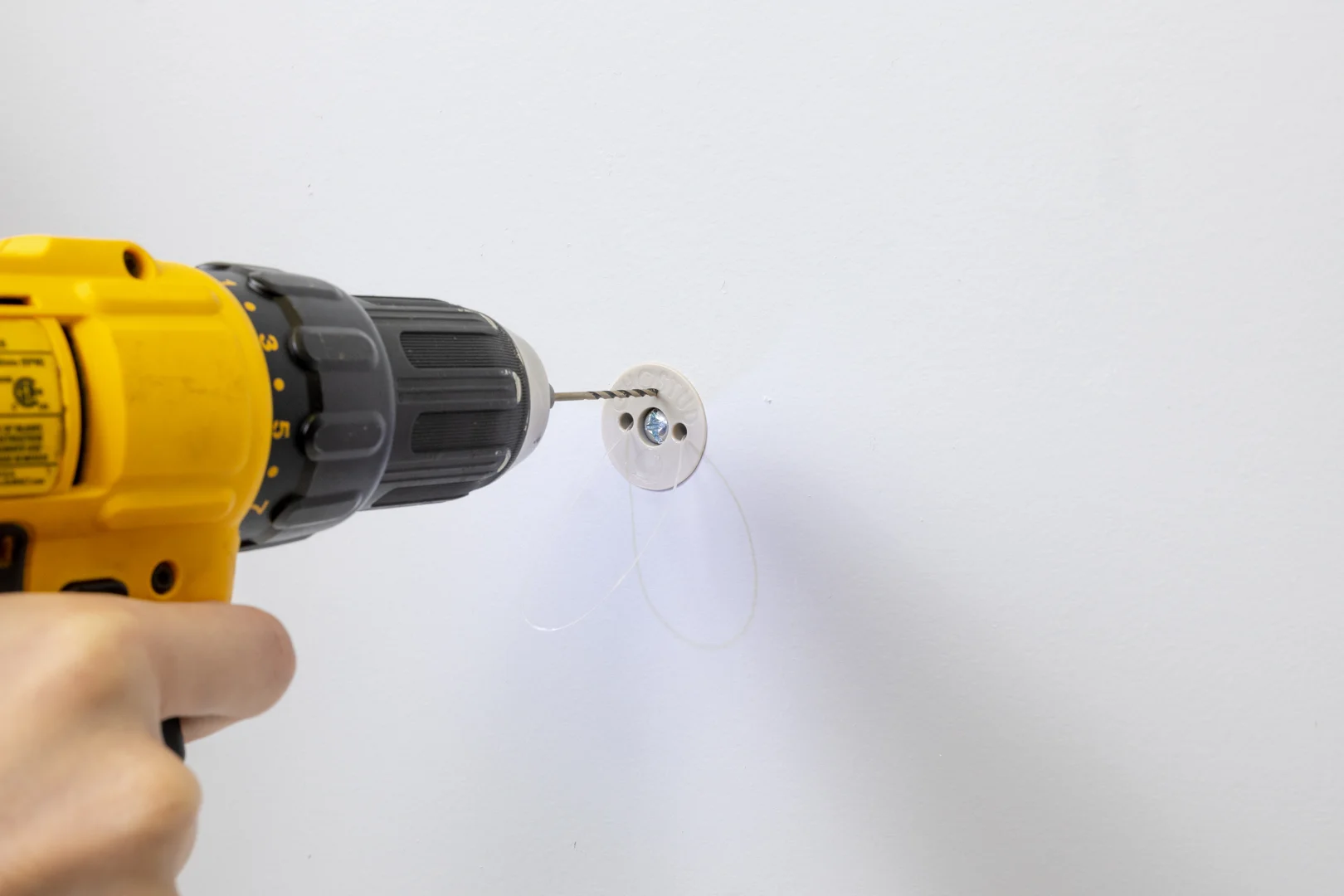
Step 1: Weigh the Fixture and Account for Dynamic Loads
Weigh your fixture using a postal or luggage scale. If you are mounting a shelf, add the weight of the items that will sit on it.
Calculate the required safe working load rating using this formula:
$$\text{Required Anchor Capacity} = \text{Total Load} \times 1.25$$
The 25% safety margin compensates for dynamic loads—such as pulling a towel from a bar or the downward tug of hanging winter coats on an entryway hook.
For cantilevered fixtures (e.g., deep floating shelves extending 8 to 12 inches out from the wall), mechanical leverage converts vertical weight into forward pull-out tension at the top anchor. Always size up to a toggle or mechanical clamping anchor for projecting items, as friction-based expansion sleeves will walk out of the gypsum under continuous tension.
Step 2: Select the Correct Drill Bit and Pre-Drill
Using an incorrect drill bit is the leading cause of anchor failure. An oversized hole causes the anchor sleeve to spin freely in the wall, while an undersized hole crushes the gypsum core as you force the anchor into place.
Review our technical guide on drilling the correct pilot hole to verify your drill bit matches the anchor manufacturer’s exact outer barrel diameter.
- Use an electronic stud finder to verify you are drilling into an open drywall cavity and not hitting a stud, electrical conduit, or plumbing pipe. If you hit wood resistance and see wood shavings, stop and switch to standard wood screws.
- Mark your hole location with a pencil and level.
- Select the appropriate fractional bit (e.g., 1/4-inch bit for #8 plastic expansion anchors, or 1/2-inch bit for toggle channels). Wrap a piece of masking tape around the bit to mark your target depth and catch gypsum dust.
- Drill straight into the drywall at a 90-degree angle using moderate drill speed. For high-capacity installations, follow the steps in our official Install Guide.
Step 3: Fasten the Anchor and Mount Securely
- Insert the Anchor: Push the anchor sleeve into the pre-drilled hole until the outer flange rests completely flush with the drywall surface. If resistance occurs, tap it lightly with a rubber mallet or the heel of your hand. Never drive a standard expansion anchor into an un-drilled hole with a hammer, as this blows out the gypsum core on the back of the board.
- Mount the Bracket: Align your fixture bracket over the anchor center.
- Drive the Screw by Hand: Insert the specified screw gauge (#6, #8, or #10) and tighten with a manual screwdriver. Avoid using high-speed cordless drills for the final turns, as excess torque strips the anchor threads and grinds the soft gypsum into dust.
- Test the Hold: Apply gentle downward and outward pressure on the mounted fixture to verify there is zero play or wobble against the wall face.
Frequently Asked Questions About Drywall Anchor Sizing
What size drywall anchor do i need for heavy coats and backpacks?
Entryway coat racks endure dynamic downward shear and pulling forces. A loaded backpack or wet winter coat can easily apply 25 to 40 lbs of sudden downward force.
Do not rely on standard plastic expansion plugs for coat hooks. Instead, use:
- Medium-to-heavy threaded self-drilling anchors rated for 50 lbs shear in 1/2-inch drywall.
- 3/16-inch or 1/4-inch toggle bolts if the hook rack uses a narrow mounting plate where multiple garments hang from a single point.
What size drywall anchor do i need when the screw is attached to the hook?
Many decorative hooks feature a fixed, integrated screw shank that cannot be swapped out. To find the correct anchor:
- Measure the outer thread diameter of the fixed screw using a digital caliper or a bolt-sizing card at the hardware store.
- Match the diameter to standard screw gauges:
- 0.138 in = #6 screw
- 0.164 in = #8 screw
- 0.190 in = #10 screw
- Select a plastic expansion anchor or ribbed sleeve explicitly labeled to accept that screw gauge. Ensure the internal sleeve length matches or exceeds the length of the hook’s protruding screw thread.
Can I use self-drilling anchors instead of toggle bolts?
Self-drilling anchors work well for flush-mounted items weighing between 10 and 40 lbs (such as small framed prints, wall clocks, and bathroom towel rings). However, they rely strictly on the integrity of the gypsum core immediately surrounding the threads.
For items exceeding 50 lbs, fixtures with deep projection (cantilevered shelves), or dynamic fixtures (such as swinging extension mirrors), self-drilling anchors risk catastrophic pull-out. In those scenarios, use rear-clamping toggle bolts or mechanical load-distributed fasteners that anchor behind the wallboard.
Conclusion
Choosing the right drywall anchor comes down to understanding your wall substrate, measuring drywall thickness, and calculating the true static and dynamic forces applied by your fixture. By pairing the appropriate screw gauge with a correctly sized pilot hole and respecting safe working shear limits, you can mount fixtures securely while preserving the structural integrity of your walls.
For a broader breakdown of specialized fasteners and hollow-wall hardware, explore our comprehensive drywall anchor guide to plan your next mounting project with confidence.