
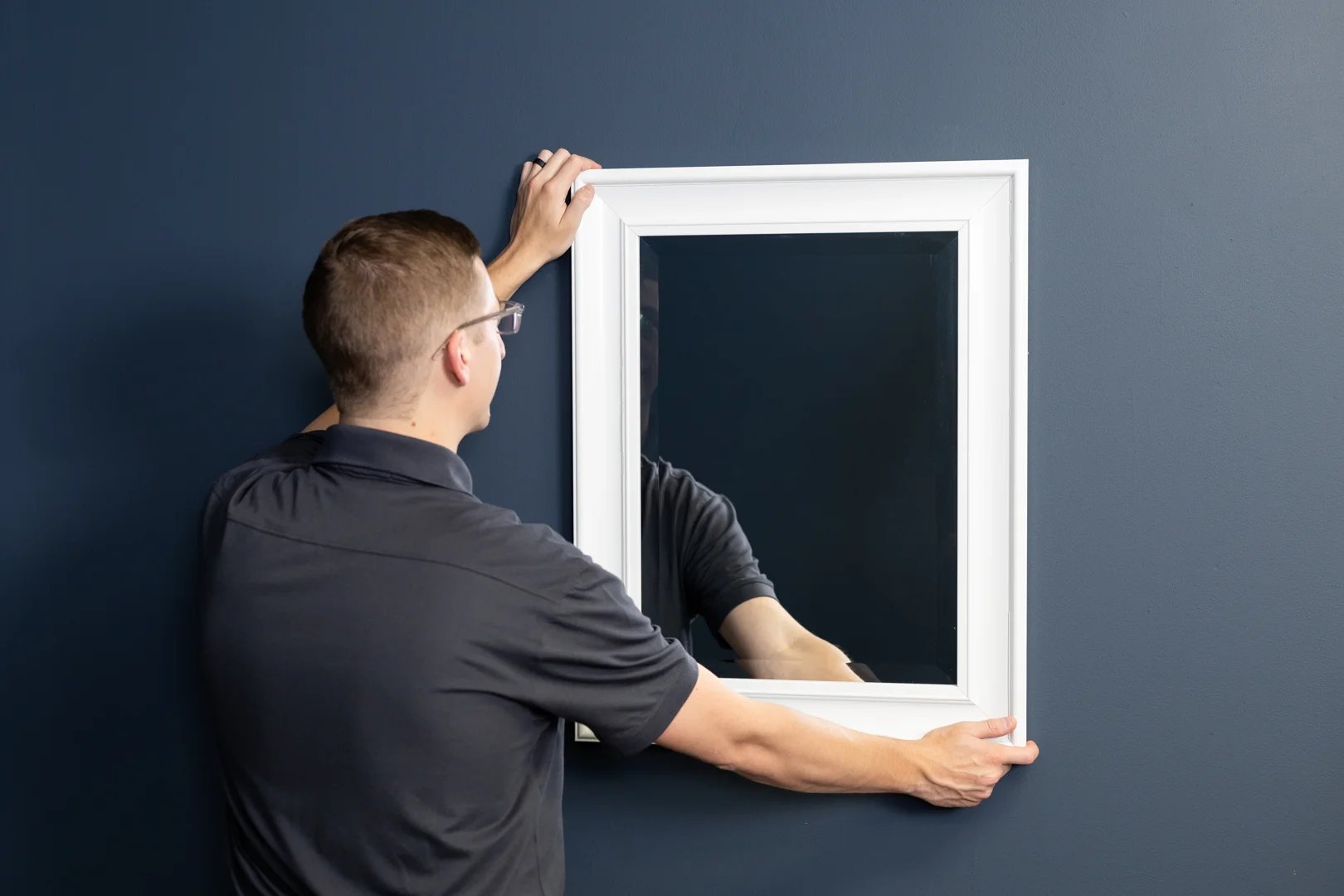
Hang a Heavy Mirror Securely While Protecting Your Wall
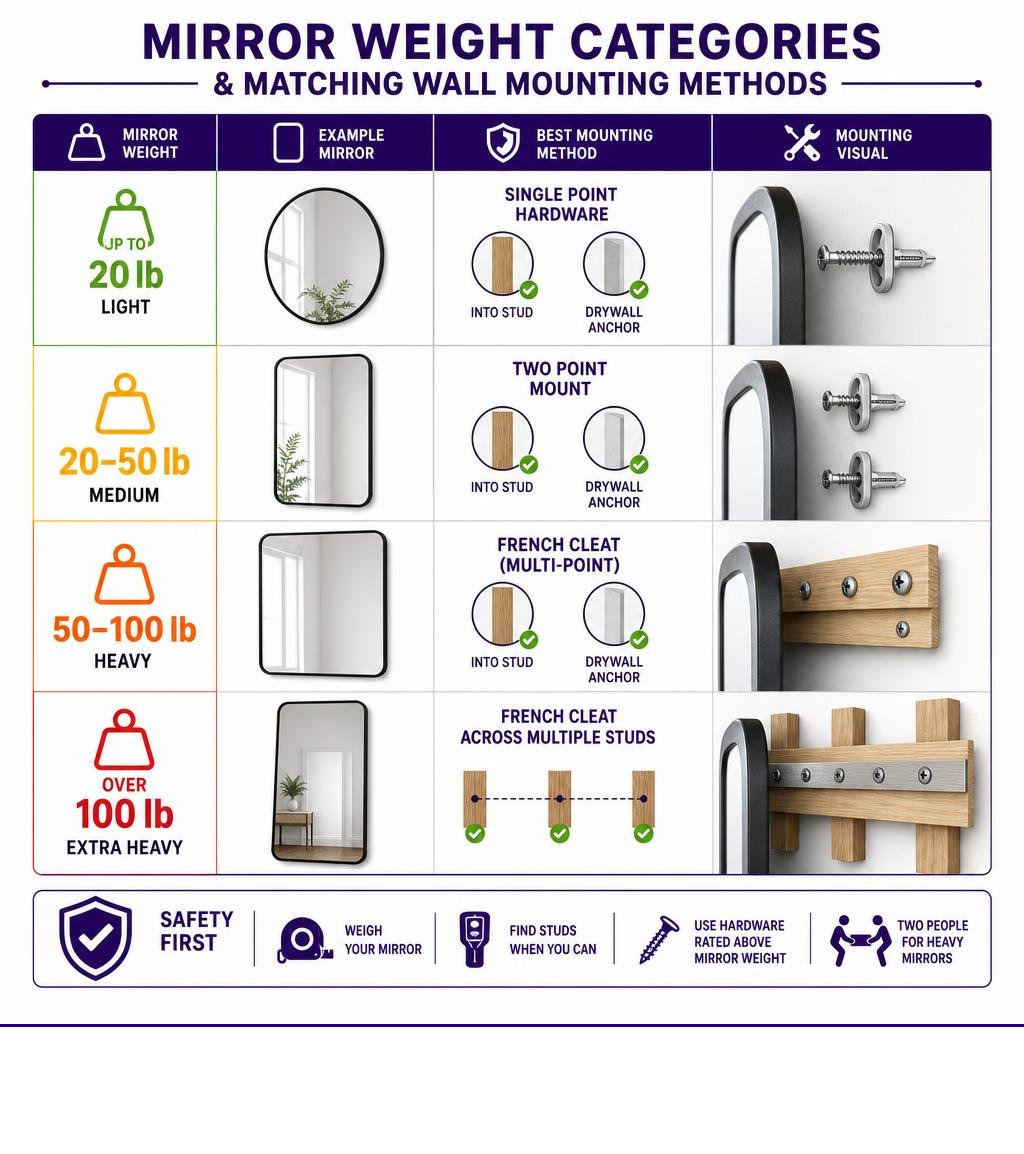
To hang a heavy mirror without damaging the wall, weigh it first, identify the wall surface, and use mounting hardware rated well above the mirror’s weight. Drive screws into studs whenever they line up with your placement. If the wall is sound drywall and no stud is available, use a load-spreading hollow-wall anchor or a multi-point mounting system instead of basic plastic anchors. For mirrors over about 50 lb, a French cleat secured across multiple points is often the most stable choice.
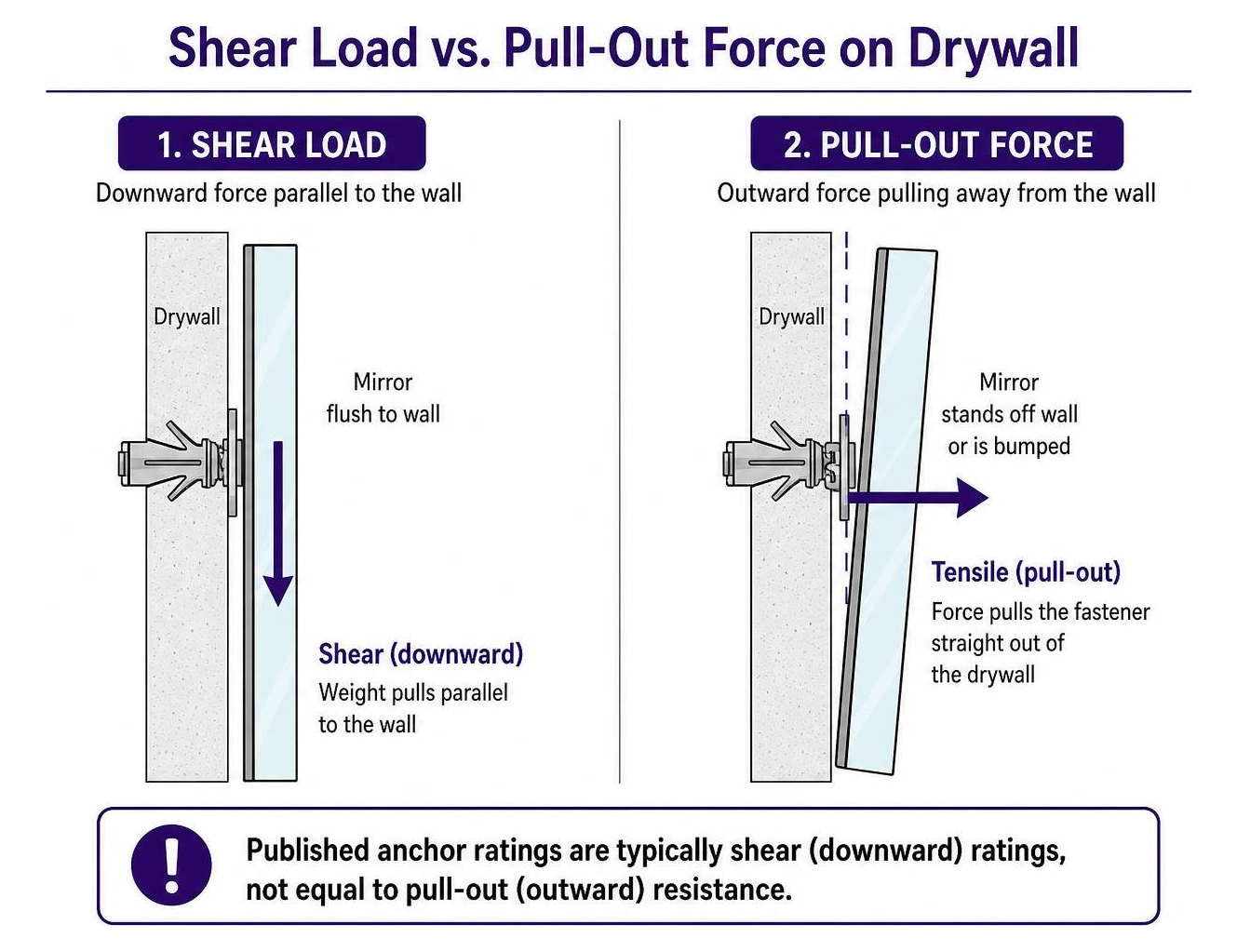
Avoid relying on adhesive strips for a truly heavy mirror. Adhesives can release as paint, humidity, temperature, and time change. Also remember that a mirror does not only pull straight down: if its frame sits away from the wall or someone bumps it, it creates outward pull on the fasteners. Published anchor ratings are usually shear ratings – the downward load on a flush-mounted item – not a promise of equal resistance to that outward force.
A safe install starts before you drill: check for studs, wiring, and plumbing; mark the hardware location with a level; and use two people to lift large glass mirrors. The right method protects both the drywall face and everyone standing nearby.
I am Trevor Jones, with more than 16 years in entrepreneurship, marketing, and technology and a focus on high-capacity drywall-mounting solutions. This guide explains how to hang a heavy mirror without damaging the wall by matching the mirror, wall, and hardware before the first hole is made.
Hardware Selection and Wall Prep: How to Hang a Heavy Mirror Without Damaging the Wall
Mounting heavy wall decor safely requires an understanding of mechanical leverage and wall composition. Drywall consists of a compressed gypsum chalk core encased between paper facings. A standard 12×12-inch section of 1/2-inch drywall can support roughly 40 pounds of static load before the gypsum core crumbles under point pressure.
When you hang a mirror, two primary mechanical forces act on the hardware:
- Shear Load: The downward gravitational force pulling parallel to the wall face.
- Tensile (Pull-Out) Force: The outward horizontal force pulling away from the wall.
A thick or leaning frame shifts the mirror’s center of gravity forward. This creates a cantilever effect that translates downward shear into outward tension at the top fasteners. If an anchor only relies on radial friction against the powdery drywall core, this tension pulls the fastener straight out, causing blowout damage to the drywall face. Dynamic vibrations from closing doors or foot traffic accelerate this loosening cycle.
Wall Substrate Identification and Safe Weight Thresholds
Before purchasing hardware, determine your exact wall substrate. Fasteners engineered for modern drywall will fail catastrophically if driven into hollow lath or solid brick.
- Drywall (Gypsum Board): Common in homes built after 1960. Standard residential thicknesses are 1/2-inch or 5/8-inch. A push-pin test (pressing a standard metal push-pin into an inconspicuous area) penetrates smoothly with firm thumb pressure. Modern studs are spaced 16 inches or 24 inches on center.
- Plaster and Lath: Standard in pre-1950s construction. Plaster consists of brittle lime or gypsum layered over narrow horizontal wood strips (lath). A push-pin will bend or fail to penetrate. Tapping the surface produces varying dull and hollow tones. Plaster requires slow drilling with carbide masonry bits to avoid shattering the brittle keys holding the plaster to the lath.
- Masonry and Concrete: Masonry sounds completely solid when tapped. Fastening requires carbide masonry drill bits and specialized masonry screws or sleeve anchors.
Standard expansion anchors hold roughly 20 to 25 pounds in sound drywall. For items exceeding this threshold, structural wood studs or high-performance load-spreading anchors are mandatory.
How to Hang a Heavy Mirror Without Damaging the Wall Using Low-Damage Hardware
If you are renting or want to minimize wall repairs, your hardware choice dictates the size of the repair later. Lightweight adhesive strips support small frames up to 20 pounds (under 24×36 inches). However, adhesives rely strictly on the tensile bond between your wall paint and the drywall paper facing. In humid environments, that bond degrades, tearing the paper face clean off the wall core.
For medium loads in drywall without accessible studs, mechanical micro-pin or claw hangers distribute weight through angled, hardened steel pins that penetrate the gypsum without wide drill bits. You can also review our guide on how to install anchors into drywall without a drill for low-impact installation methods.
| Hardware Type | Drywall Hole Size | Safe Weight Capacity (1/2″ Drywall) | Wall Substrate Suitability |
|---|---|---|---|
| Adhesive Strips | 0 mm (No hole) | Up to 15–20 lb | Smooth painted drywall only |
| Push-In Steel Claws | Micro-slits (~1 mm) | Up to 65 lb shear | 1/2″ or 5/8″ Drywall only |
| Self-Drilling Zinc Anchors | 3/8″ to 1/2″ | 30 to 50 lb shear | Sound drywall (not plaster) |
| Steel Strap Toggles | 1/2″ drill hole | 50 to 100+ lb shear | Hollow drywall, plaster, tile |
| Load-Spreading Anchor (GHOSTUD GS1) | 1″ hole saw | Up to 250 lb shear | 1/2″ or 5/8″ Drywall |
Step-by-Step Installation for Secure and Damage-Free Mounting
Accurate placement eliminates misplaced drill holes that weaken the drywall matrix.
- Weigh the Mirror: Place the mirror on a scale. Never estimate the weight. A typical 24×60-inch wood-framed mirror weighs about 24 pounds, while an oversized 72×48-inch framed mirror can exceed 60 to 80 pounds.
- Map the Footprint: Outline the mirror’s outer dimensions using blue painter’s tape. The gallery eye-level standard centers the glass roughly 57 to 60 inches from the finished floor. If hanging above a console table or mantel, maintain 4 to 8 inches of clearance.
- Measure the Hardware Offset: Measure the exact distance from the top outer edge of the frame down to the mounting brackets or D-rings. Transfer these marks inside your tape outline on the wall.
- Locate Studs and Hidden Utilities: Scan the wall using a multi-mode stud finder with AC live-wire detection to avoid hidden electrical runs or plumbing lines.
How to Hang a Heavy Mirror Without Damaging the Wall When No Studs Are Available
When studs do not align with your layout, you must use hollow-wall anchors that transfer stress away from the front surface paper to the back face of the gypsum board. A basic friction anchor simply expands within the 1/2-inch core; under load, it grinds the gypsum into dust and pulls out.
For a comprehensive comparison of mechanical hollow-wall fasteners, review our practical guide to molly bolt vs toggle bolt comparisons.
To install heavy-duty strap toggle bolts on hollow drywall:
- Drill a precise 1/2-inch pilot hole at your marked wall location.
- Hold the metal toggle channel flat against the flexible plastic straps and slide it through the hole until it clears the back of the drywall.
- Pull the straps taut toward you so the metal channel seats flush against the interior drywall face.
- Slide the plastic retaining flange down the straps until it presses tight against the front wall surface.
- Snap the excess plastic straps off flush with the wall face.
- Thread your machine screw through the mirror bracket into the anchored metal channel and tighten until snug. Avoid over-torquing, which can crush the interior gypsum core.
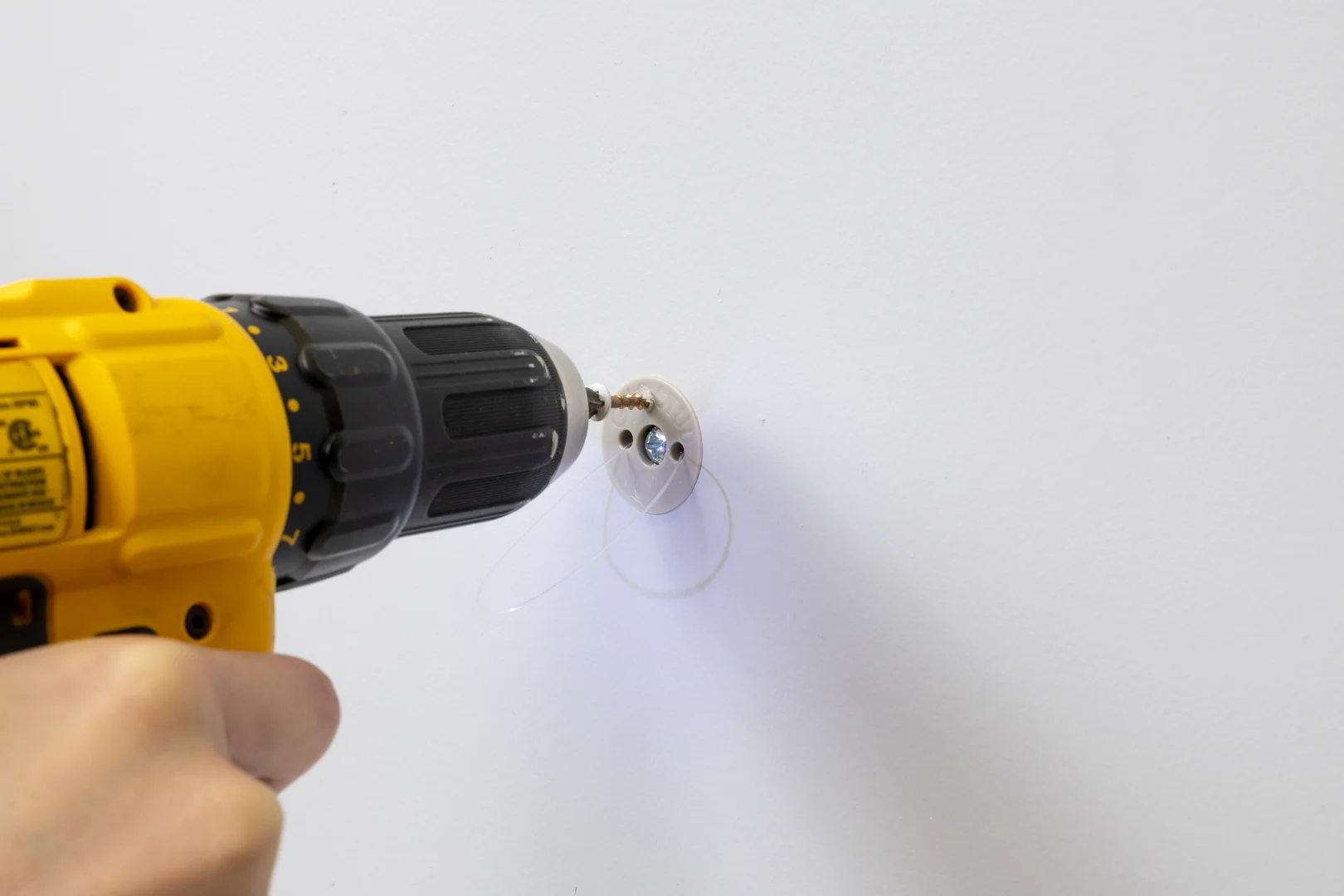
When you require structural-grade capacity in hollow drywall partitions, the patented load-spreading design of the GS1 Ghostud drywall anchor provides up to 250 lb of shear capacity in 1/2 in or 5/8 in drywall using a 1-inch hole saw installation.
Note: GHOSTUD anchors are engineered specifically for 1/2-inch and 5/8-inch gypsum drywall. If your wall is solid masonry, lath and plaster, brick, or concrete, GHOSTUD is the wrong choice. In those situations, use specialized masonry anchors or tapcon screws drilled directly into the solid substrate.
Installing an Interlocking French Cleat System
For large mirrors over 50 pounds, an interlocking French cleat system provides superior stability. The system uses two beveled aluminum brackets: one mounts downward-facing on the back of the mirror frame, and the other mounts upward-facing on the wall. For additional details, see our technical breakdown on how to anchor a heavy mirror to the wall.
- Attach the Cleat to the Mirror: Lay the mirror face down on a moving blanket. Center the upper bracket along the top structural rail of the frame. Pre-drill pilot holes to prevent splitting the wood frame and fasten the cleat with the included wood screws.
- Mount the Wall Cleat: Position the matching wall bracket. Place a 2-foot or 4-foot spirit level along the top edge. Mark the screw slots.
- Anchor the Wall Cleat: Fasten the wall bracket into at least two wood studs using 2-inch wood screws. If studs are inaccessible across the span, secure each mounting hole with rated toggle bolts or heavy-duty drywall anchors.
- Apply Bottom Spacers: Stick adhesive silicone or foam bumper pads to the bottom two corners of the mirror frame. This keeps the mirror parallel to the wall and prevents bottom kick-out.
Critical Safety Precautions, Lifting Protocols, and Common Mistakes
Never attempt to lift an oversized or heavy mirror alone.
- Use Two People for the Lift: Position one person on each side of the frame. Lift with your legs, keeping your back straight. Raise the mirror slightly above the wall hardware and lower it slowly until the brackets fully interlock.
- Verify Bracket Engagement: Gently pull downward and forward on the frame to confirm the cleats or D-rings have engaged the wall hardware before releasing support.
- Thermal Degradation Risks: Never mount a heavy mirror directly above an active fireplace using polymer anchors or adhesive tapes. Wall temperatures above functional fireplaces can exceed 140°F (60°C), causing chemical degradation in adhesives and plastic anchors that leads to sudden joint failure. Use high-temperature metal anchors or direct stud mounts in these zones.
- Handle Loose Anchors Correctly: If an anchor spins or pulls loose during installation, remove it immediately. Do not attempt to test it under load. Patch the hole and relocate the fastener at least 2 inches away to avoid compromised drywall.
Frequently Asked Questions About Hanging Heavy Mirrors
Can I safely hang a 50 lb mirror without drilling into a wall stud?
Yes, provided the 1/2-inch or 5/8-inch drywall is intact and you use appropriate hollow-wall fasteners. Use heavy-duty toggle bolts or high-capacity load-spreading anchors rated for at least twice the mirror’s static weight (the 2x safety rule). Distribute the load across at least two separate anchor points spaced across the frame width to avoid concentrating shear force in a single section of drywall.
Are adhesive strips safe for heavy decorative mirrors?
No. Adhesive strips and double-sided foam tapes are only suitable for lightweight items under 15 to 20 pounds in low-humidity environments. Over time, static deadweight combined with humidity fluctuations causes adhesive shear creep. When the adhesive fails, it frequently delaminates the paint and tears the paper facing off the gypsum core.
What is the best height to hang a heavy mirror on the wall?
Standard interior design practice places the horizontal centerline of the mirror at eye level, roughly 57 to 60 inches from the floor. When mounting above furniture like a credenza, dresser, or console table, position the bottom edge of the frame 4 to 8 inches above the tabletop to maintain proportional balance and prevent accidental bumps.
Conclusion
Hanging a heavy mirror without wall damage comes down to calculating forces, identifying your substrate, and selecting hardware engineered for the load. While light decorative pieces hang easily with low-profile hooks, oversized and heavy mirrors demand mechanical anchoring that distributes shear load across sound framing or the back face of the gypsum core. For more mounting strategies, explore our comprehensive guide to hanging heavy mirrors.