
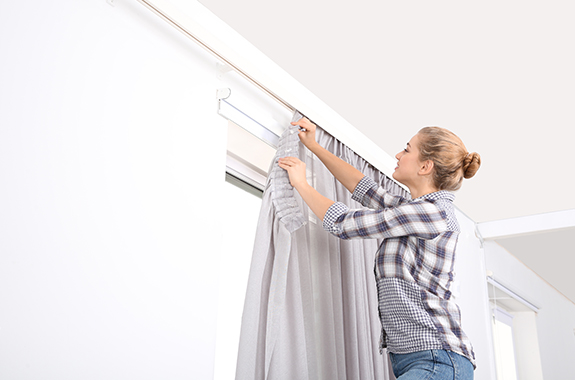
Best Wall Anchors for Curtain Rods at a Glance
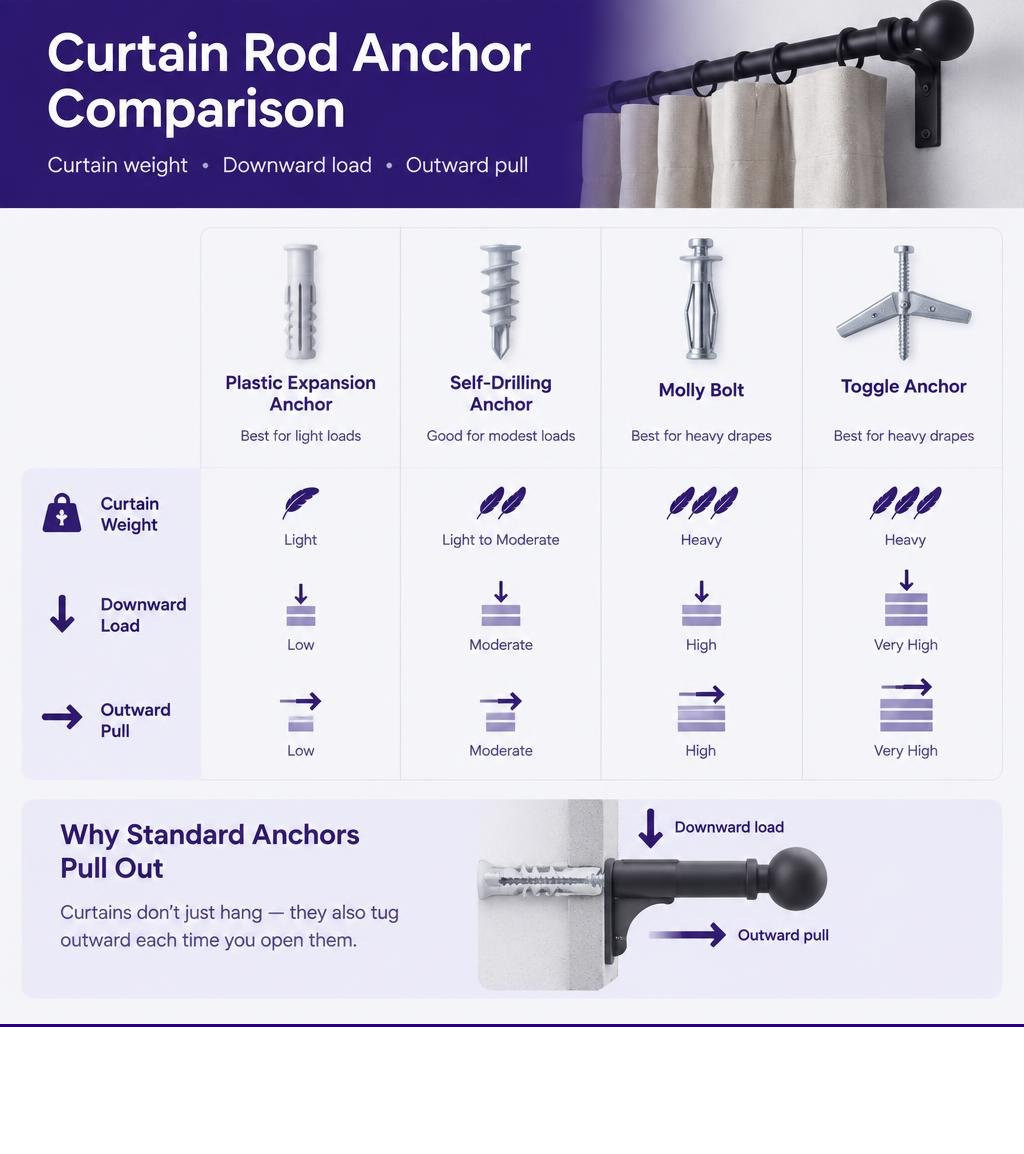
Use a stud if one lines up with your bracket. If you must mount in drywall, choose plastic expansion anchors only for light sheers, self-drilling anchors for modest loads, and molly bolts or toggles for heavy drapes. Check the weight of the curtains and rod, plus the bracket’s load limit. Curtains also tug brackets outward each time you open them, so a high weight rating alone does not guarantee a secure mount.
Related guides for mounting curtain hardware:
- best drywall anchors for curtain rods
- how to hang curtain rods in drywall
- curtain rod anchor guides
Understanding Load Mechanics: Why Standard Anchors Pull Out
Curtain hardware fails because of combined forces. Hanging drapery does not apply a simple downward load. A standard window with two lined curtain panels puts approximately 10 pounds on the rod. A large window with floor-length velvet curtains can exceed 20 pounds.
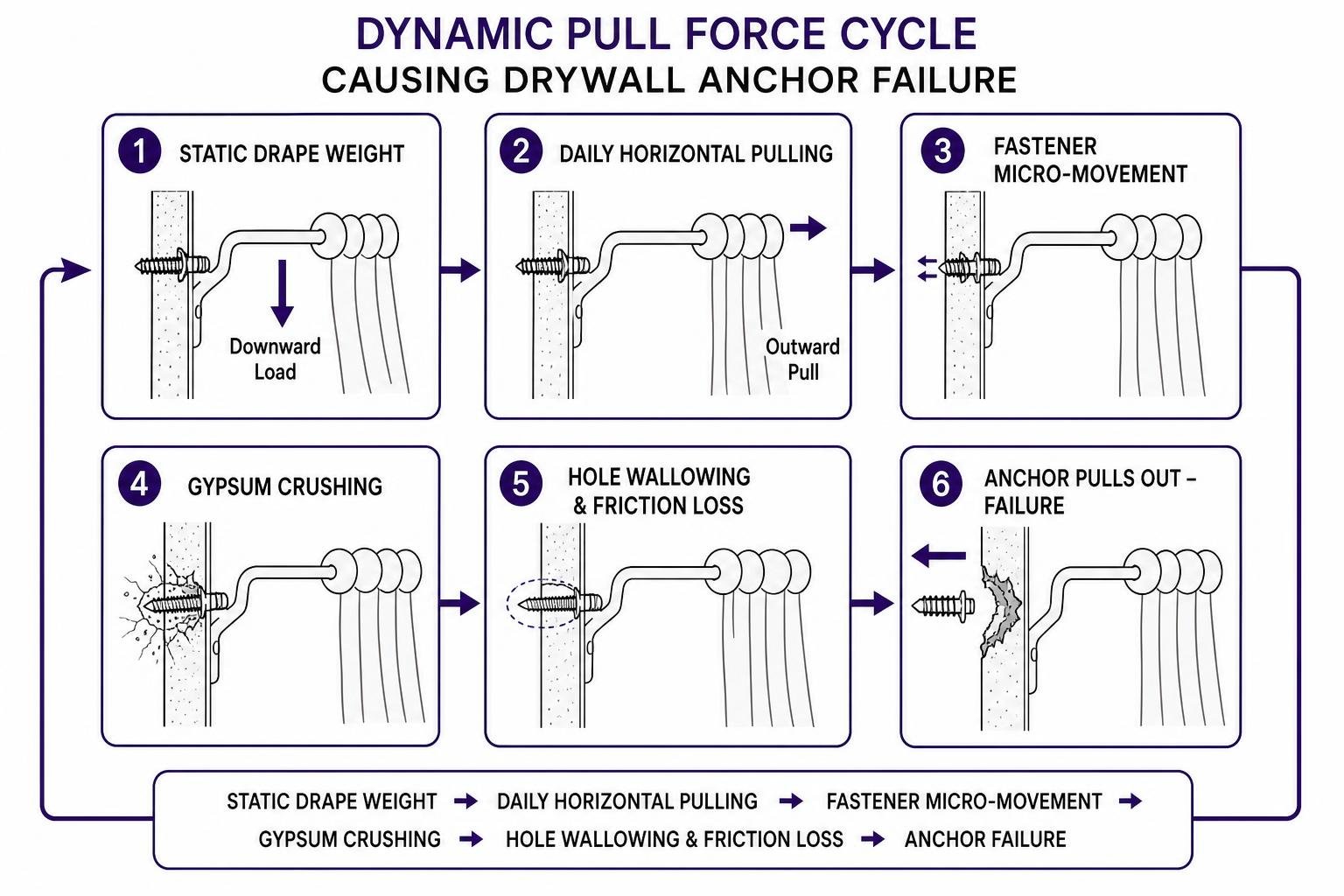
When you hang a curtain rod, the bracket projects 3 to 5 inches off the wall. This projection creates a cantilever. The fabric weight pulls downward on the bracket arm, which translates into rotational leverage at the wall surface. The bottom of the bracket pushes inward against the gypsum core, while the top mounting screw experiences continuous outward pull-out tension.
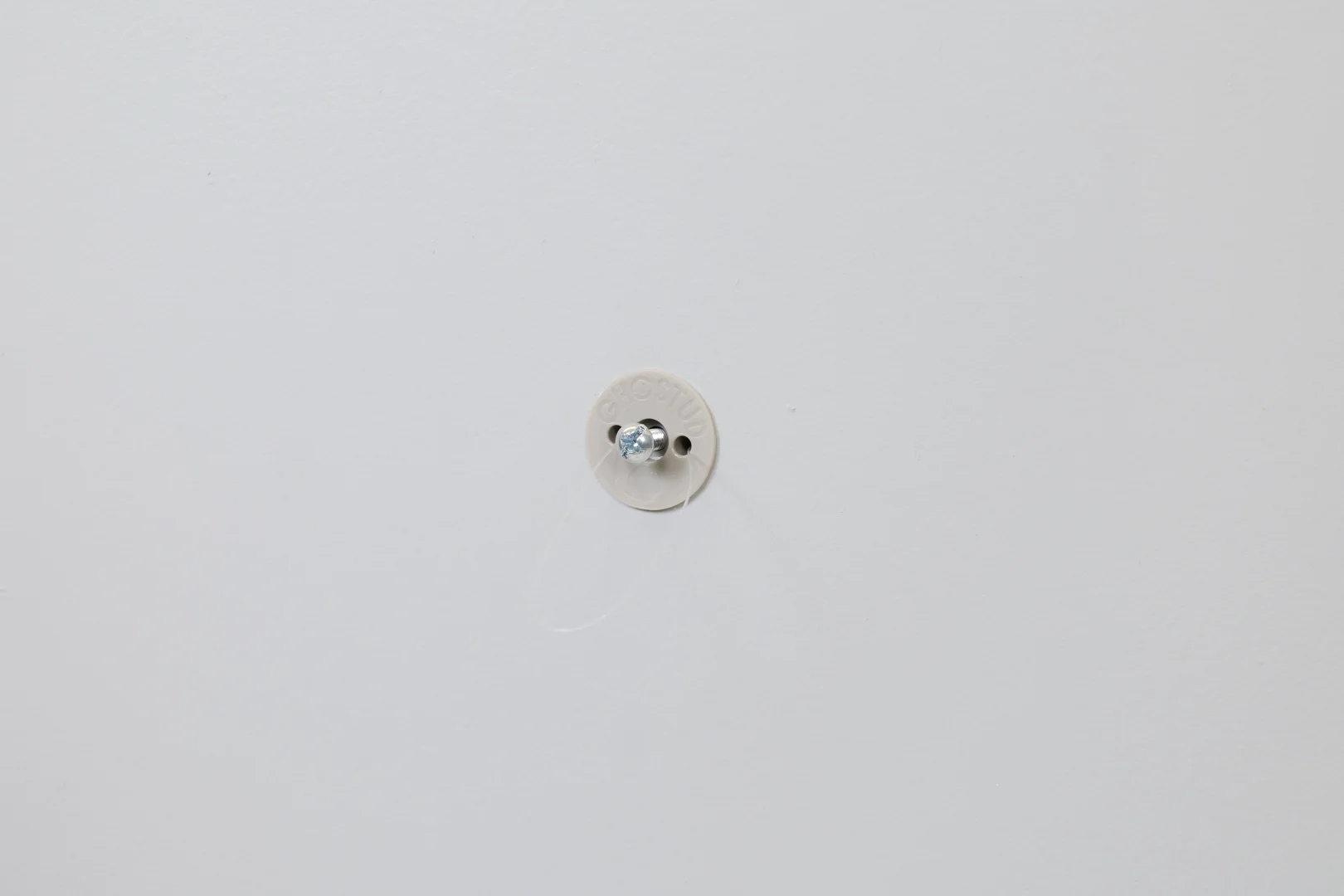
Daily operation adds dynamic tension to this static load. Every time you pull curtains open or closed, you exert horizontal shear and forward pulling stress directly on the top fastener. Understanding shear ratings helps explain why standard friction-fit hardware fails under these conditions.
The primary failure mode in hollow drywall is hole wallowing and paper-face fatigue. Standard expansion plugs rely purely on radial friction against the crumbly gypsum core. As dynamic tugging rocks the bracket back and forth, the anchor core crushes the surrounding gypsum. The round pilot hole wallows out into an oval, the friction bond fails, and the anchor pulls completely out of the wall, leaving a blown-out hole.
To minimize this leverage, position your brackets evenly. Curtain rods longer than 4 to 5 feet require at least one center support bracket to prevent sagging. Rods over 6 feet need a support bracket for every 3 to 4 feet of rod length.
How to Choose Drywall Anchors for Curtain Rods
Drywall is a brittle composite of gypsum wrapped in paper facing, typically sold in 1/2-inch or 5/8-inch thicknesses. Plain 1/2-inch drywall can hold as little as 5 pounds under direct pull-out force before tearing. You must size your fasteners to handle the full static load, rod weight, and dynamic force combined. Always choose an anchor rating with a safety factor of at least double the calculated total weight.
Selecting the best wall anchors for curtain rods requires reviewing guidelines on selecting the right drywall anchor for your total fixture weight. You must also check your bracket base holes. Universal brackets like the IKEA BETYDLIG wall/ceiling bracket provide slots for flexible alignment, but your screw head diameter must be wide enough to clamp the bracket firmly without slipping through.
Evaluating Anchors by Load Capacity
Different anchor styles distribute weight across hollow walls using distinct mechanical methods.
| Anchor Type | Drywall Thickness | Static Capacity Range (Drywall) | Recommended Fabric Weight | Mechanism |
|---|---|---|---|---|
| Plastic Expansion Plugs | 1/2 in or 5/8 in | 5 to 10 lbs | Sheer fabric only (< 5 lbs) | Radial friction against gypsum |
| Self-Drilling Threaded (Nylon/Zinc) | 1/2 in or 5/8 in | 25 to 75 lbs | Light cotton or linen (5–15 lbs) | Wide external threads bite drywall core |
| Steel Molly Bolts | 1/2 in or 5/8 in | 25 to 50 lbs | Medium lined drapes (10–20 lbs) | Collapsible metal sleeve behind wall |
| Spring Toggle Bolts | 1/2 in or 5/8 in | 50 to 90 lbs+ | Heavy lined drapes (15–30 lbs) | Spreading spring wings behind wall |
| GHOSTUD GS1 Anchor | 1/2 in or 5/8 in | Up to 250 lbs | Heavy velvet, blackout, thermal (> 20 lbs) | Load-distributed solid plate through 1-in hole |
Mounting something heavy where there’s no stud? GHOSTUD® spreads the load across the drywall with a wide backplate instead of relying on the gypsum core. GS1 holds up to 250 lb shear, GS2 up to 1,000 lb. Made in the USA from recycled structural plastic. Shop GHOSTUD® from $16.99 →
For an in-depth breakdown of hollow-wall metal options, read this guide comparing molly bolts and toggle bolts.
Comparing Light, Medium, and Heavy-Duty Anchor Performance
Match the anchor mechanism to your specific drapery setup:
- Lightweight Loads (Under 5 lbs): Sheer panels and ultra-light cafe rods do not exert heavy leverage. Basic ribbed plastic expansion plugs are sufficient here. Do not use them for functional curtains opened daily.
- Medium Loads (5 to 20 lbs): Standard lined cotton panels put moderate stress on your walls. Self-drilling nylon anchors (such as CrimsonMark or E-Z Ancor rated at 50 to 75 lbs) bite directly into the gypsum. Steel molly bolts expand a metal sleeve behind the wall to provide a permanent threaded socket for medium loads.
- Heavy-Duty Loads (20 lbs and up): Floor-length velvet curtains, thermal blackout drapes, and long decorative iron rods create intense dynamic loads. Spring toggle bolts or heavy-duty snap toggles distribute force across the back of the drywall.
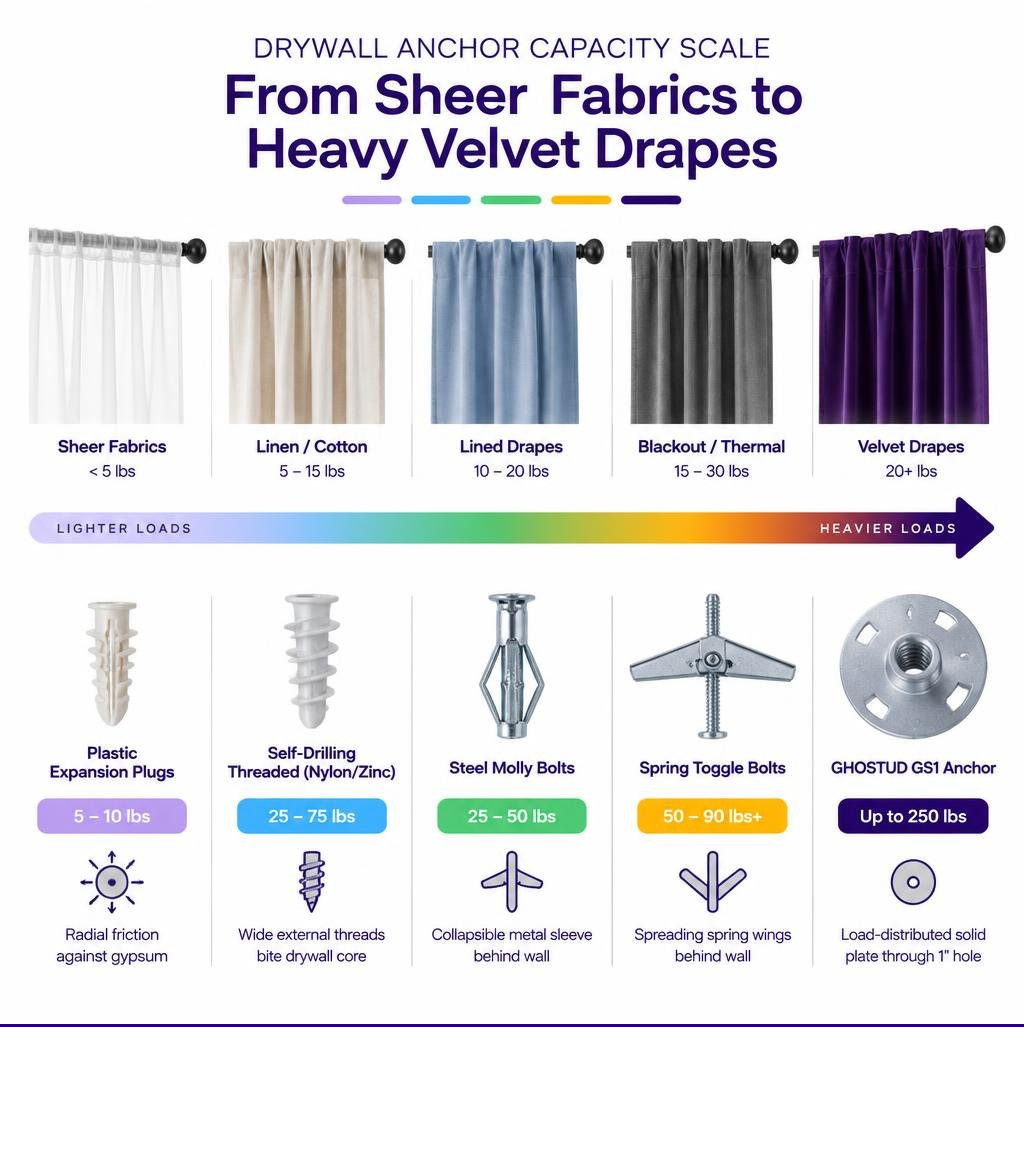
For a solid, load-distributed mechanical hold on 1/2-inch or 5/8-inch drywall, our GS1 Ghostud Drywall Anchor is built for dynamic fixtures like curtain rods, towel bars, and toilet paper holders. It installs through a 1-inch hole saw cutout, spreads weight evenly across the drywall face, and is rated up to 250 lb. It installs permanently, eliminating the wallowing issues common with traditional friction plugs.
Step-by-Step Installation: How to Hang Curtain Rods Without Studs
Mounting curtain rods securely requires exact layout and proper tool control.
Required Tools
- Tape measure
- 24-inch or 48-inch bubble level
- Pencil
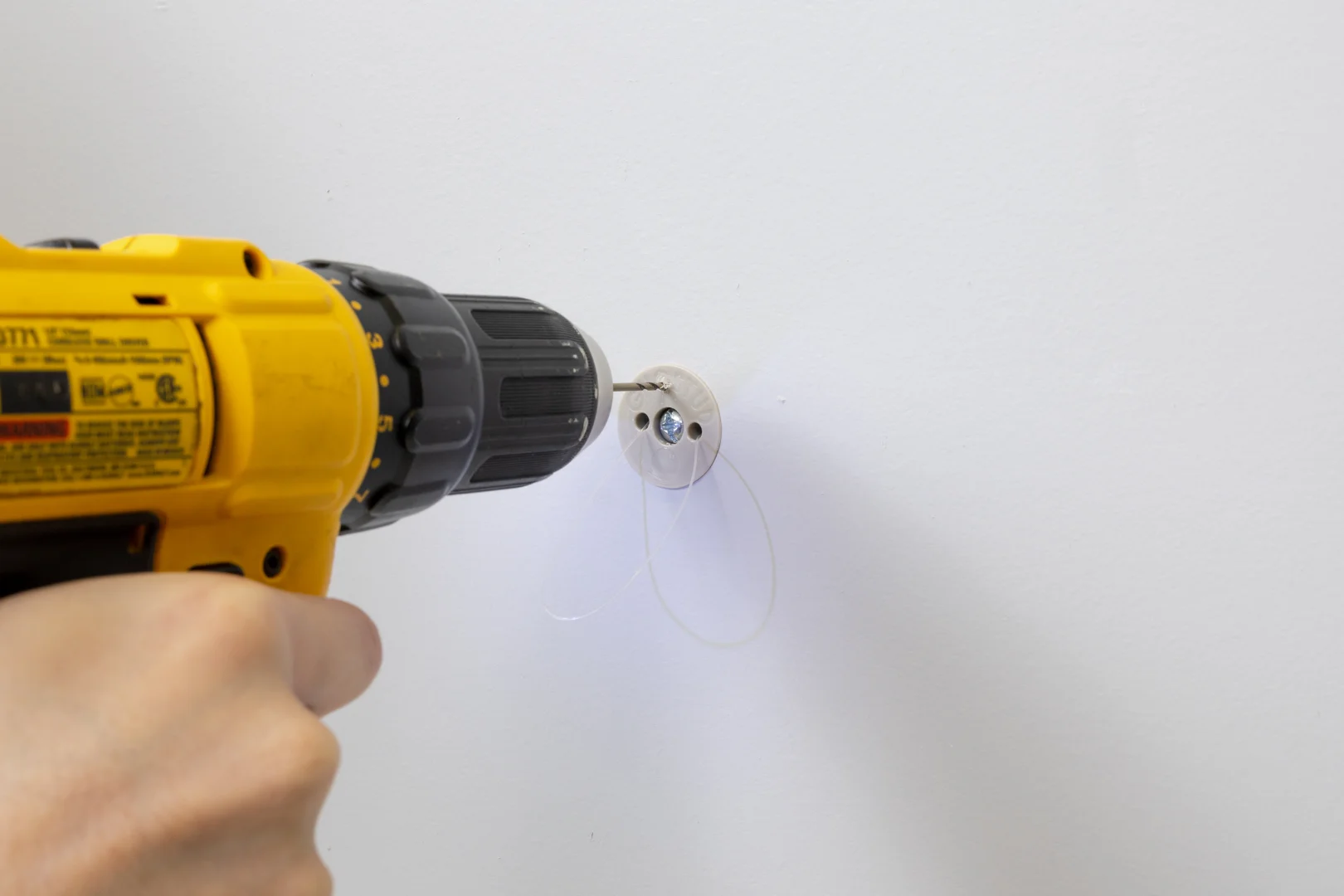
- Cordless drill and appropriate drill bits or hole saw
- Hand screwdriver (#2 Phillips)
- Wall anchors rated for your curtain load
Installation Steps
- Measure and Mark Height: Measure 4 to 6 inches above the window frame (or two-thirds the distance between the trim and ceiling). Mark the mounting height on both sides.
- Mark Bracket Width: Measure 6 to 12 inches past the outer edge of the window trim on each side. This allows curtains to stack clear of the glass when open. Mark the mounting holes using the bracket as a template.
- Level the Alignment: Place a level across your left and right bracket marks. Adjust marks until perfectly level.
- Mark Center Supports: For spans over 4 to 5 feet, measure and mark the exact center point at the established level line.
- Drill Anchor Holes: Drill pilot holes matched to your anchor specifications:
- Plastic expansion: Pre-drill the exact packaging-specified bit size (typically 3/16-inch or 1/4-inch).
- Steel molly bolts: Drill the specified sleeve diameter (typically 5/16-inch).
- Spring toggles: Drill a clearance hole large enough to feed the folded wings through (typically 3/8-inch to 1/2-inch).
- GHOSTUD GS1: Cut a clean 1-inch hole using a hole saw.
- Set the Anchors: Insert the anchor into the drywall until the flange sits flush against the paper face.
- Fasten the Brackets: Secure the bracket to the anchor using the provided machine screw or fastener. Drive the final turns with a hand screwdriver to ensure a snug fit.
- Mount the Rod and Drapery: Place the rod with curtains into the brackets. Tighten the bracket set screws to lock the rod in place.
Tips for Installing Curtain Hardware Without Wall Damage
Avoid common drywall mistakes during installation:
- Prevent Rear Blowouts: Do not force drill bits through the drywall. High forward drill pressure punches through the rear gypsum paper, creating a large, weak crater on the back of the wall. Let the drill bit speed cut cleanly.
- Stop Power Driving: Never drive drywall anchor mounting screws to the stop with an impact driver or high-speed drill. High torque strips the internal threads of nylon anchors or crushes the gypsum under the bracket foot. Finish tightening by hand.
- Size Pilot Holes Accurately: Drilling an undersized hole for a plastic anchor causes it to bend or mushroom before seating flush. Drilling an oversized hole destroys the anchor’s friction grip completely.
If you need detailed guidance on clean insertion techniques, follow our guide on how to insert an anchor into drywall.
Wall Limitations: When to Avoid Drywall Anchors
Drywall anchors are designed strictly for hollow gypsum assemblies. Never use hollow drywall anchors under the following conditions:
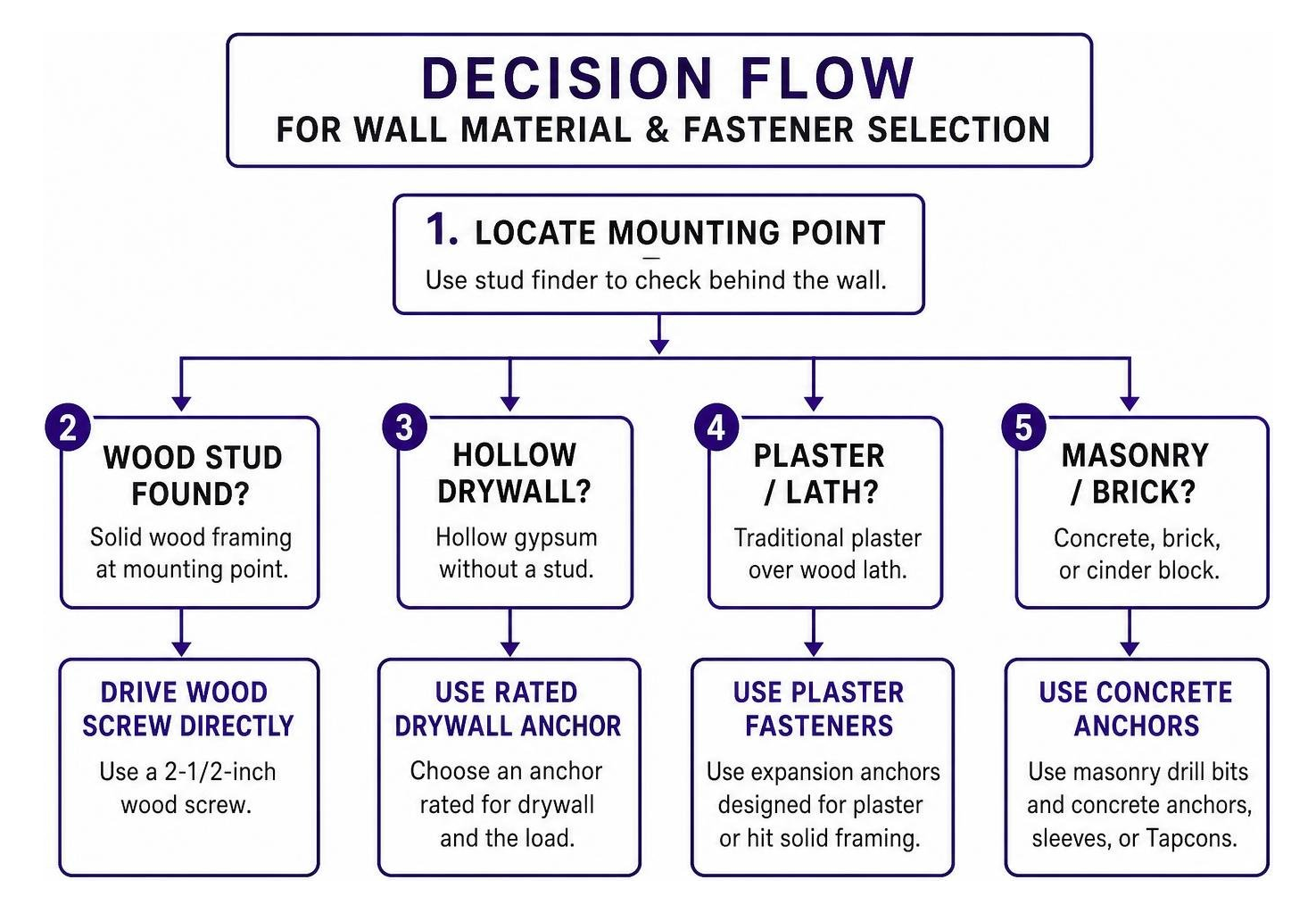
- Direct Stud Contact: Always check for framing with a stud finder first. If a bracket aligns with a wood stud, drive a 2-1/2-inch wood screw directly into the lumber. Review our comparison on drywall anchors versus stud mounting to understand why solid wood framing is always the strongest choice.
- Plaster and Lath Walls: Traditional plaster walls consist of lime or gypsum over thin wood laths. Drywall anchors (including self-drilling anchors and GHOSTUD units) will fracture brittle plaster keys and fail. Use specialized expansion anchors designed for plaster or hit solid framing.
- Masonry and Concrete: Concrete, solid brick, and cinder block walls require masonry drill bits and dedicated sleeve anchors, concrete screws (Tapcons), or hammer-set anchors. Drywall fasteners cannot be installed in solid masonry.
- Metal Studs and Tile Backer: Drywall anchors are not engineered for tile backer board or light-gauge steel framing.
Take a stud finder, mark every stud along your window header, and confirm your wall material before drilling.
Frequently Asked Questions About Curtain Rod Anchors
Can I hang heavy velvet curtains in drywall without finding a stud?
Yes. Heavy velvet drapes (exceeding 20 pounds) can be hung in drywall using toggle bolts or high-capacity mechanical anchors rated for heavy loads in 1/2-inch or 5/8-inch drywall. Ensure you distribute the load across multiple brackets spaced no more than 3 to 4 feet apart.
Are self-drilling plastic drywall anchors reliable for curtain rods?
Self-drilling nylon or zinc anchors work reliably for light to medium curtains (up to 15 pounds) that remain stationary. They are less suitable for heavy drapes on rods that are pulled aggressively every day. Over time, dynamic cyclic pulling can cause the anchor’s wide external threads to pulverize the dry gypsum core.
How many support brackets and anchors are needed for long curtain rods?
For curtain rods up to 4 to 5 feet long, two end brackets are sufficient. For rods between 6 and 8 feet, install three brackets (two ends and one center support). For rods exceeding 8 feet, install a bracket every 3 to 4 feet along the span to prevent the rod from bowing and to reduce the pull-out force on individual wall anchors.
Conclusion
Hanging curtains securely without studs requires matching your wall fasteners to both the static weight of the drapes and the dynamic leverage of daily use. Standard plastic expansion plugs work for lightweight sheers, while self-drilling fasteners and steel molly bolts support medium-weight cotton panels. For heavy, floor-length blackout or velvet drapes, use high-capacity toggle bolts or our solid GS1 anchor in 1/2-inch or 5/8-inch drywall.
To explore all our heavy-duty mounting hardware and installation tutorials, visit our curtain rod anchor guides to plan your installation.
Mount it once, mount it right. Compare GS1 and GS2 →