
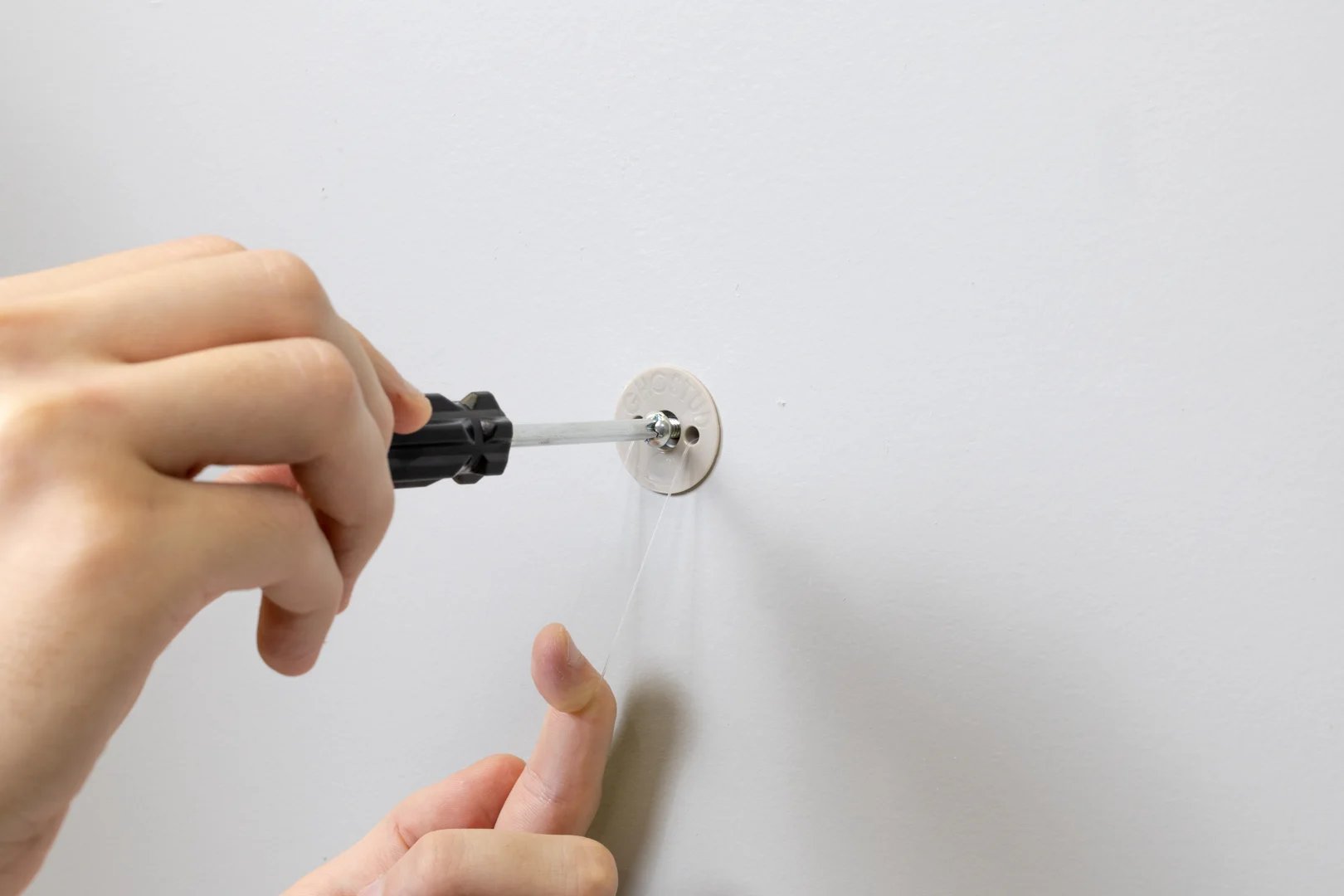
How Much Weight Can a Picture Hanger Hold in Drywall?
A nail driven into drywall alone usually supports 5 to 10 lb. A conventional picture hook can support about 15 lb, while some specially rated hooks hold more. Weigh the whole item, check the hanger’s rating for drywall, and follow its installation instructions. Use a properly located stud when one is available.
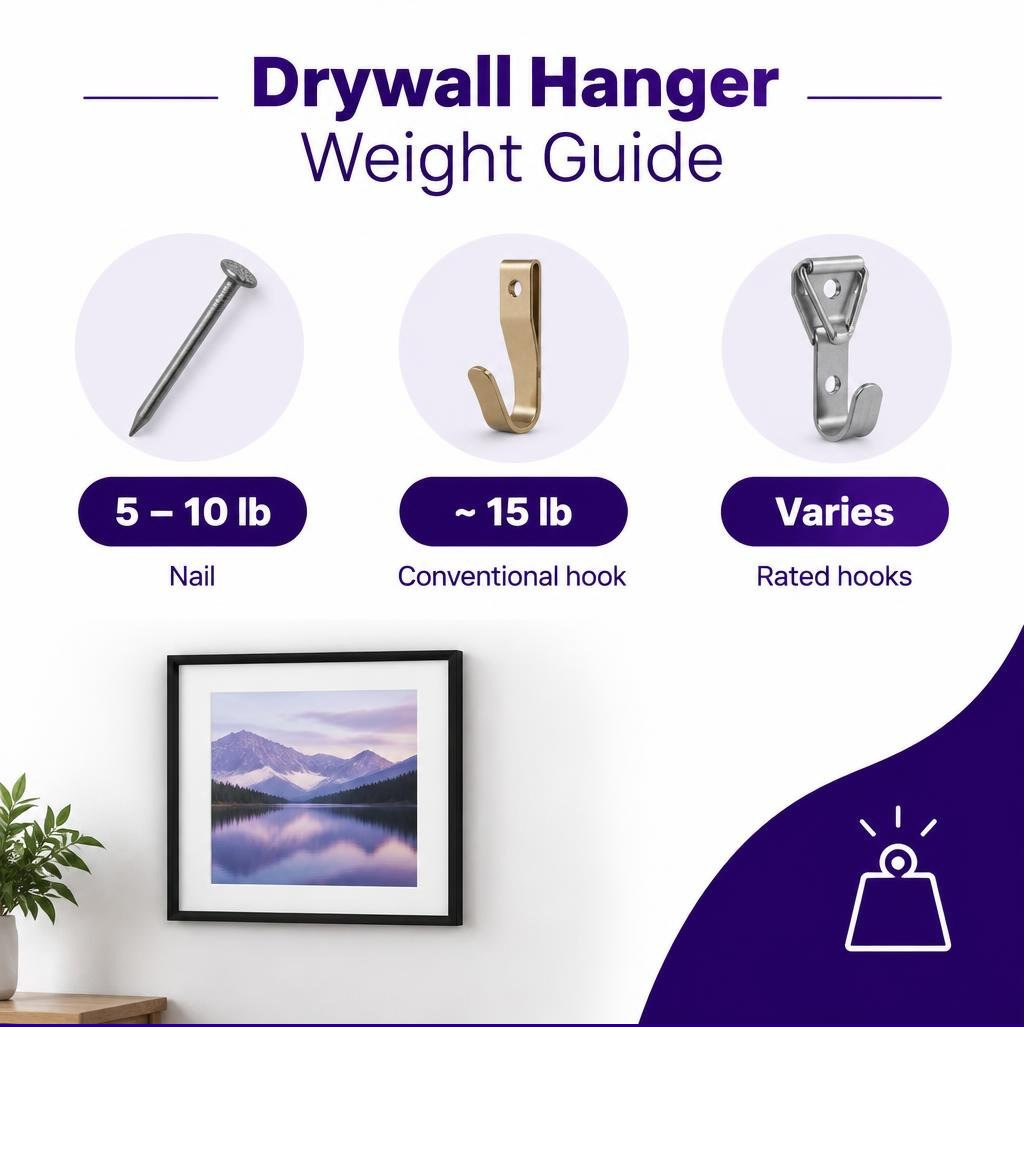
Determining how much weight a picture hanger can hold in drywall requires calculating both fastener design and wall conditions. For full installation strategies, use a mounting method that matches the item’s weight and wall conditions.
Drywall Physics: Shear Load vs. Pull-Out Stress
Every object mounted to a wall exerts two distinct mechanical forces: shear load and pull-out stress.
Shear load is the straight downward force exerted parallel to the wall face. Pull-out stress (tension) is the outward force pulling perpendicular to the wall. Understanding these physical forces is critical, especially when reading manufacturer labels. You can learn more in our detailed look at how shear ratings are explained.
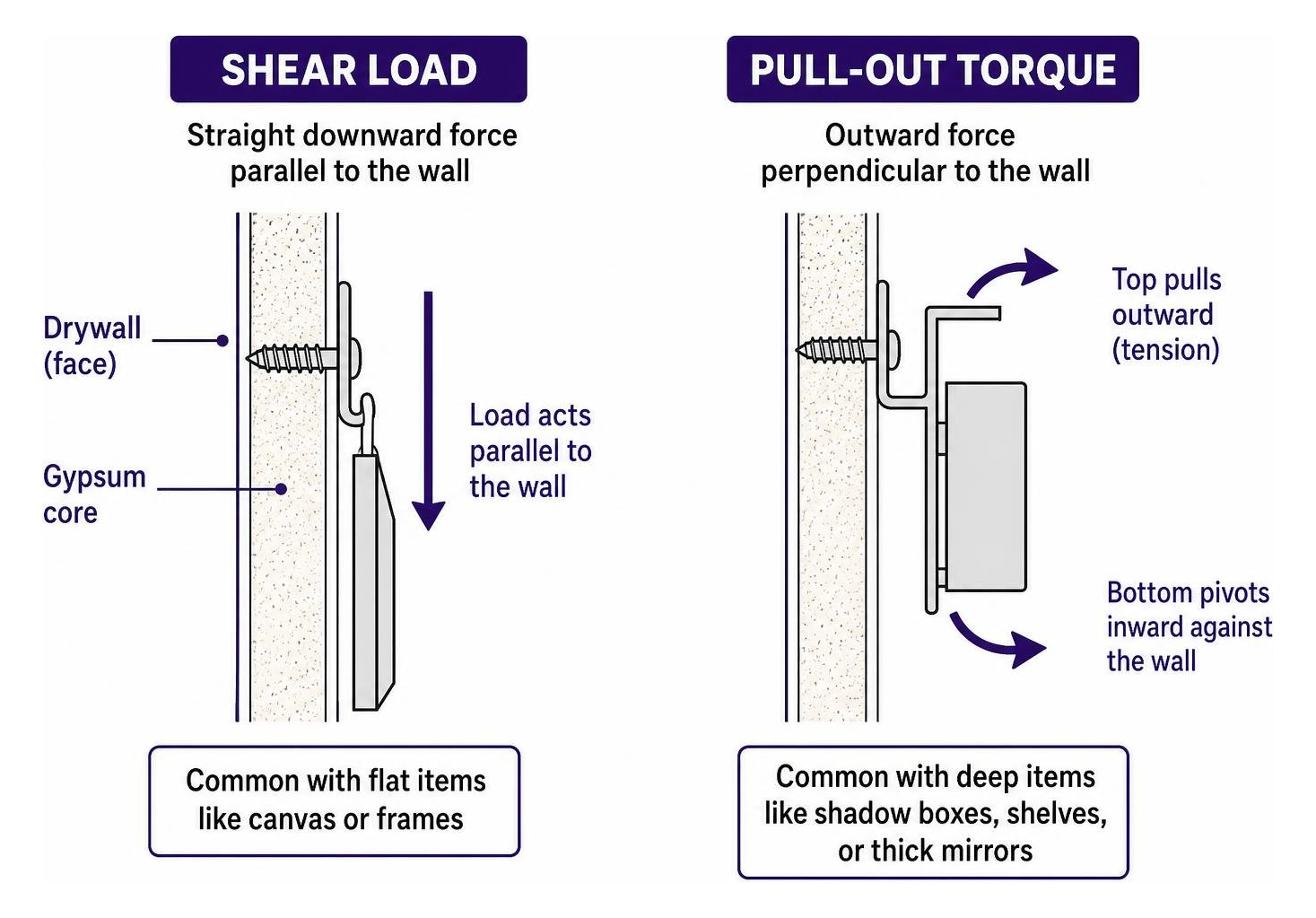
When you hang a flat canvas, the load is almost entirely shear. The fastener presses downward against the gypsum core.
When you hang a deep shadow box, a shelf, or a thick decorative mirror, the center of gravity shifts forward. This shift introduces leverage torque. The top of the bracket pulls outward against the fastener while the bottom pivots inward against the wall. Fasteners designed only for shear fail rapidly under continuous tension.
Gypsum Core Strength and Wall Thickness
Drywall is not structural timber. It consists of a pulverized gypsum rock core sandwiched between two sheets of paper. The structural integrity relies heavily on the tensile strength of that paper facing.
Standard residential construction uses 1/2-inch drywall, while commercial builds and fire-rated assemblies typically use 5/8-inch drywall.
In standard 1/2-inch drywall, an unanchored fastener will cause the soft gypsum core to crush under loads approaching 50 lb. Once the gypsum crushes, the surrounding paper tears open, causing an immediate blowout failure. 5/8-inch drywall offers higher density and greater resistance to tear-out, but its gypsum core remains brittle under direct localized stress.
Static Versus Dynamic Forces
Static weight is only the starting number. A static load sits motionless on the wall. Dynamic loads introduce kinetic energy that multiplies the effective force on your fasteners.
Doors slamming nearby, foot traffic on adjacent stairs, and seasonal home movement generate cyclic vibrations.
In environments with wide seasonal humidity and temperature swings, the friction coefficient of expansion-based fasteners can decrease by up to 25% annually. Furthermore, a 20-pound decorative piece can exert dynamic loads of 60 to 80 pounds during sudden bumps or building settlement. Because of this, always maintain a 50% safety margin between the weight of your item and the maximum rating of your hardware.
How to Hang Heavy Items on Drywall Step by Step
Follow this sequence to mount wall decor safely without structural failure:
- Weigh the entire assembly. Place the frame, glass, artwork, and mounting brackets on a scale. Never guess the total weight.
- Scan for hidden framing. Run a stud finder across the intended installation area. Always anchor into the stud with wood screws if one aligns with your target position.
- Mark the fastener locations. Hold the piece at the desired height. Mark the bracket positions with a pencil, using a torpedo level across the marks to confirm alignment.
- Cut the mounting hole. If no stud is present and the load exceeds standard hook capacities, select the proper hardware. For GHOSTUD anchors, use the specified hole saw: 1 inch for GS1 or 2 inches for GS2.
- Seat the anchor body. Insert the anchor into the opening, ensuring the load-distributing flanges sit flush against the drywall core. Follow the manufacturer’s instructions for the specific hardware.
- Secure the mounting bracket. Drive the provided machine screws into the anchor hub until snug. Avoid over-torquing.
- Hang the decor and verify stability. Mount the item. Support its weight gradually with your hands before releasing the load completely.
Load Distribution and Spacing Techniques
Distributing weight across multiple anchors requires proper mechanical hardware. For a closer comparison, see how to select the right drywall anchor for your load.
- D-Rings vs. Picture Wire: For items over 20 lb, avoid long hanging wires. Wires pull mounting hooks inward toward each other, generating lateral pull-out stress. Mount heavy items using two D-rings or heavy-duty steel brackets attached directly to two individual wall anchors.
- Safety Margins: Calculate hardware capacity so that your total item weight equals no more than 50% of the combined anchor rating. If hanging a 40 lb mirror on two points, each point should be rated for at least 40 lb on its own.
What to Use for Different Picture Hanger Loads
Hardware capacities vary drastically based on how they interact with the gypsum core. The table below outlines real-world weight expectations across standard drywall thicknesses. For installation details, see our drywall anchor installation steps.
| Hardware Type | Safe Load (1/2 in Drywall) | Safe Load (5/8 in Drywall) | Primary Failure Mode |
|---|---|---|---|
| Bare Nail / Screw | 5–10 lb | 10–15 lb | Downward slotting / core tear-out |
| Sawtooth Hanger | 10 lb | 10 lb | Hook bending / nail slip |
| Angled Picture Hook | 15–30 lb | 20–40 lb | Paper face deformation |
| Plastic Expansion Plug | 10–25 lb | 15–30 lb | Pull-out from hole wallowing |
| Self-Drilling Threaded Anchor | 25–50 lb | 35–75 lb | Gypsum strip-out under torque |
| Steel Toggle Bolt | 50–100 lb | 75–125 lb | Rear gypsum crushing on cyclic load |
| GHOSTUD GS1 | Up to 250 lb | Up to 250 lb | Fastener shear limit |
| GHOSTUD GS2 | Up to 1,000 lb shear | Up to 1,000 lb shear | Fastener shear limit; never hang heavy decor without setting a wall anchor first |
How Much Weight Can a Picture Hanger Hold in Drywall Without Anchors?
A bare nail driven straight into drywall holds almost nothing—typically 5 lb before working loose.
Conventional picture hooks improve this by using hardened steel nails driven at a precise 45-degree downward angle. This angle converts downward force into a clamping action against the front paper face, supporting 15 to 30 lb safely. Sawtooth hangers attached to lightweight frames safely support about 10 lb. The HGTV guide on how to hang pictures highlights these lightweight mounting techniques for standard gallery displays.
Whenever a solid wood stud is available behind your desired layout, drive your fastener directly into the framing. A standard wood screw in a stud supports 50 to 100+ lb without risking wall damage. For a complete comparison, read our analysis on drywall anchor vs. stud support.
GHOSTUD High-Capacity Mounting Solutions
When studs are misaligned with your design and your load exceeds standard hook limits, high-capacity mounting hardware provides a structural connection across hollow drywall.
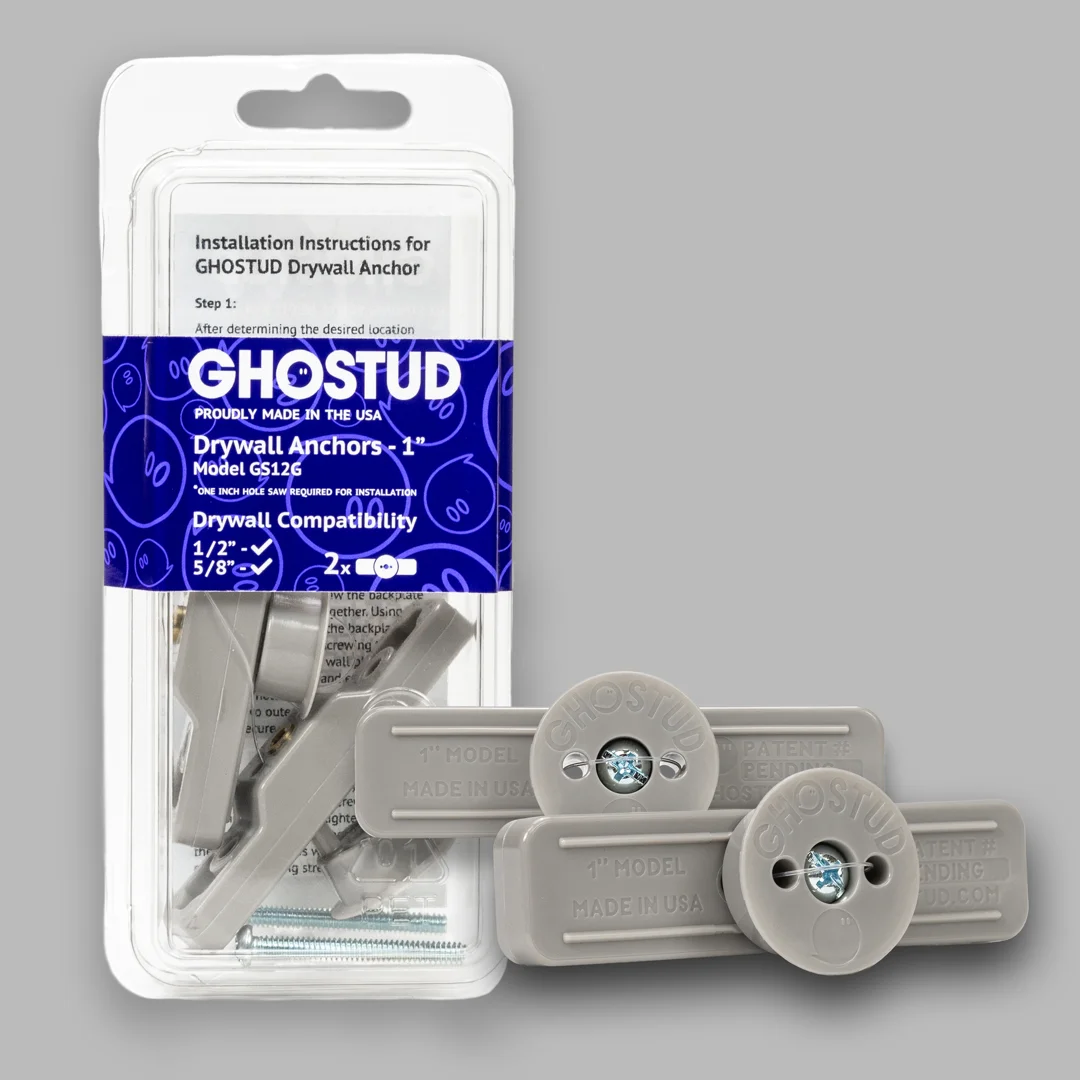
GHOSTUD anchors are made from recycled material. Their load-distributed design reduces localized stress points in drywall:
- GHOSTUD GS1: Installs via a 1-inch hole saw. Rated up to 250 lb in 1/2 in or 5/8 in drywall. It is made for daily-use fixtures such as towel bars, toilet paper holders, curtain rods, picture frames, and light shelving.
- GHOSTUD GS2: Installs via a 2-inch hole saw. Rated up to 1,000 lb shear in 1/2 in or 5/8 in drywall. It is made for heavy static loads such as TVs, cabinets, shelving, and mirrors.
Both models are sold in 2-packs and 20-packs at ghostud.com. Because they require cutting a 1-inch or 2-inch hole, they are permanent installations and are not intended for temporary or damage-free applications.
Edge Cases, Common Mistakes, and When to Call a Professional
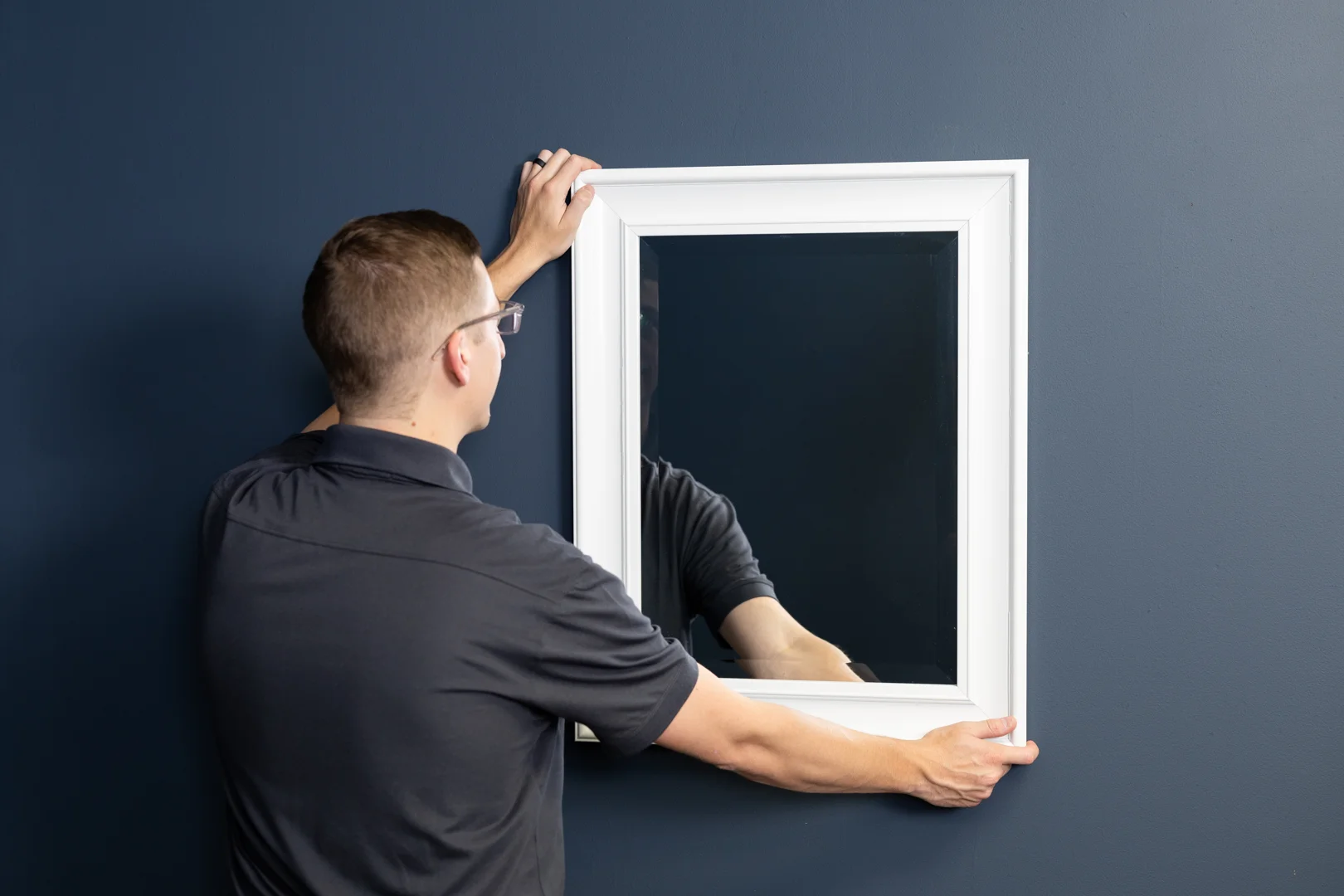
Avoid these common mounting mistakes:
- Over-tightening screws: Driving a screw too hard into plastic or threaded anchors strips the internal threading and grinds the surrounding gypsum into dust.
- Reusing stripped holes: Never reinstall a fastener into a wallowed-out hole. Move the mount at least 2 inches away or patch the area properly.
- Using adhesive strips for heavy frames: Surface adhesives bond only to the paint layer. Heavy loads cause the paint to shear off the drywall paper face completely.
The Zipper Effect and Cumulative Wall Fatigue
When hanging heavy multi-piece gallery walls or large mounting rails, fastener spacing is critical.
Installing multiple drywall anchors closer than 6 inches apart creates a continuous fracture line within the brittle gypsum core. This is known as the “zipper effect.”
When anchors are clustered tightly, the drywall’s collective tensile strength drops by up to 40%. A row of ten toggle bolts rated for 100 lb each will not hold 1,000 lb in a tight group; the entire sheet of drywall will shear off along the perforated line. Always space drywall fasteners at least 6 inches apart to isolate core compression zones.
Incompatible Surfaces and Safety Boundaries
Match your hardware strictly to your wall substrate.
GHOSTUD anchors are designed exclusively for drywall (1/2 in or 5/8 in thickness). They are not suitable for plaster and lath, concrete, masonry, brick, stucco, tile over backer board, or metal studs. If you encounter plaster, masonry, or tiled walls, use a mounting solution designed for that wall assembly.
Furthermore, never use drywall anchors for grab bars, handrails, safety rails, ADA applications, fall-prevention, or child-safety furniture anti-tip straps. Any fixture intended to support human body weight or dynamic life-safety loads must be anchored directly into solid structural wall framing.
For complex masonry or loads beyond the mounting hardware’s documented rating, use a mounting system specified for that wall assembly.
Frequently Asked Questions
Can a single nail safely support a 15-pound picture frame?
No. A bare nail driven straight into drywall holds only 5 to 10 lb reliably. Under a 15-pound load, the nail will pivot downward, crushing the gypsum core and tearing out of the wall. Use a rated 45-degree angled picture hook or an anchor rated for at least 30 lb.
How does drywall thickness change anchor weight limits?
Standard 1/2-inch drywall provides reliable shear resistance for light-to-medium anchors, but begins to experience core micro-fracturing near 50 lb on concentrated points. 5/8-inch drywall offers higher density and greater surface contact for anchor threads, increasing safe shear capacities by roughly 20% to 30%.
Should a heavy picture be mounted into a stud or with a drywall anchor?
Always use a properly located stud when one aligns with your layout. Wood screws driven directly into framing provide superior holding strength. If a stud is unavailable at your desired mounting position, use a drywall anchor specifically rated for your item’s weight and load profile.
Conclusion
Understanding drywall limitations prevents costly property damage and destroyed decor. Match your hardware to the actual weight of the item, maintain a 50% safety margin, and never rely on bare nails for anything over 5 pounds.
For oversized artwork and mirrors that exceed conventional hook ratings, choose an anchoring strategy that matches your wall and load. Locate your framing, check your drywall thickness, and verify your fastener ratings before hanging your next piece.