
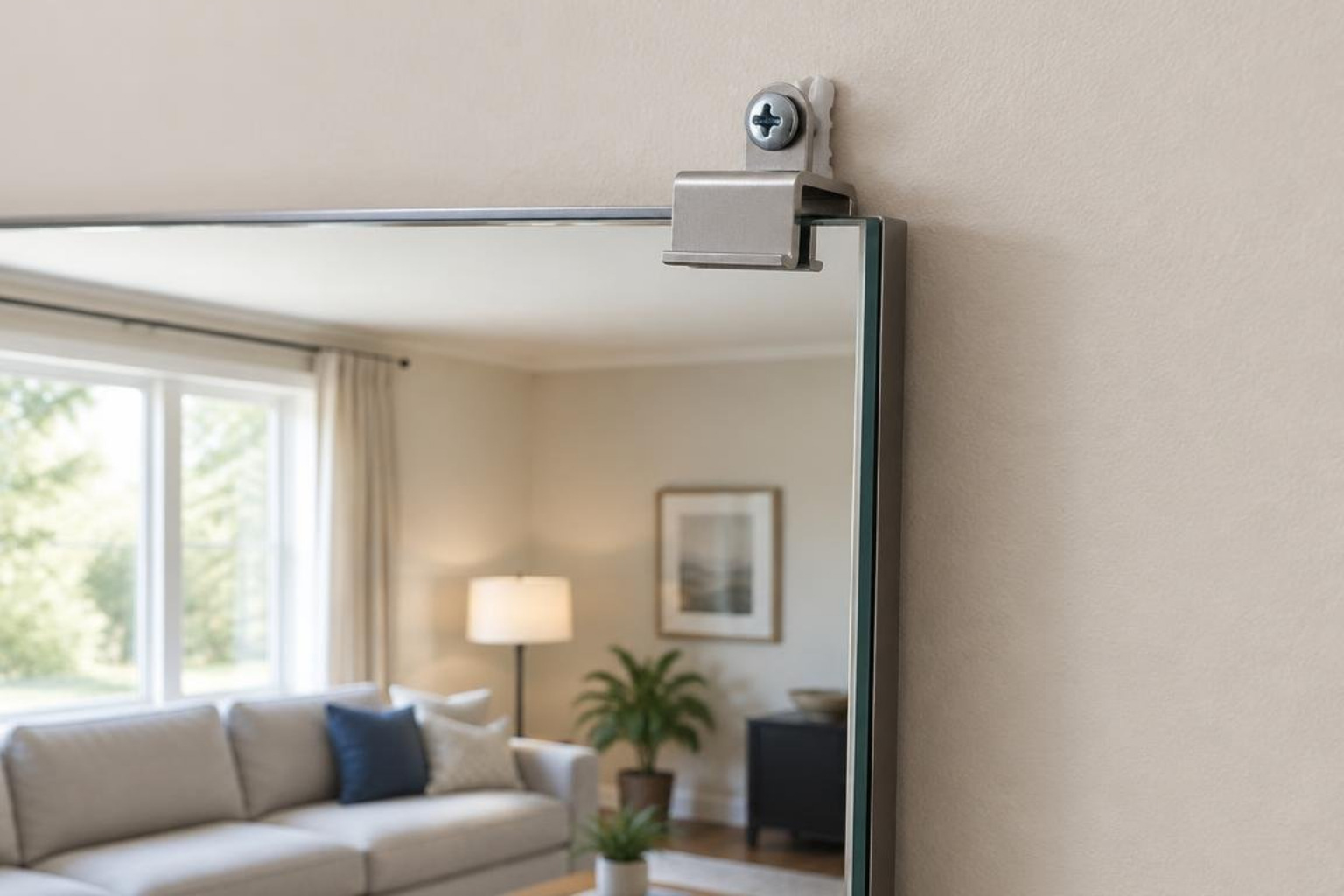
Choose the Right Anchor for a Heavy Mirror
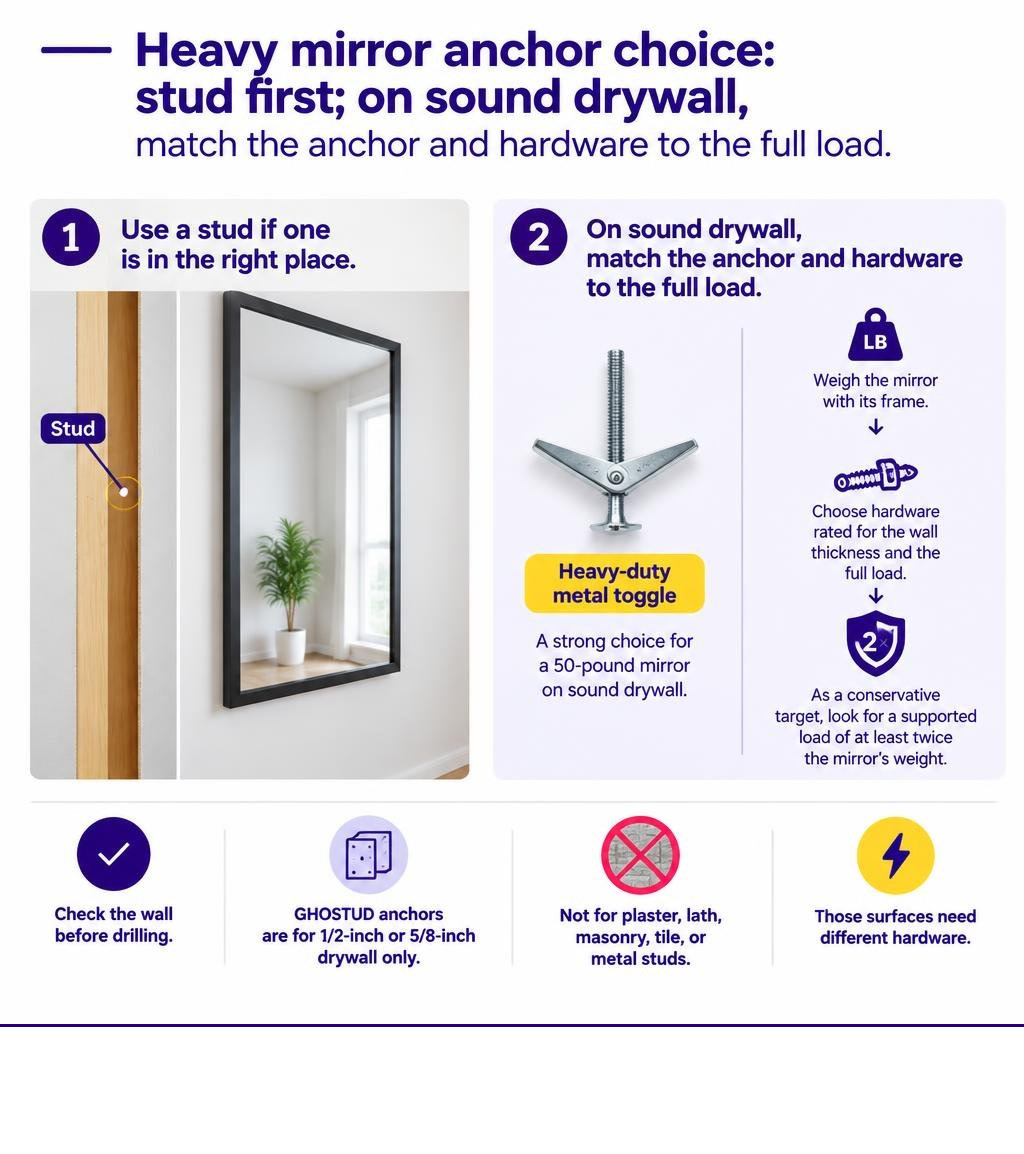
Use a stud if one is in the right place. If not, a heavy-duty metal toggle is a strong choice for a 50-pound mirror on sound drywall. Weigh the mirror with its frame, then choose mounting hardware rated for the wall thickness and the full load. As a conservative planning target, look for a supported load of at least twice the mirror’s weight. Do not assume two anchors will split the weight evenly. Finding the best drywall anchor for heavy mirror mounting depends directly on your wall thickness and the total load.
Check the wall before drilling. Standard drywall anchors are for 1/2-inch or 5/8-inch drywall only, not plaster, lath, masonry, tile, or metal studs. Those surfaces need different hardware.
Helpful installation guides:
- how to anchor a heavy mirror to the wall
- heavy mirror mounting guide
- how to hang a heavy mirror on plasterboard
- how to hang a heavy mirror without damaging the wall
Why Drywall Fails: Shear Force, Pull-Out Load, and Gypsum Mechanics
Drywall is not wood. It is a compressed chalk-like core of gypsum encased in two sheets of paper. Gypsum has decent compressive strength, but its tensile strength is weak.
When you hang a heavy mirror, two forces act on the fastener:
- Shear force: The downward pull of gravity trying to slice the fastener through the gypsum.
- Pull-out tension (cantilever force): The forward pull trying to rip the fastener straight out of the wall.
A flat mirror hangs mostly in shear. However, if you hang it by a loose picture wire across a single hook, the mirror tilts forward at the top. That tilt creates leverage, converting downward weight into outward tension.
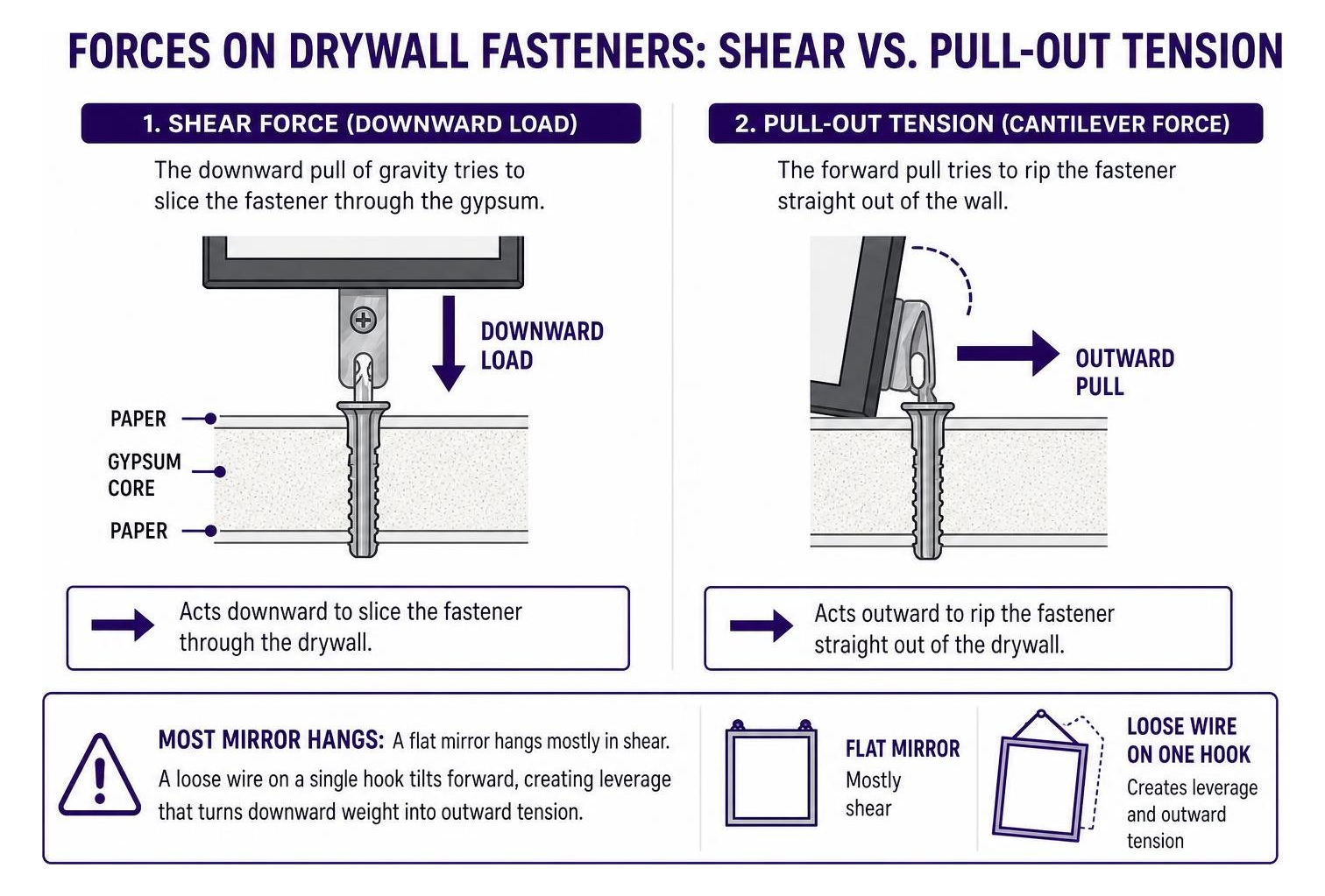
When a standard fastener fails under a heavy load, it undergoes progressive failure. The downward force crushes the crumbly gypsum core immediately beneath the fastener hole. Once the core pulverizes, the paper liner tears. The fastener tips downward, creating a wider hole, and pulls out under the slightest forward movement.
Review our strongest drywall anchor guide shear ratings explained to see how different designs combat this failure mode. Standard plastic expansion plugs offer little resistance against pull-out and can rip straight through 1/2-inch drywall under shock loads.
Step-by-Step: How to Hang a Heavy Mirror on Drywall Without Studs
To mount a heavy mirror securely without studs, follow this numbered procedure.
1. Weigh the Mirror
Step on a bathroom scale holding the mirror, then step on it without the mirror. Subtract your weight from the total. Note the exact poundage. Include all decorative framing.
2. Check for Studs and Utilities
Run an electronic stud finder horizontally across the intended installation area. If a stud aligns with your desired position, drive a 2.5-inch wood screw directly into the timber. If no stud aligns, verify there are no hidden electrical wires or plumbing lines behind the drywall before proceeding.
3. Mark the Wall
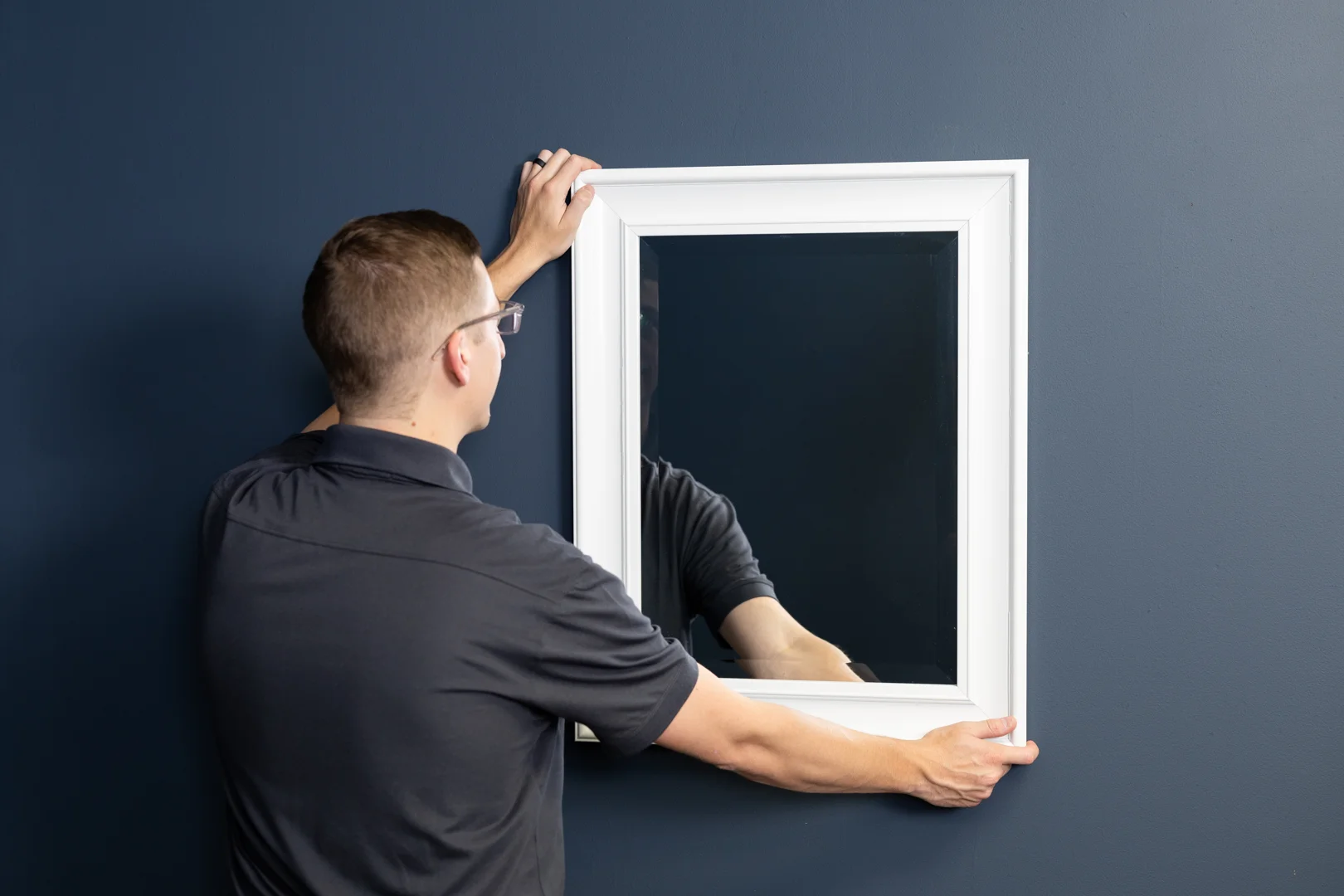
Hold the mirror at your desired height with a helper. Mark the top edge with a pencil or painter’s tape. Measure the distance from the top edge of the frame to the mirror’s mounting brackets (such as D-rings). Transfer those exact marks to the wall using a tape measure and a 4-foot spirit level to guarantee a level line.
4. Cut or Drill the Holes
Match your drill bit or hole saw to the exact diameter required by your anchor hardware:
- For 1/4-inch toggle bolts or SnapToggles: Drill a 1/2-inch hole.
- For standard molly bolts: Drill the manufacturer-specified pilot hole (typically 5/16-inch to 3/8-inch).
- Drive self-drilling anchors directly with a #2 Phillips screwdriver without pre-drilling.
5. Install the Anchors
Insert the anchor body through the hole. If installing toggle bolts, thread the machine screw through your hanging bracket before inserting the wings into the wall cavity. Push the wings through until you feel them snap open against the back face of the drywall. Pull back firmly on the bolt to seat the wings, then tighten the screw until it sits flush against the bracket. Do not over-torque, which can crush the gypsum core.
6. Perform a 15-Second Load Test
Before hanging the glass, grab the mounted brackets or screws with your hands. Apply firm, gradual downward pressure for 15 seconds. If the wall crumbles, yields, or flexes, stop immediately.
7. Hang the Mirror
Lift the mirror into place with a helper. Seat the frame brackets onto the wall hardware. Check with your spirit level. Avoid common installation traps by reviewing these beginner heavy mirror hanging mistakes and how to avoid them.
Ranked: The Best Drywall Anchor for Heavy Mirror Installations
Different loads demand different hardware. Review our complete resource on how to select the right drywall anchor for your load and see our related installation resources for a broader look at wall-mounting fundamentals.
| Anchor Type | Drywall Thickness | Hole Size Required | Rated Capacity (Per Anchor) | Ideal Load Type |
|---|---|---|---|---|
| Plastic Expansion Plug | 1/2 in or 5/8 in | 3/16 in to 1/4 in | Up to 10–25 lb | Lightweight art, 5 lb frames |
| Self-Drilling Zinc Anchor | 1/2 in or 5/8 in | No pre-drilling | 25–50 lb shear | Medium frames, light mirrors (<25 lb) |
| Hollow-Wall Molly Bolt | 1/2 in | 5/16 in to 3/8 in | 50–100 lb shear | Medium mirrors, decorative fixtures |
| Steel Toggle Bolt / SnapToggle | 1/2 in or 5/8 in | 1/2 in | 100–265 lb shear | Heavy mirrors (50–100 lb) |
| Interlocking French Cleat | 1/2 in or 5/8 in | Varies (multi-point) | 200–300 lb total system | Wide mirrors, heavy panels |
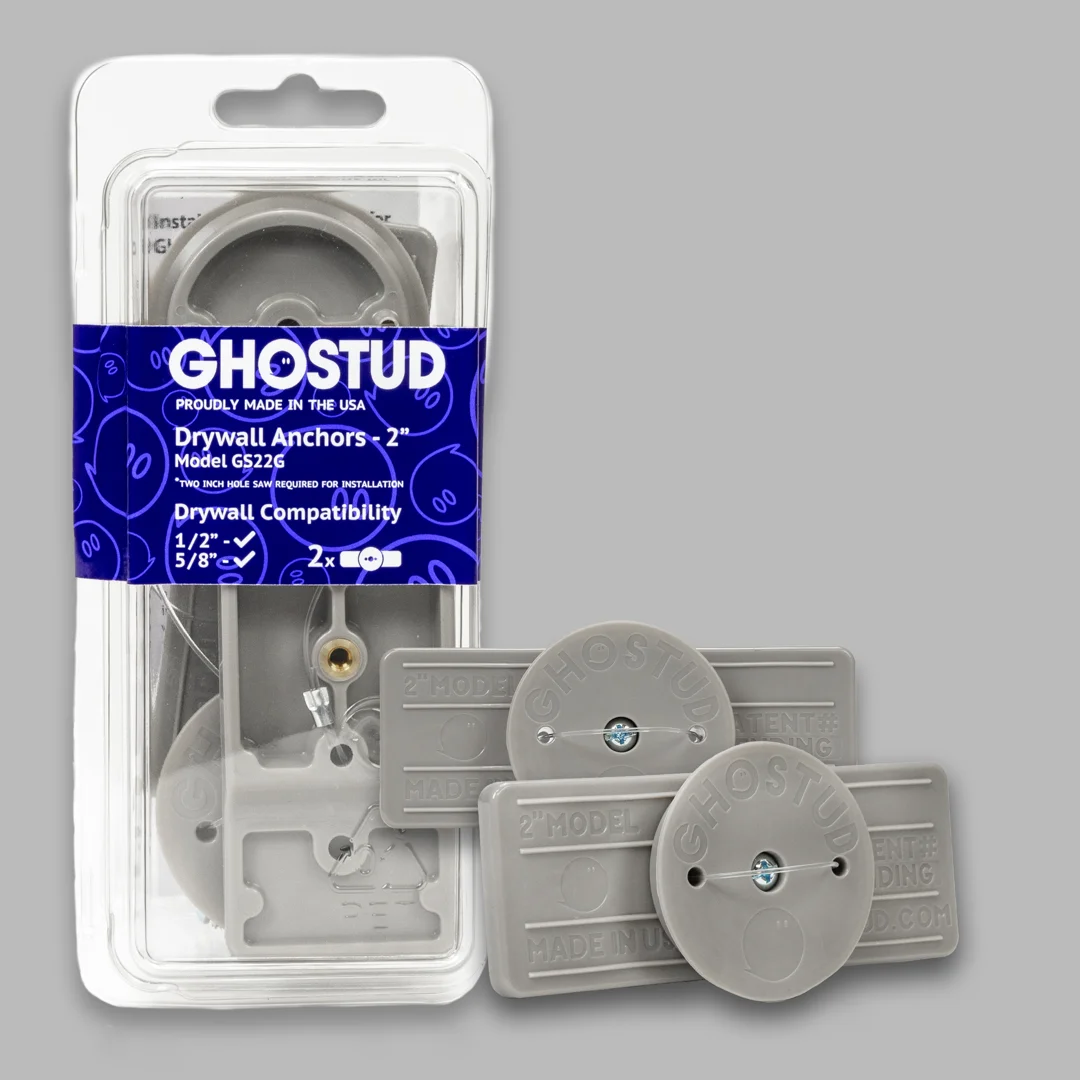
| GHOSTUD GS2 Anchor | 1/2 in or 5/8 in | 2 in (hole saw) | Up to 1,000 lb shear | Heavy static loads, oversized mirrors |
Light to Medium Options: Self-Drilling Threaded and Molly Bolts
For mirrors weighing under 25 pounds, self-drilling zinc or nylon anchors work well. They feature wide, deep external threads that tap directly into drywall, offering 25 to 50 pounds of shear resistance in 1/2-inch drywall. A plastic expansion plug is sufficient for a lightweight 5-pound picture frame, so skip the heavier hardware for jobs that small.
Molly bolts (hollow-wall anchors) step up the holding power to 50–100 pounds. As you tighten the bolt, the slotted metal casing behind the wall compresses and expands outward into four distinct legs, gripping the backside of the drywall sheet. Check our step-by-step guide to drywall anchor types to master these setups.
Why Toggle Bolts Are Often Considered the Best Drywall Anchor for Heavy Mirror Mounting
For standard 50-pound to 100-pound mirrors without a stud, steel toggle bolts are the traditional trade standard. A toggle bolt uses a machine screw paired with spring-loaded metal wings. You fold the wings flat, push them through a 1/2-inch pre-drilled hole, and the wings spring open behind the wall cavity.
Modern variations like the Toggler SnapToggle or Simpson Strong-Tie FlipToggle use solid metal channel bars held by plastic straps. A 1/4-inch SnapToggle is rated up to 265 pounds shear in 1/2-inch drywall. These toggles work, but repeated loading and movement can slowly crush the rear paper surface of the drywall, eventually loosening the toggle assembly and wallowing out the hole.
High-Capacity Systems: Interlocking Cleats and Heavy-Duty Structural Anchors
When hanging oversized mirrors that exceed 100 pounds across hollow wall cavities, horizontal weight distribution is critical.
- French Cleats: Extruded aluminum cleats mount to the wall across multiple anchor points, interlocking with a matching bracket on the mirror. They support 200 to 300 pounds across the entire span.
- GHOSTUD GS2: For heavy static loads like mirrors, cabinets, shelving, and TVs where studs are out of reach, the GS2 Drywall Anchor requires cutting a 2-inch hole with a standard hole saw. It locks behind the wall to distribute load across a wide surface area, rated up to 1,000 lb shear in 1/2 in or 5/8 in drywall. It is made from recycled material in the USA and sold at ghostud.com in 2-packs and 20-packs. The trade-off: the larger hole and higher per-anchor cost make it an effectively permanent installation, so it is not the right pick if you just need to hang a light 5-pound frame or if a stud is already in reach. For daily-use dynamic fixtures like towel bars or curtain rods, the GS1 is the better-matched anchor instead of GS2.
Wall Types and Safety Edge Cases: When Anchors Should Never Be Used
Drywall anchors have strict structural limits. Never use hollow-wall anchors in these situations:
- A Stud Is Accessible: A single 2×4 pine stud holds a screw with 500 to 700 pounds of shear strength. Read our breakdown on drywall anchor vs stud a detailed guide to choosing the right support. If a stud is in your layout path, screw directly into the wood.
- Plaster and Lath Walls: GHOSTUD anchors and self-drilling anchors are strictly engineered for 1/2-inch or 5/8-inch gypsum drywall. Plaster is brittle; drilling large holes or using spreading anchors can crack the keys holding the plaster to the wood lath. Learn how to hang a heavy picture on plasterboard securely or use masonry-specific fasteners for solid plaster.
- Masonry, Concrete, Brick, Tile, or Metal Studs: Never attempt to use drywall-specific expansion anchors or GHOSTUD units in tile over cement board, brick, or masonry. Use concrete sleeve anchors or tapcons instead.
- Human-Weight and Safety Fixtures: Never install drywall anchors for grab bars, handrails, ADA safety rails, fall-prevention equipment, or child-safety furniture anti-tip straps. Drywall cannot be relied upon to catch human body weight.
Choosing the Best Drywall Anchor for Heavy Mirror Weight Ranges
Always size your hardware using the 2x safety rule: the total rated capacity of your mounting system should equal at least twice the weight of the mirror.
- Up to 20 lb: Two zinc self-drilling anchors into 1/2-inch drywall.
- 20 to 50 lb: Two heavy-duty molly bolts or SnapToggles.
- 50 to 100 lb: Two 1/4-inch SnapToggles or an interlocking French cleat spanning multiple anchors.
- 100+ lb: Direct stud attachment, multi-anchor French cleat, or heavy-duty structural plates like the GS2.
Always hang heavy mirrors from two distinct side D-rings rather than a single center wire. A single wire pulls inward, placing excessive pull-out tension on the wall anchors and increasing the risk of structural wall failure.
Frequently Asked Questions About Heavy Mirror Drywall Anchors
Can you hang a 50-pound mirror on drywall without hitting a stud?
Yes. You can safely mount a 50-pound mirror on sound 1/2-inch or 5/8-inch drywall using steel toggle bolts, SnapToggles, or interlocking French cleats. Always use two independent anchor points rated for at least 50 pounds each to satisfy the 2x safety rule.
How many anchors should be used for a wide or heavy mirror?
Use at least two anchors spaced horizontally at the mirror’s structural mounting brackets (such as D-rings). For mirrors wider than 36 inches or heavier than 75 pounds, use a multi-point French cleat to distribute the shear load across four or more separate anchor points along the wall.
How do you repair drywall after removing heavy-duty toggle or molly anchors?
For standard toggle bolts, back the screw out completely; the toggle wings will simply drop down inside the wall cavity. For molly bolts, unthread the screw slightly and tap it inward with a hammer to flatten the rear legs, or pry off the outer front flange with needle-nose pliers so the barrel falls into the wall. Fill the hole with two coats of joint compound, sand smooth when dry, prime, and repaint.
Conclusion
Hanging heavy decor on hollow walls requires understanding how weight moves through gypsum. Assess your mirror’s total weight on a scale, check for wall studs first, and match your wall anchors to the exact thickness of your drywall. If you are mounting heavy static items on hollow drywall where framing is out of reach, explore our guide to hanging heavy mirrors to choose the right installation strategy for your project.